


Every September, the natural world begins to signal change. Birds move with purpose, guided by memory, instinct, need, and a destination they may never have seen but still know to seek. People are trying to find their way, too. Families move across cities, states, and nations searching for work, peace, healthcare, education, or a place where their children can live without constant fear.
We are all traveling in some way. But travel is not the same as progress, and movement is not the same as freedom. Seeing the destination does not mean everyone has been given a fair path to reach it.
The phrase as the crow flies describes the shortest distance between two points. It suggests a direct route, free from the twists and turns below. From the sky, the instruction seems simple: fly straight, avoid wandering, keep the destination in view.
That sounds a little like the way we talk about justice: stay focused, work hard, keep going, make good choices, and do not become distracted by anger, division, or the failures of the past.
But the straightest path on a map may cross a river, a fence, a mountain, a highway, or land someone has been told they cannot enter. From above, the route looks clear. On the ground, people are still trying to survive the terrain.
That is why justice requires more than a view from above. It requires perspective, history, grounded listening, and action. We must rise high enough to see the larger pattern, but come close enough to understand what the journey costs.
Perspective: More Than a Symbol of Flight
The crow is often treated as an uncomfortable bird: noticed, but not welcomed; seen, but not valued. Yet crows do important work. They live in extended family groups, defend one another, and call out when danger is near.
That matters in a culture that treats success as individual achievement. We praise people who “overcome,” but we often forget those who taught them, fed them, protected them, prayed for them, or helped them stand after failure.
No one flies entirely alone. Human flourishing depends on real community: the kind that notices when someone is missing, sounds an alarm when danger approaches, helps raise children, and understands that my safety is tied to yours.
Grounding: When the Warning Sounds Like Noise
Human communities have warning calls, too: the employee raising concerns, the mother advocating for her child, the patient who knows something is wrong, the student asking why histories are missing, the minister who will not preach peace without naming injustice, and the organizer called divisive for refusing to make harm comfortable.
These voices are often described as too loud, too angry, or too difficult. But sometimes the person called disruptive is the only one telling the truth. Sometimes what sounds like noise is actually a warning.
Micah 6:8 offers one of Scripture’s clearest descriptions of faithful living: “To act justly and to love mercy and to walk humbly with your God.” Act. Love. Walk. Each word requires movement. Justice must shape what we do; mercy must move us closer to one another; humility must make us willing to listen and change direction.
History: Circling the Same Field
America is rarely still. We are always creating something: a task force, a committee, a listening session, a new initiative, a revised mission statement, a strategic plan, or another report.
The language of movement surrounds us. Yet movement does not always mean progress. A crow can circle the same field for hours. A nation can circle the same injustice for generations.
For decades, we have discussed unequal healthcare, segregated neighborhoods, underfunded schools, pollution, wage gaps, maternal deaths, voter suppression, mass incarceration, and the racial wealth divide. The statistics are updated and the reports grow longer. Still, the same communities remain at the center of the same disparities.
At some point, we have to ask whether we are looking for the destination or avoiding the landing. Landing changes things. It brings us into contact with the ground and requires responsibility.
From a distance, a community may be described as having poor health outcomes. On the ground, there is a mother choosing between medication and groceries, a child using an inhaler near pollution, a worker afraid to report unsafe conditions, a grandmother traveling across two counties for care, and a young woman wondering whether her pain will be dismissed again.
Statistics help us see patterns, but numbers cannot replace listening. People are not data points moving across a chart. Their lives carry memory, loss, faith, fear, knowledge, and meaning. Before we design solutions, we must understand what people have already survived.
Action: The Necessary Work of Cleanup
Justice also includes cleanup. Every society leaves things behind: polluted land, broken promises, unpaid labor, abandoned neighborhoods, buried histories, and policies that still shape who has access to safety and opportunity.
We call workers essential during a crisis and expendable once the crisis fades. We depend on caregivers but do not pay them enough to care for themselves. We praise teachers while asking them to solve problems created far beyond the classroom. We rely on Black women to lead, comfort, organize, mentor, and hold institutions together, then treat their exhaustion as a personal weakness.
Too often, the people closest to the damage are expected to manage its consequences. Communities affected by pollution must prove it is making them sick. Workers experiencing racism receive wellness seminars while the workplace remains unchanged. Faith communities feed hungry people while few ask why so many working families cannot afford food.
Isaiah 58 offers a different understanding of spiritual responsibility: break chains of injustice, free the oppressed, feed the hungry, shelter those without homes, and refuse to turn away from human need. Faith is not separated from material life. Prayer does not replace responsibility.
Justice must reach the conditions people are living in: the workplace, hospital, school, neighborhood, budget, policy, boardroom, and voting booth. It must help clean what has been allowed to decay.
Grounding: The Overlooked Are Holding Everything Together
Many institutions depend on labor they rarely honor: administrative assistants who know how everything works, custodians who understand the building, nurses who notice changes first, community health workers who enter spaces formal systems cannot, faith leaders who carry grief that never appears in a public health report, and elders who remember what happened before the official story began.
These people are often invited into a room only after decisions have been made. Their stories are collected, summarized, and presented by someone else. Their pain becomes evidence, and their labor becomes a footnote. That is not inclusion; it is extraction wearing a friendly face.
Justice asks us to treat people as whole, sacred human beings, not merely sources of information. It requires rigor, because caring about people does not excuse careless work. And it demands that something of value return to those whose lives made the learning possible.
That return may look like resources, protection, payment, policy change, access, ownership, healing, or a place at the table before the menu is written. The overlooked should not have to disappear before we recognize that they were essential.
Action: Carrying Seeds into Damaged Ground
Crows also carry and store food, including seeds. Not every seed is recovered; some remain in the soil. Justice work often begins before there is visible proof that change is coming. These acts may seem small. Seeds usually do. Still, reconstruction depends on people willing to carry possibility into damaged places.
Reconstruction is not simply rebuilding what existed before. Some structures should not be restored. Some systems were never designed to protect everyone. Some traditions brought comfort to one group while harming another. If we rebuild without examining the foundation, we may create a cleaner version of the same injustice.
True reconstruction asks harder questions: Who was the original structure built to serve? Who was excluded? Who paid the cost? Whose knowledge should guide what comes next? What must be removed, preserved, or returned?
Justice does not only tear down. It plants, waters, protects what is still fragile, and creates conditions where people can grow without fighting for every inch of light.
History and Repair: Reconciliation Cannot Skip the Truth
Many of us are drawn to the language of reconciliation. It sounds peaceful, loving, and Christian. That hope matters. Still, reconciliation can cause harm when it is separated from truth, accountability, and repair.
Love does not ask harmed people to pretend the wound never happened. It does not confuse silence with peace or protect injustice because confronting it may make people uncomfortable. Love must tell the truth, listen, interrupt harm, accept responsibility, and repair what it can.
Jesus identified justice, mercy, and faithfulness as the weightier matters of religious life. Not image. Not comfort. Not the appearance of peace. Justice. Mercy. Faithfulness.
Perspective: Provision From an Unexpected Place
In 1 Kings 17, God commands ravens to bring Elijah food during drought and danger. It is an unusual choice. Ravens were not considered clean or respectable creatures. Yet they became carriers of provision.
That story asks us to reconsider whom we trust. Wisdom may come from the person without the title. Care may come from a neighborhood outsiders describe only through its problems. The people pushed to the edge may see danger more clearly than those at the center.
Human Flourishing: Somewhere Safe to Land
Public health often measures whether people survive: life expectancy, mortality, disease rates, and access to care. These measures are necessary. They show where preventable harm continues.
But human flourishing asks a larger, more tender question: what kind of life are people actually able to live?
Can they rest, feel safe, imagine a future, and raise children without preparing them too early for harm?
Can they work without being diminished, seek medical care without being ignored, practice faith without manipulation, and love their families without constant fear of losing housing, income, healthcare, or freedom?
Flourishing is not simply personal success. A person may earn a high salary and still be unwell. A child may receive excellent grades while carrying fear no child should have to hold. A family may survive displacement while losing its community, history, and sense of place.
Survival and flourishing are not the same. We have praised communities for being resilient while leaving unchanged the conditions that require constant resilience.
We admire how well people adjust, recover, and endure. But adaptability should not become an excuse for injustice. The crow may learn to survive in a landfill. That does not mean the landfill is where it belongs.
People need more than the strength to keep flying. They need somewhere safe to land: a place to rest, build, belong, and raise the next generation without teaching them that exhaustion is the price of being alive.
Action: Justice Must Keep Moving
Amos 5:24 gives us another image: “Let justice roll on like a river, righteousness like a never-failing stream.” Justice is not described as one event. It moves, persistently, shaping the land as it goes.
When blocked, water searches for another path. Justice requires that kind of persistence: not one march, sermon, training, grant, apology, or heritage month, but steady commitment after public attention shifts elsewhere.
It must remain when the cameras leave, leadership changes, budgets tighten, and the work becomes less popular.
Hope helps us stay in that movement. Not shallow optimism or the belief that time alone will heal everything, but disciplined hope: the kind that studies history, listens to people most affected, names harm, builds with care, returns resources, and asks whether anything truly changed.
Anger may help us recognize that something is wrong. Hope helps us believe our actions still matter. Together, they can give us courage to keep moving toward a destination we may not reach alone.
When Justice Finally Lands
Perhaps the wisdom of the crow is not that it always flies in a perfect line. Perhaps its wisdom is that it keeps moving without losing sight of what matters.
It rises for perspective, calls when danger is near, gathers the community, clears what has decayed, carries seeds into damaged ground, and then lands where the work is waiting.
Our nation has spent too long circling familiar patterns and calling the movement progress. We know what happens when comfort matters more than truth, when reconciliation is pursued without repair, and when communities are praised for surviving conditions no one is willing to change.
The question is not whether we can see the destination. We can. We know justice should lead toward safety, dignity, belonging, shared power, truth, accountability, and conditions where people can live fully.
The harder question is whether we will land long enough to do what the journey requires: act justly, love mercy, walk humbly, listen when the warning sounds, clean what has decayed, carry seeds into damaged ground, and build places where people no longer have to live in constant flight.
The crow is not only a symbol of movement. It is a witness to necessary work: memory, warning, community, repair, provision, and hope.
The view from above may help us recognize where freedom is. But freedom cannot remain a beautiful idea circling overhead. It must come close enough to touch the ground, change the soil, give the weary a place to rest, and make room for the next generation to rise. Justice must land—and when it does, it should leave a place where people can finally flourish.
“Do not be silent; there is no limit to the power that may be released through you.” —Howard Thurman
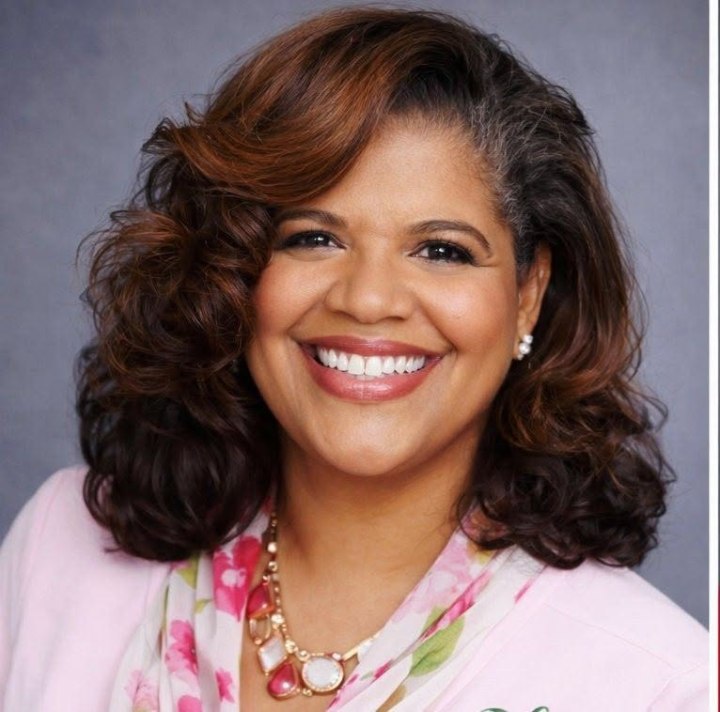
Founder, Rhodes To Wellness, LLC
Creator, The Public Health Griot™
Public Health Educator, Strategist, and Advocate
https://www.rhodeseffect.com/
References
All About Birds. (n.d.). American Crow: Life history. Cornell Lab of Ornithology.
Ettinger, A. K., et al. (2021). THRIVE conceptual framework and study protocol: A community-engaged approach to defining and measuring child and youth thriving. Frontiers in Pediatrics, 9, 797526. https://doi.org/10.3389/fped.2021.797526
Foster, D. A. (2020). Reclaiming reconciliation. Ecumenical Trends. https://doi.org/10.1353/ecu.2020.0015
Glazier, R. A., Driskill, Q., & Hanson, K. (2024). Race and faith: The role of congregations in racial justice. Journal for the Scientific Study of Religion. https://doi.org/10.1111/jssr.12943
Häßler, T., et al. (2020). A large-scale test of the link between intergroup contact and support for social change. Nature Human Behavior, 4, 380–386. https://doi.org/10.1038/s41562-019-0815-z
Nixon, S. A. (2019). The coin model of privilege and critical allyship: Implications for health. BMC Public Health, 19, 1637. https://doi.org/10.1186/s12889-019-7884-9
Smith, A. (2019). Unreconciled: From racial reconciliation to racial justice in Christian evangelicalism. Duke University Press. https://doi.org/10.1515/9781478007036
Thurman, H. (2022). Jesus and the disinherited. Beacon Press. (Original work published 1949).
Włodarczyk, A., Basabe, N., Páez, D., & Zumeta, L. (2017). Hope and anger as mediators between collective action frames and participation in collective mobilization. Journal of Social and Political Psychology, 5(1). https://doi.org/10.5964/jspp.v5i1.471
Scripture
Amos 5:24.
Galatians 3:28.
Isaiah 58:6–8.
Matthew 23:23.
Micah 6:8.
1 Kings 17:2–6.
Discover more from Three-Fifths
Subscribe to get the latest posts sent to your email.

