
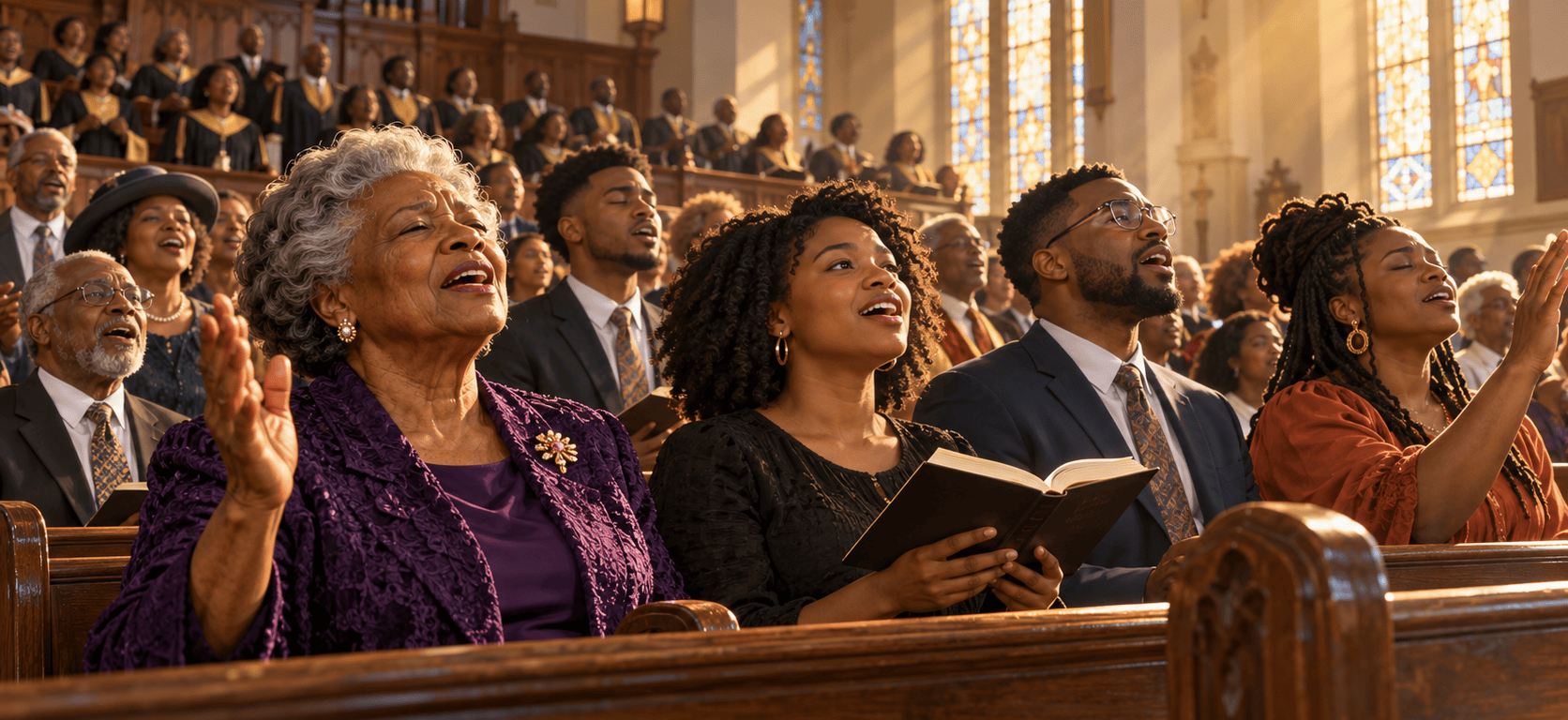
For the first time in what feels like forever, I was in an environment where three stanzas of “Lift Every Voice and Sing” were sung. These days, we can hear the first verse after that national anthem at a football game, but it had been a while since I heard the last stanza in particular:
God of our weary years
God of our silent tears
Thou who has brought us thus far on the way
Thou who has by Thy might led us into the light
Keep us forever in the path, we pray
Lest our feet stray from the places, our God, where we met Thee
Lest our hearts, drunk with the wine of the world, we forget Thee
Shadowed beneath Thy hand
May we forever stand
True to our God
True to our native land
Our native land
Often called the “Black National Anthem,” James Weldon Johnson wrote this song as a poem in January 1900 for an assembly at Stanton School, the segregated school where he served as principal, to commemorate Abraham Lincoln’s life. He partnered with his brother J. Rosamond, who composed the music for the poem, and taught it to Stanton School’s chorus, which debuted it before the assembly on February 12, 1990.
A few months later, The Daily American, the nation’s first Black daily newspaper, founded and edited by Johnson, printed the work as “The National Negro Hymn.” As Black people introduced it and spread it, the song became widely known across the country by 1910. In 1919, the N.A.A.C.P. (of which Johnson was a founder) adopted it as the organization’s official anthem.
From there, it became a rallying cry during the Civil Rights Movement and remains a cultural staple today, reminding us that its words still speak across generations.
For me, sitting in the sanctuary of the Historical Black Theological College, Turner Theological Seminary, and hearing the harmonious voices of a community bound by a desire to better themselves academically, the words stayed with me a little longer, and the connection between song and struggle felt clearer.
It has been a long two years (or six, depending on who you ask): wars and rumors of wars, mixed with the capitalistic one percent making decisions for people they can’t identify with. Over 300,000 Black women out of employment, women’s rights being stripped away, gas, medicine, and food costs inflated, while whispers of “God, where are you?” permeate the atmosphere.
As we rounded the corner on a song I have heard my entire life, I couldn’t help but think through the lyrics: Where have I heard a similar cry?
Psalm 124
• 1. If the Lord had not been on our side—let Israel say
• 2. If the Lord had not been on our side when people attacked us,
• 3. They would have swallowed us alive when their anger flared against us.
God of our weary years
God of our silent tears
Thou who has brought us thus far on the way
• 4. The flood would have engulfed us, the torrent would have swept over us,
• 5. The raging waters would have swept us away
Thou who has by Thy might led us into the light
Keep us forever in the path, we pray
Lest our feet stray from the places, our God, where we met Thee
Lest our hearts drunk with the wine of the world, we forget Thee.
• 6. Praise be to the Lord, who has not let us be torn by their teeth
• 7. We have escaped like a bird from the fowler’s snare; the snare has been broken, and we have escaped
• 8. Our help is in the name of the Lord, the maker of heaven and earth.
Shadowed beneath Thy hand
May we forever stand
True to our God
True to our native land
Our native land
Our ancestors, from David to James Weldon Johnson, taught us to sing in times like these with good reason. Through opening our mouths, we learned to declare new things over ourselves. Through congregational hymns sung in harmony, we learned to understand how strong we were together. By partnering with each other through song, we learned how to transform our minds and hearts, if only for a moment, to face the day’s journey.
The evil one’s strategy is to wear us down and make us lose hope, but our ancestors have often held the antidote to surviving this world’s sicknesses: poem, psalm, and song.
Sometimes it’s in a poem.
Sometimes it’s in a psalm.
Sometimes it’s in a song.
Sometimes it’s a reminder heard at a service at a Historically Black Theological College: “Lift Every Voice and Sing,” until your investment in hope is returned in full. Singing, writing, being joyful, and communing are the resistance work generations have passed down to us—from David to James Weldon Johnson.
For the first time in what feels like forever, I was in an environment where all three stanzas of “Lift Every Voice and Sing” were sung. These days, we can hear the first verse after that national anthem at a football game, but it had been a while since I heard the last stanza in particular:
God of our weary years
God of our silent tears
Thou who has brought us thus far on the way
Thou who has by Thy might led us into the light
Keep us forever in the path, we pray
Lest our feet stray from the places, our God, where we met Thee
Lest our hearts, drunk with the wine of the world, we forget Thee
Shadowed beneath Thy hand
May we forever stand
True to our God
True to our native land
Our native land
Often called the “Black National Anthem,” James Weldon Johnson wrote this song as a poem in January 1900 for an assembly at Stanton School, the segregated school where he served as principal, to commemorate Abraham Lincoln’s life. He partnered with his brother J. Rosamond, who composed the music for the poem, and taught it to Stanton School’s chorus, which debuted it before the assembly on February 12, 1900.
A few months later, The Daily American, the nation’s first Black daily newspaper, founded and edited by Johnson, printed the work as “The National Negro Hymn.” As Black people introduced and spread it, the song became widely known across the country by 1910. In 1919, the N.A.A.C.P. (of which Johnson was a founder) adopted it as the organization’s official anthem.
From there, it became a rallying cry during the Civil Rights Movement and remains a cultural staple today, reminding us that its words still speak across generations.
For me, as I sat in the sanctuary of the Historical Black Theological College, Turner Theological Seminary, and heard the harmonious voices of a community bound together by a desire to better themselves academically, the words stayed with me a little longer. In that moment, the connection between song and struggle felt clearer.
It has been a long two years (or six, depending on who you ask): wars and rumors of wars, mixed with the capitalistic one percent making decisions for people they can’t identify with. Over 300,000 Black women out of employment, women’s rights stripped away, gas, medicine, and food costs inflated, while whispers of “God, where are you?” permeate the atmosphere.
As we rounded the corner on a song I have heard my entire life, I couldn’t help but think through the lyrics: Where have I heard a similar cry?
Psalm 124
• 1. If the Lord had not been on our side—let Israel say
• 2. If the Lord had not been on our side when people attacked us,
• 3. They would have swallowed us alive when their anger flared against us.
God of our weary years
God of our silent tears
Thou who has brought us thus far on the way
• 4. The flood would have engulfed us, the torrent would have swept over us,
• 5. The raging waters would have swept us away
Thou who has by Thy might led us into the light
Keep us forever in the path, we pray
Lest our feet stray from the places, our God, where we met Thee
Lest our hearts drunk with the wine of the world, we forget Thee.
• 6. Praise be to the Lord, who has not let us be torn by their teeth
• 7. We have escaped like a bird from the fowler’s snare; the snare has been broken, and we have escaped
• 8. Our help is in the name of the Lord, the maker of heaven and earth.
Shadowed beneath Thy hand
May we forever stand
True to our God
True to our native land
Our native land
Our ancestors, from David to James Weldon Johnson, taught us to sing in times like these with good reason. Through opening our mouths, we learned to declare new things over ourselves. Through congregational hymns sung in harmony, we learned how strong we were together. By partnering with each other through song, we learned how to transform our minds and hearts, if only for a moment, to face the day’s journey.
The evil one’s strategy is to wear us down and make us lose hope, but our ancestors have often held the antidote to surviving this world’s sicknesses.
Sometimes survival is in a poem.
Sometimes resistance is in a psalm.
Sometimes deliverance is in a song.
Sometimes your help is in a reminder at a service at a Historically Black Theological College to “Lift Every Voice and Sing,” until your investment in hope is returned in full.

Discover more from Three-Fifths
Subscribe to get the latest posts sent to your email.

