
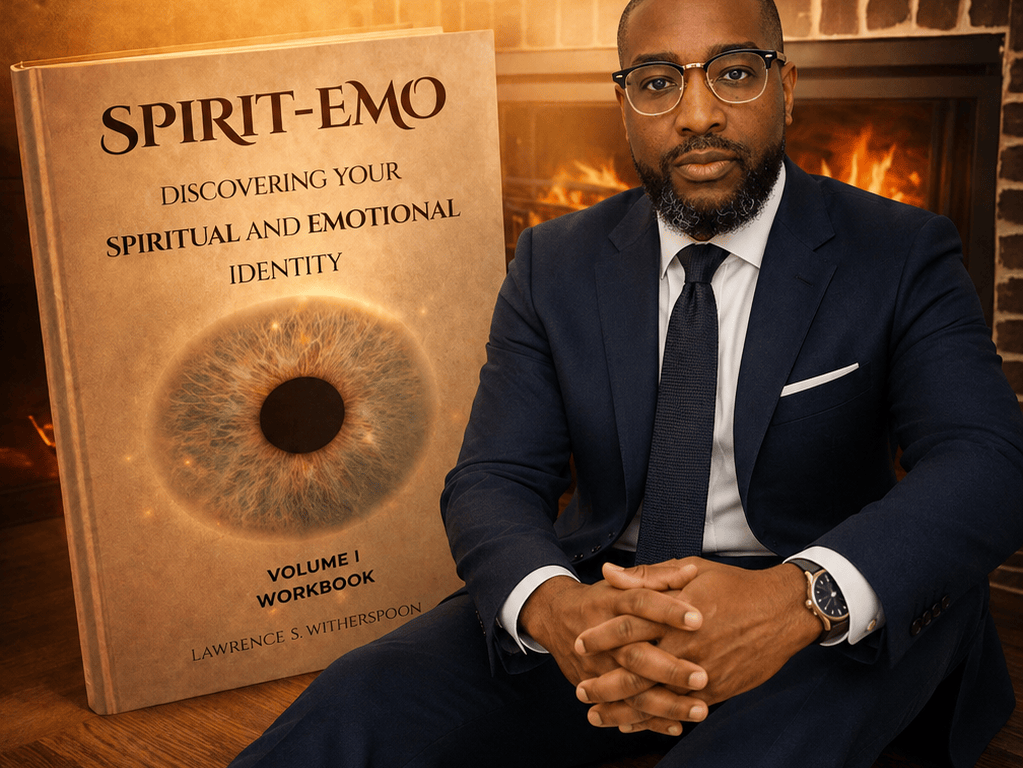

Faith, Emotional Intelligence, and Relationships have played a significant role in helping me navigate difficult seasons. Through my own journey, I have learned that faith does not mean I will always understand what is happening, and emotional intelligence does not mean I will always have the right response. Sometimes, faith gives me the strength to keep moving when I do not have answers, while emotional intelligence gives me the awareness to acknowledge what I am actually feeling along the way.
This is part of the message behind my book, The Spirit-Emo: Discovering Your Spiritual and Emotional Identity. I believe that what is in our spirit will eventually show up through our emotions. When we take the time to understand both, we become better equipped to navigate life with intention rather than simply reacting to what happens around us. Our emotions are not something we have to be ashamed of or suppress. They can provide valuable insight into what is happening within us.
I have also learned that gratitude and grief can exist in the same space. We can be grateful for the people who have loved us, the opportunities we have been given, and the ways God has sustained us, while still acknowledging that something hurt, disappointed us, changed us, or left us with unanswered questions. Gratitude does not require us to pretend that everything is okay.
For me, authentic gratitude is not about ignoring the difficult parts of our story. It is about recognizing the whole story. There have been seasons when I could honestly say, “This has been hard,” and, at the same time, “I am grateful for what has sustained me.” Both statements can be true.
Relationships have been especially important in that process. Sometimes God uses people to remind us of who we are when difficult circumstances make us question ourselves. A conversation, a friendship, a mentor, a family member, or simply someone who chooses to remain present can become a source of strength during a difficult season.
I believe emotional wellness requires us to make room for the full range of our experiences. We can acknowledge disappointment without allowing disappointment to define us. We can experience grief without losing sight of gratitude. We can have unanswered questions without believing that our lives are without purpose.
Practicing gratitude should never become a way of minimizing someone’s pain. Telling someone to “just be grateful” can unintentionally communicate that their emotions are inconvenient or that they should move past their pain before they have had an opportunity to process it. Instead, gratitude can become part of the healing process when it is allowed to exist alongside honesty.
Sometimes gratitude sounds like, “I am thankful, even though this hurts.”
Sometimes it sounds like, “I do not understand this, but I know I am not alone.”
And sometimes it simply sounds like, “I made it through another day.”
That, to me, is where faith and emotional intelligence meet. We do not have to deny what we feel in order to remain hopeful. We do not have to ignore what has been difficult in order to be grateful. We can acknowledge the pain, honor the emotions, remain connected to the people who sustain us, and still choose to recognize the grace that has carried us.
Gratitude is not pretending that the storm never happened. It is recognizing that, somehow, we were sustained while we were walking through it.

Discover more from Three-Fifths
Subscribe to get the latest posts sent to your email.

