
As autumn’s chill whispers closer, September arrives, painting the world in shorter days and longer shadows. The landscape began its seasonal transformation, shedding its vibrant hues. Yet, September also held a profound metaphor: the longer we hover around the edges of truth, the more obscured our vision becomes. Eventually, a moment arrives when we must cease our endless circling, turn our gaze from distraction, and step boldly into the light.
This call to directness, to “Stop Circling the Truth,” set the stage for the challenges and choices we now face as October unfolds. As we move deeper into the season, the forces at play in our world become even more pronounced, demanding not just clarity of vision but also unwavering stability.
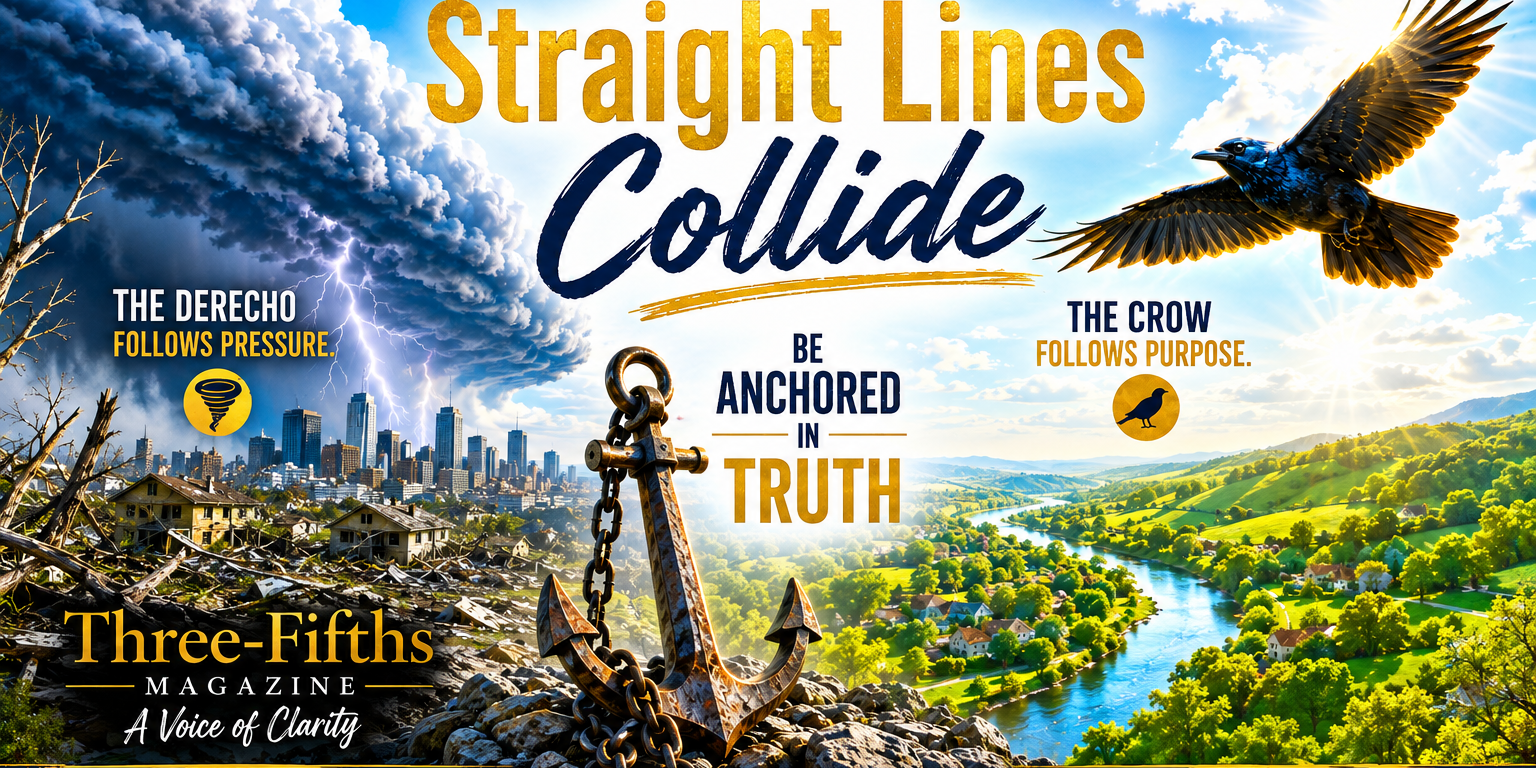
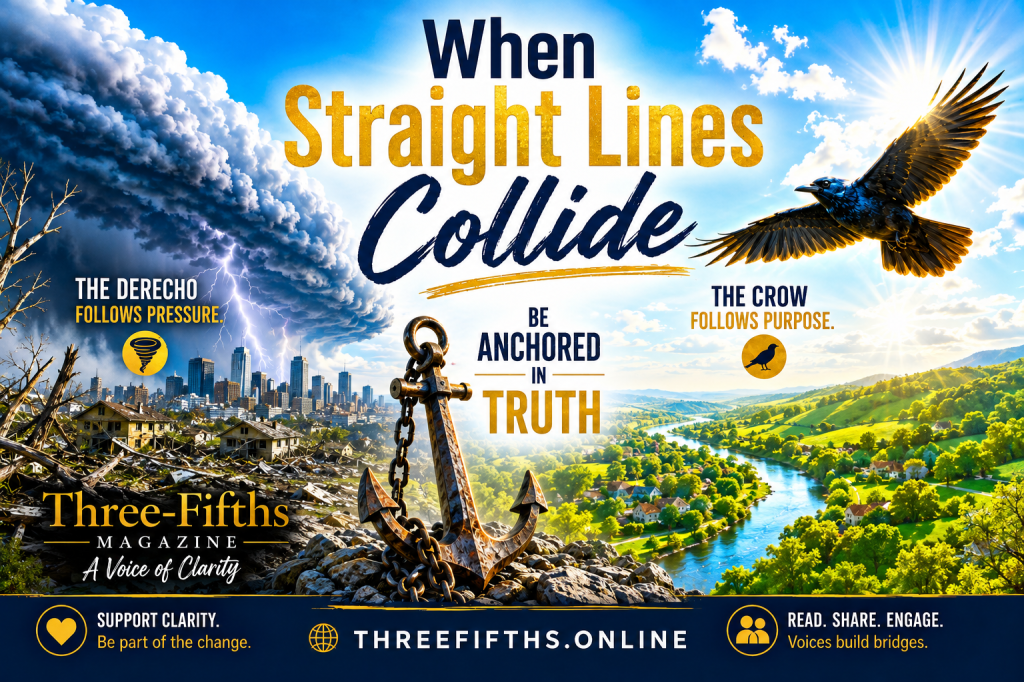
It was the morning of August 11, 2026, in the supposedly sleepy Midwest. Dark clouds began appearing almost out of nowhere, like ghostly shadows across the late-summer horizon. Something was different. Something felt unusual. We often expect violent summer storms to arrive during the hottest part of the day, but this storm system was different. It moved across the region during the morning, traveling in a powerful, straight-line formation. Meteorologists called the phenomenon a derecho.
The Derecho: A Literal Storm, A Figurative Force of Pressure
Literally, a derecho is a powerful weather event created by specific atmospheric conditions. Unlike a tornado, which spins around a central point, a derecho produces widespread, straight-line winds that can travel for hundreds of miles. Its immense power can damage buildings, destroy trees, disrupt communities, and leave people facing the loss of property, security, and dreams. It’s a natural atmospheric phenomenon, a stark reminder that powerful forces can develop, move quickly, and affect lives far beyond their origin.
But this physical reality also offers a powerful metaphor for the world we live in. Figuratively, the derecho represents other forces moving in straight lines around us: racism, division, political hostility, misinformation, fear, economic anxiety, and health inequities. These aren’t random, chaotic events; they can appear organized, focused, and relentless, moving through our communities with the force of a derecho. The constant churn of the 24-hour news cycle, fueled by fear, anger, blame, and confusion, can amplify these pressures and make us lose sight of deeper systems and patterns. The winds keep blowing, and the beat goes on.
The Crow: A Literal Bird, A Figurative Guide to Direct Truth and Justice
Yet, even in the middle of this manufactured mayhem, another way to move exists. An eye watches from the sky. There is a path. There is a mission of truth.
This is where the crow enters our narrative, not just as a symbol of purpose, but as a call to direct action, echoing September’s profound invitation. Literally, a crow is an intelligent bird, known for its ability to observe from above and fly with remarkable directness. Figuratively, the crow becomes a powerful symbol of the pursuit of truth and wisdom, and crucially, the direct path to it. If the derecho represents external pressure and potential destruction, the crow represents internal purpose and clarity that demands a straight flight. While the derecho is driven by atmospheric forces beyond its control, the crow chooses where it is going, and it does so without endless circling.
As we explored in September, the crow, a creature of keen sight and direct flight, does not need to circle endlessly to know its path. It adjusts its course and flies straight toward its destination. This is the quiet demand September made of us: as the light diminishes, stop circling the truth. See clearly. Name what is there. And fly toward justice.
Long before “Stop Circling the Truth” became our invitation to examine the difficult realities around us, the visionary W. E. B. Du Bois used the image of the crow to offer a different way of seeing the world. His “As the Crow Flies” writings, spanning decades, delved into profound questions of knowledge, race, democracy, colonialism, and the human condition. For Du Bois, the crow offered a unique vantage point—a way to see beyond the boundaries and pathways constructed on the ground —often serving as a figurative device for “double consciousness,” the internal “twoness” experienced by African Americans.
America has never been short on information regarding its racial, social, and moral problems. We possess a wealth of books, documentaries, historical records, testimonies, statistics, memorials, court cases, speeches, sermons, and generations of lived experience. The problem isn’t always a lack of truth. Sometimes, the deeper issue is that we know the truth—and yet, we keep circling it. We acknowledge injustice, debate it, commemorate it, apologize for it, write about it, preach about it, and then, inexplicably, find ourselves confronting the very same patterns once more.
A crow doesn’t choose the longest, most convoluted route simply because the terrain below is complicated. It sees the destination and flies directly toward it.
Circling looks like:
- Talking endlessly about racial injustice without genuinely changing the systems that perpetuate it.
- Celebrating historical figures while conveniently ignoring the very conditions they fought so valiantly against.
- Calling for reconciliation without first confronting the uncomfortable truths that make reconciliation necessary.
- Demanding unity without addressing the deep-seated inequities that continue to divide us.
- Proclaiming “we’ve come a long way” while steadfastly refusing to ask who has been left behind in that journey.
- Having difficult conversations repeatedly, yet never allowing those conversations to lead to difficult, transformative decisions.
- Knowing precisely what is wrong but continually postponing the urgent actions that must be taken.
We may care deeply—and still be unwilling to fly directly toward the truth.
“The crow sees differently.” If we can see differently, perhaps we can tell the truth differently. This isn’t just about acknowledging facts, but about perceiving the underlying currents, the hidden connections, the systemic roots of injustice. It’s about seeing with a clarity that cuts through noise and denial, revealing deeper implications. When we truly see the intricate tapestry of injustice, our words gain new power: we don’t just report; we reveal; we don’t just state; we illuminate the path forward, making the uncomfortable truth undeniable and the need for change urgent.
If we can tell the truth differently, perhaps we can act differently. A truth told with such piercing clarity doesn’t just inform; it compels. It dismantles the excuses for inaction and ignites a different kind of resolve. When the truth is laid bare, stripped of its comfortable veils, our responses can no longer be timid or incremental. We are called to actions that are as direct and uncompromising as the truth itself—actions that challenge the status quo, dismantle oppressive structures, and build something genuinely new.
And if we act differently, perhaps we can finally stop circling justice and begin flying toward it. For too long, we’ve hovered, debated, and deliberated, often mistaking conversation for progress. But when our actions align with a truth bravely spoken, we cease this aimless circling. We find our true bearing, like the crow, and set a direct, unwavering course. This isn’t just about reaching a destination; it’s about the journey itself becoming purposeful, each beat of our wings carrying us closer to a world where justice isn’t a distant ideal, but a lived reality.
The Anchor: A Literal Tool, A Figurative Steadfastness in the Face of the Derecho
It is no coincidence that both the crow and the derecho can move in straight lines. But what directs them differs: the crow follows purpose and flies directly, as September’s message urged, while the derecho follows pressure. One chooses its destination; the other is driven by forces beyond its control. America today stands between these two realities, facing powerful cultural winds—political rhetoric, media narratives, misinformation, fear, anger, and ideological division—that seek to determine our direction. These forces push us toward reaction rather than reflection, conformity rather than conviction, noise rather than clarity, fear rather than truth.
Our calling is different. Like the crow, we are called to pursue truth intentionally and directly, refusing to be blown off course by whatever cultural wind happens to be strongest in the moment. But intentional direction alone is not enough. When the winds become stronger, even the strongest wings need something more.
They need an anchor. Literally, an anchor is a heavy object used to moor a vessel, keeping it stable and in place against currents and winds. Figuratively, to be “Anchored in Truth” means knowing where we are going, why we are going there, and what will keep us steadfast when powerful forces try to redirect us. It means pursuing truth with courage, standing firm when pressure increases, and refusing to surrender our convictions simply because the cultural winds have become stronger. It means remaining faithful when the path becomes difficult.
Which Will You Anchor To?
Together, the crow, the derecho, and the anchor tell a story about faithful living in changing times. The crow gives us direction and the imperative to fly directly toward truth and justice, a lesson we embraced in September. The derecho reminds us of the resistance and destructive pressures we face in October. The anchor gives us stability to hold fast to our convictions through it all.
The question then becomes: The Derecho of Awesome Power or the Crow’s Flight of Truth and Wisdom. Which will you anchor to?
We cannot answer this question for us. Support for what we do must ultimately be settled in the heart and confirmed by conviction. This is not a time to withdraw from the fight or the flight. It is a time to embrace our responsibility. The next step is yours: move from bystander to participant, from ally to advocate, from watching what is happening to asking what you can do.
“Let us deeply consider our individual roles. What is my contribution to the tapestry of my family, my neighborhood, my city, my state, and my nation? How can I lend my voice and support to essential publications such as Three-Fifths Magazine? The whisper of divine unity has grown into a resounding call. We have heard it. Now, the singular question remains: Will we answer?”

Discover more from Three-Fifths
Subscribe to get the latest posts sent to your email.


