
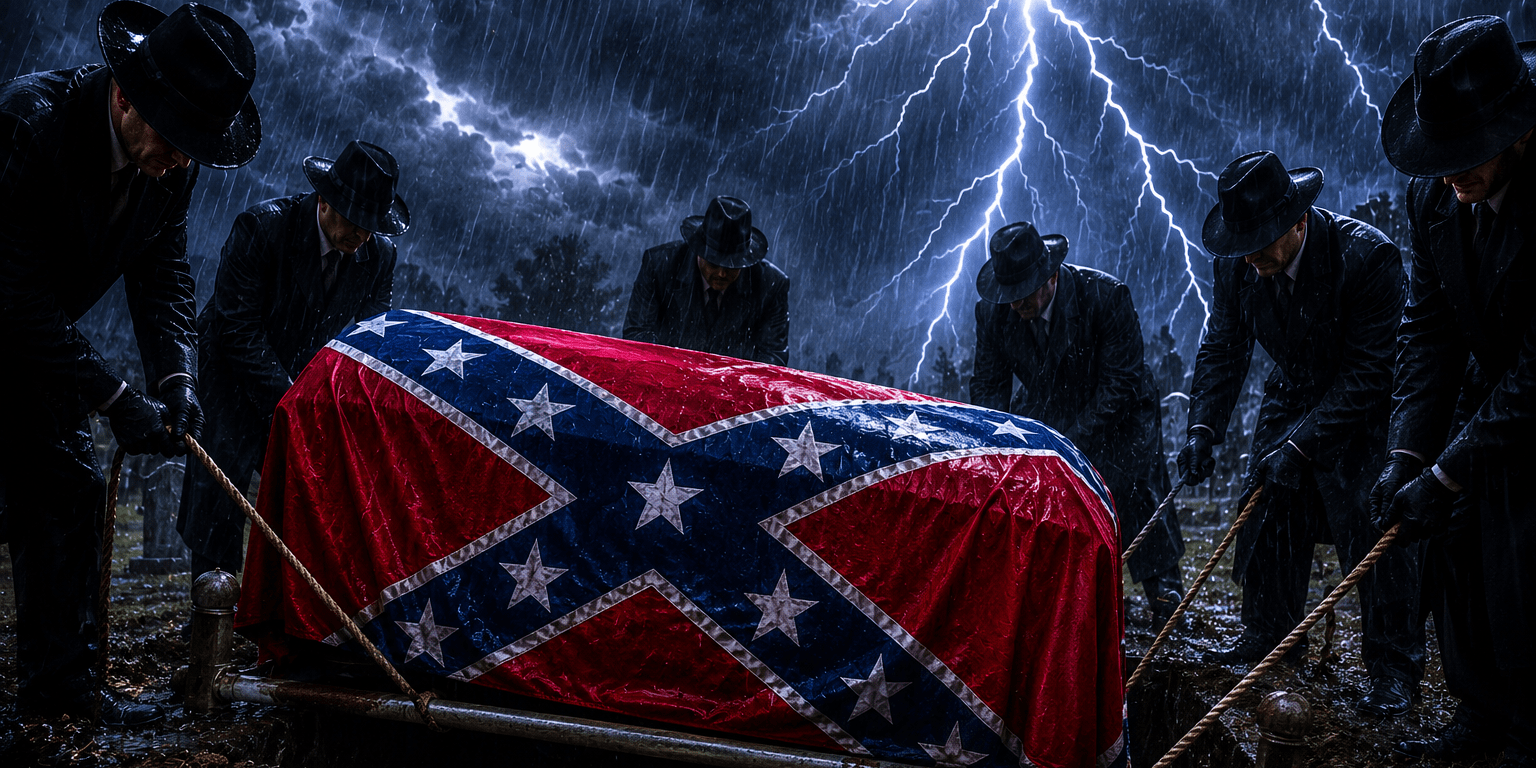
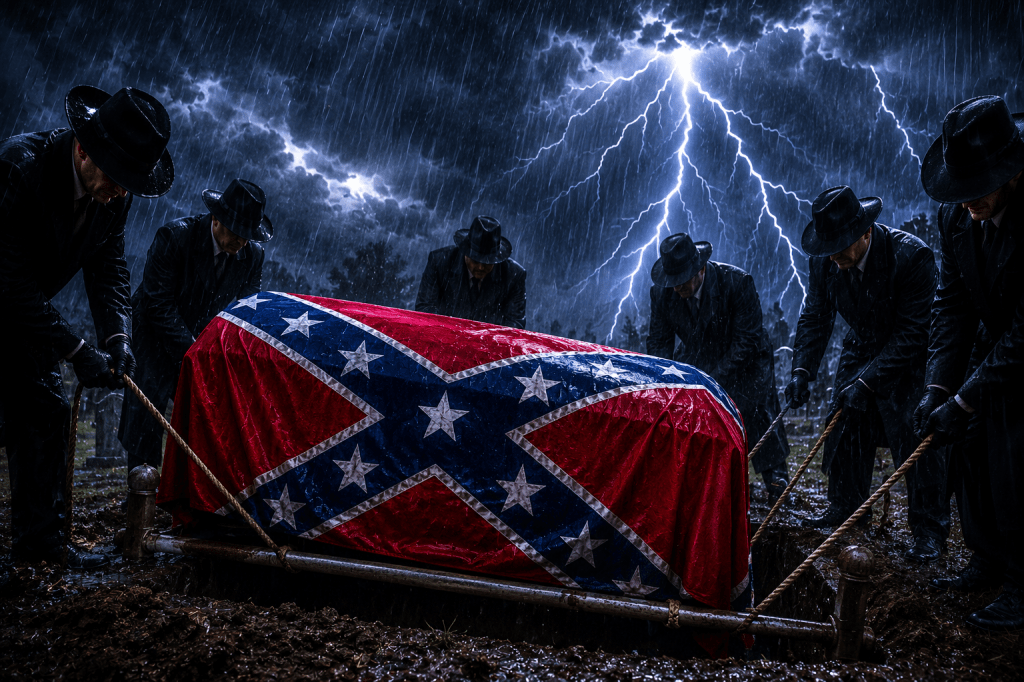
The Confederacy is often remembered as a failed rebellion that ended with the Civil War in 1865. Militarily, that is true. The Confederate States of America surrendered, its government collapsed, and the Union was preserved. If we are honest about the history of this country, the military defeat of the Confederacy did not necessarily mean the defeat of the ideology that sustained it. The only thing that was truly defeated was the military effort. Much of everything else adapted, reorganized, and became more concerted.
To understand the afterlife of the Confederacy, we must first understand what the Confederacy actually was. The South did not secede over vague economic disagreements or abstract debates over “states’ rights” alone. The declarations of secession written by Confederate states made their intentions clear. The preservation of slavery, racial hierarchy, and the economic and political system built upon Black enslavement sat at the center of their decision to leave the Union. Southern political leaders openly framed emancipation and Black citizenship as existential threats to their culture, power, and way of life, stoked by fear of retaliation for the hundreds of years of enslavement.
Embedded within that vision was a deeply rooted belief about whom America was meant to belong. The Confederacy represented more than a breakaway government. It represented a racial and social order many white Southerners believed was divinely justified, historically necessary, and worth killing for. Even after losing the war, many former Confederates did not view themselves as morally defeated. They viewed themselves as temporarily overpowered.
Even the immediate aftermath of the Civil War reflected America’s unwillingness to fully dismantle Confederate power. President Andrew Johnson issued sweeping pardons to former Confederates, allowing many Southern elites to quickly regain political and economic influence. Rather than uprooting the ideology that fueled secession, much of the old leadership class was reintegrated back into American public life.
For a brief moment during Reconstruction, the entire social order of the South was disrupted. Black Americans voted, held office, built schools, established businesses, acquired land, and participated in American democracy in ways previously unimaginable under slavery. Federal troops occupied former Confederate states, and the promise of a multiracial democracy briefly emerged from the ashes of the war.
But Reconstruction also revealed something critical about the nation itself. Large portions of white America, North and South alike, eventually grew exhausted by the work required to sustain Black freedom. White Southern resistance intensified through violence, intimidation, propaganda, and organized terror. The Ku Klux Klan emerged not as a historical accident, but as a direct response to Black advancement and political participation. Its purpose was not hidden. It was to restore racial control through fear.
The violence became so widespread that Congress passed the Ku Klux Klan Act of 1871, granting the federal government authority to combat organized white supremacist terrorism in the South. The legislation itself serves as evidence of how aggressively racial violence was used to restore the social order Confederates believed they had lost.
The election of Rutherford B. Hayes and the Compromise of 1877 marked one of the most consequential turning points in American history. In exchange for resolving the contested presidential election, federal troops were withdrawn from the South, effectively ending Reconstruction. What followed was not reconciliation rooted in justice, but the reassertion of white Southern political control. The promises made to formerly enslaved Black Americans were abandoned, while many of the social assumptions of the Confederacy quietly regained legitimacy through segregation, disenfranchisement, and racial violence.
This is where the afterlife of the Confederacy truly begins to reveal itself.
The Confederacy did not survive as a nation, but its worldview survived through inheritance. Lost Cause mythology reframed the Civil War as noble resistance rather than a fight to preserve slavery, while monuments, flags, churches, schools, and organizations like the United Daughters of the Confederacy helped normalize distorted understandings of race, citizenship, and American identity through textbooks, memorials, and public memory. Hatred rarely sustains itself naturally across generations. It is taught, protected, repeated, and institutionalized.
Hatred rarely sustains itself naturally across generations. It is taught, protected, repeated, and institutionalized.
The Ku Klux Klan became one of the clearest manifestations of this inheritance. White robes, burning crosses, lynchings, and racial terror were not disconnected from the Confederacy’s ideology. They were extensions of it. The methods evolved, but the underlying purpose remained strikingly familiar: preserving a racial hierarchy through intimidation, exclusion, and violence. Even as the language surrounding race changed over time, the fear of losing political, social, and cultural dominance remained deeply embedded within American life.
The afterlife of the Confederacy did not remain confined to the South either. It spread through housing policy, policing, education, voting restrictions, public memory, and political rhetoric. It embedded itself into the geography of American inequality and into national debates over who deserves full access to citizenship, safety, dignity, and power.
This is why conversations about the Confederacy continue to provoke such fierce reactions today. What people are often defending is not simply a flag or a monument, but a version of American identity tied to hierarchy, exclusion, nostalgia, and selective memory. The language changes. The symbols evolve. But the through lines remain.
In recent years, the United States has once again witnessed the rise of movements rooted in grievance, nationalism, historical revisionism, and fear of demographic and cultural change. Contemporary rhetoric surrounding demographic “replacement,” immigration, and cultural decline echoes older fears that fueled white backlash during Reconstruction and segregation. Though the language has modernized, anxieties over racial and political power remain deeply embedded within American public life.
The struggle over education and historical memory has also persisted. Modern battles over curriculum, book bans, race, identity, and what students should be allowed to learn reflect a continuing struggle over who gets to shape America’s historical narrative and which truths are considered acceptable within public education. The fight over memory did not end with the Lost Cause era. It simply evolved.
Extremist texts like The Turner Diaries, which influenced multiple acts of domestic terrorism, reveal how white supremacist movements continued to imagine violent resistance as necessary for preserving racial and political dominance long after the Civil War ended. We witnessed echoes of this ideology during the January 6th attack on the United States Capitol, where Confederate imagery once again appeared in open defiance of the federal government itself.
None of this means history repeats itself in identical form. History adapts. Ideologies evolve. But it would be dishonest to ignore the ways old assumptions continue to reassert themselves beneath new language and modern political branding.
Jefferson Davis, President of the Confederacy, once suggested that “the principles for which we contend would reassert themselves again in another time.” Whether intended as prophecy or warning, the statement forces an uncomfortable question upon the nation: what exactly survived after Appomattox?
The answer is not simple, because America itself remains conflicted over how honestly it is willing to confront its past. The country often prefers narratives of closure. We celebrate the ending of slavery, the victories of the Civil Rights Movement, and moments of democratic progress as though injustice simply disappeared once laws changed. History does not vanish simply because a nation declares itself “healed.”
Some things survive in policy.
Some survive in memory.
Some survive in silence.
Some survive in institutions.
Some survive in the stories nations tell themselves to avoid confronting what was never fully buried.
That is the afterlife of the Confederacy.
And if we, as a country, continue to struggle with accepting the documented origins and evolution of white supremacy in America, then we should begin asking ourselves a larger question:
How will future generations be encouraged or allowed to remember this era sixty years from now?

Educator & Future Public Servant
(Inspired by those who led with truth)
Discover more from Three-Fifths
Subscribe to get the latest posts sent to your email.

