
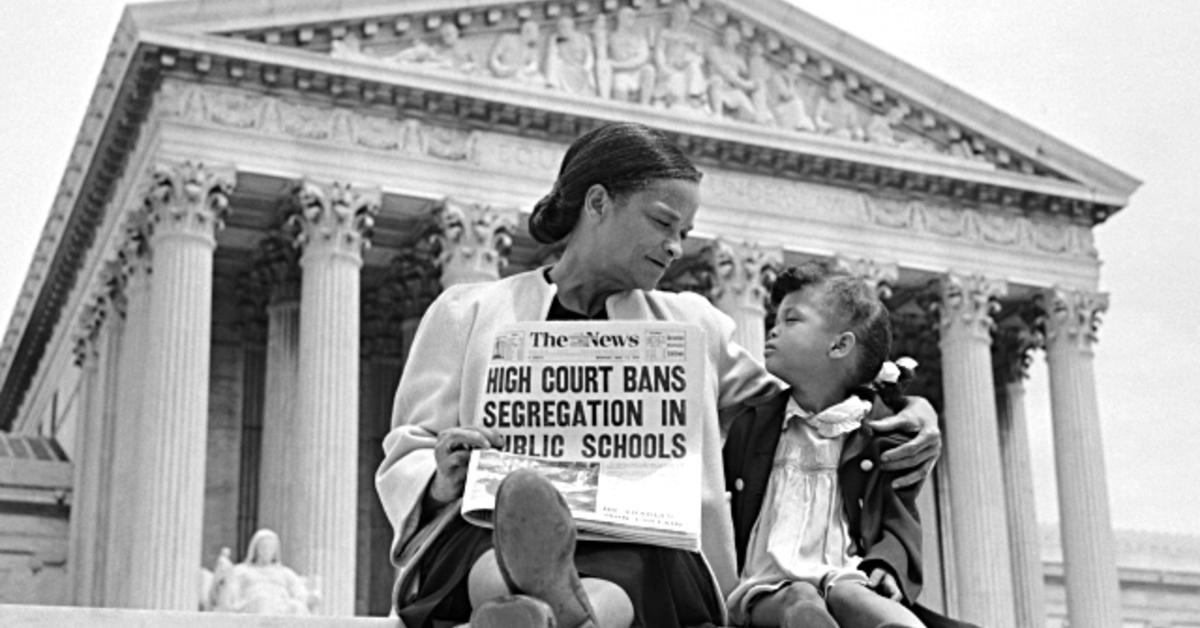
There was a time in this country when certain people were prohibited from learning to read or write simply because of the color of their skin. Anti‑literacy laws made it illegal for Black people to read, write, or even own a book.¹ The denial of knowledge to people of color was woven into the fabric of this nation. As if one group believed it had the authority to control who could learn, think, and know. But knowledge is not property. It cannot be owned.
In many Southern states, it was not only illegal for Black people to learn to read, but also illegal for anyone to teach them. After emancipation, the chains were lifted from Black bodies only to be tightened around Black minds through the continued denial and policing of education. Black communities pushed back by building their own schools because they understood that learning to read was an act of liberation.² As those schools grew, churches quickly became central sites of teaching and gathering. Yet even as Black children filled the churches and one‑room classrooms their communities built with their own hands, the nation created new systems to keep them separate and unequal.
History shows a pattern. Every time Black progress rose, regression reinvented itself. New laws. New language. Same intent. Each generation found fresh ways to preserve the old order, shifting from chains to codes, from statutes to school policies, from explicit exclusion to quiet obstruction, and most recently, shifting from race to the language of partisan politics. The form changed to look more acceptable, but the function stayed the same. Different box. Different wrapping. Different bow. But when you open the box, it’s still racism. The tactics changed, but the purpose never did. And those tactics showed up everywhere, especially in schools. Jim Crow ensured that Black schools received fewer resources, outdated books, and crumbling buildings.³
When Brown v. Board of Education declared segregation in public schools unconstitutional in 1954,⁴ it was celebrated as a turning point. The ruling overturned Plessy v. Ferguson and declared that separate educational facilities are inherently unequal.5 But the decision changed the law long before it changed the beliefs of those responsible for teaching, evaluating, and leading Black children.
A year later, the Court issued Brown II, ordering states to desegregate schools with all deliberate speed.⁶ The phrase allowed districts to delay integration for years. Many states responded with massive resistance, school closures, and new policies designed to preserve racial separation without explicitly violating the law.⁷ The tactics evolved, but the pattern remains unmistakably present today. It resurfaces in the weakening of Section 2 of the Voting Rights Act, which now limits the ability to challenge discriminatory voting practices and preserves political power while avoiding any direct mention of race.⁸ Both moments reveal the same strategy. When the law moves toward equality, new structures appear to maintain the old order.
Although today’s school hallways, bustling with children from diverse backgrounds and classrooms, appear outwardly integrated, what remains unseen are the beliefs and mindsets of the adults who bring their own perspectives into the classroom. These mindsets did not disappear with new laws; they were carried forward. The beliefs that lived on from generation to generation, taught in homes and reinforced in communities, including the prejudices that were never challenged. The quiet assumptions that walk into the room before a child ever does. The judgments that shape who is seen as capable, who is labeled, who is supported, who is doubted, and who is dismissed.
Throughout my career as an educator, I have encountered experiences that revealed how deeply some of these mindsets persist. Some years ago, I interviewed for a teaching position in a large district. The principal expressed enthusiasm for my résumé and experience, but the conversation took a turn I will never forget. She explained that many families in that school community held strong views about who they felt should teach their children. She shared that the previous teacher, also a person of color, had faced constant, unwarranted complaints. The principal feared that hiring another Black educator would trigger the same backlash. She ultimately referred me to another school she believed would be more welcoming. I accepted the position with gratitude, but I also carried the weight of truths I thought were long gone, yet here they were staring me in the face in the twenty‑first century.
This was not an isolated moment. At another school, I was in my evaluation meeting, where the principal began by telling me that it was very difficult for any teacher to earn a highly effective rating there. What this principal did not know was that I had already earned that rating at a previous school. The message was subtle and polished, but it was clear. It was a way of lowering expectations before the evaluation even began. What disturbed me most about this exchange was that the principal wasn’t even aware of what her own comment revealed. These experiences taught me that the afterlife of segregation does not always announce itself. Sometimes it arrives in the form of professional courtesy, quiet warnings, or lowered ceilings disguised as neutral policy.
I have learned that in some schools, the afterlife of segregation is not loud. It is subtle. It is polite. It is professional. It shows up in patterns. It emerges in the patterns of who is sent for intervention, who is encouraged to pursue advanced coursework, which families receive steady communication, and whose concerns quietly fall to the margins. It shows up in how the behavior of Black boys and girls is interpreted, how educators of color are evaluated, and how leadership pathways narrow depending on the mindset of whoever occupies the principal’s chair. I have witnessed schools where no educators of color held leadership roles despite public commitments to diversity. I have seen teachers of color whose strong performance data did not translate into recognition or advancement. When they voiced legitimate concerns, they were met with negativity. I have seen students of color placed into remedial programs not because they lacked ability, but because their curiosity or energy was misread. These experiences are not isolated. They reflect a quiet machinery of beliefs and practices that never fully disappeared.
What many people do not realize is that beneath the surface of some school districts lies an ecosystem of inherited mindsets. These beliefs do not announce themselves. They operate in decisions and patterns. Laws may change, but the mindset of separate and unequal continues to move like a quiet current through school hallways, unseen by those who have never had to witness the system from the vantage point of Black educators or families of color.
When the Supreme Court handed down Brown v. Board of Education, it declared that separate schools were inherently unequal.⁴ But what the ruling could not do was uproot the beliefs that built those systems in the first place. Segregation was a mindset. And mindsets do not disappear with the stroke of a pen.
Today, while buildings may be integrated, the underlying beliefs that once drove segregation still subtly influence the decisions of some school leaders. The afterlife of Brown v. Board of Education is not found in the law itself. It is found in the daily experiences of children and educators of color who continue to navigate systems never designed with them in mind.
Brown v. Board of Education promised equality. What we received was the appearance of equality, a carefully constructed smokescreen. You can be in the same building and still not be treated the same. You can sit in the same classroom and still be handed outdated textbooks and limited resources. You can work in the same school and still be overlooked for leadership roles, even when you hold stronger credentials and a proven record. Parents of students of color may be welcomed into the same schools as other families, yet their concerns are not met with the same urgency, attention, or care. Integration changed the seating chart. It did not change the mindset.
And until the mindset changes, equality will remain a promise this nation has yet to keep. Until individuals are willing to examine their own thinking, retrain the patterns they inherited, and confront the origins of those beliefs, we will keep raising new school walls on the same old foundation and wondering why the fractures never fade. Equality has never been about sharing buildings. It has always required adults with the courage to unlearn what history handed them, to disrupt patterns that cause harm, and to choose a different path for the children they serve. Because the mindset rooted in a history of inequality must be stripped from our schools in every form it takes, whether subtle or overt, if we ever hope to build an education system that is not haunted by the architecture of its past.
Discover more from Three-Fifths
Subscribe to get the latest posts sent to your email.


