
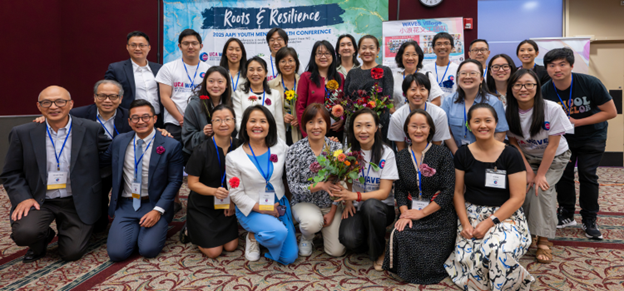
Last week, our community-based organization (CBO), UCA WAVES – United Chinese Americans Wellness, Advocacy, Voices, Education and Support – advertised an opportunity for suicide prevention training through WeChat, the most popular social media platform for Chinese American immigrants worldwide. Within 24 hours, all 30 spots were filled, and a significant waitlist had formed.
Suicide is a highly stigmatized topic for Asian and other minoritized communities, and ordinarily, one would expect that we would have a hard time filling such a training. How do we explain this outcome?
Let’s peel off the layers of the onion.
In the Asian community, stigma plays a major role in inhibiting help-seeking for mental health problems. Stigma intersects with factors such as systemic racism (e.g., the model minority myth), immigration trauma, language access, intergenerational communication conflicts, and other cultural barriers limiting discussions about mental health.
The critical role of stigma is exemplified by another conversation I had with our community health worker (CHW) leader for Strong Minds Strong Communities, a one-on-one mental health support program. Like the suicide prevention training, our Strong Minds program quickly filled as soon as our two CHWs were ready to take clients after 5 months of training. At the same time, participants expressed a preference that others not know they were in the program due to stigma and shame about being associated with mental health issues. In the award-winning documentary produced by WAVES, “Silent War: Asian Americans Reckoning with Mental Health,” a young Chinese American woman relates that her grandfather in China would rather lie about her father’s suicide and continue to tell friends and acquaintances that “he is doing well in the US” than tell the truth – all because of cultural stigma. This additional layer of deception and “saving face” continues to greatly pain her and her family.
Perhaps because of this deeply rooted stigma, trust is paramount when addressing mental health among immigrant and other underserved communities. As trusted members of the community, CBOs have access to inherent networks for outreach through word of mouth and culturally appropriate communication channels such as WeChat. In contrast, health care settings such as university counseling centers and mental health clinics may be perceived as overly formal and untrustworthy due to historical trauma and racial/cultural bias. In the Asian community, another layer is cultural beliefs. Counseling is perceived as “Western” medicine or/and/or culturally non-congruent. Community members hear stories about how formal health care can sometimes do more harm than good, especially when cultural and linguistic congruency is lacking. Many of our community members have shared experiences of prematurely discontinuing therapy due to not being “understood” by Western counselors, including with regard to experiences of racism. Therefore, the success of our initiatives in spite of tremendous stigma can largely be traced to trust that has developed over time along with culturally congruent language and framing.
Of course, mental health does not exist in a vacuum. Instead, it is determined by the complex interplay of biological, psychological, sociocultural, and spiritual factors, as well as lived experiences. A major social and political factor affecting our community is racism. The Silent War documentary highlights the story of a young Sikh American who was bullied so relentlessly by his peers about “wearing a bomb on his head” that he took the drastic step of cutting off his hair to fit in – a practice he describes as akin to cutting off an arm in his religious and cultural community. Another sign of his racialized trauma response was his habit of always sitting at the back of the bus so he could foresee any potential physical or verbal attacks.
Such individual narratives are borne out by national statistics. According to a landmark study commissioned by The Asian American Foundation, “Beyond the Surface: Understanding Mental Health Among Asian Americans, Native Hawaiians, and Pacific Islander Youth,” 93% of Asian American, Native Hawaiian, and Pacific Islander young people have experienced race-based discrimination in the past 12 months – a shockingly high figure. Racism against Asian Americans is well documented throughout US history, from the 1882 Chinese Exclusion Act to the incarceration of Japanese Americans during WWII. Sadly, history repeated itself during COVID when incidents of anti-Asian hate increased by 900% and greatly affected mental health in our community. One study found that Asian Americans who have experienced racism were more distressed by anti-Asian hate than the pandemic itself. In 2024, over half of AAPI (Asian American/Pacific Islander) adults (53%) and almost 3 in 4 AAPI young adults (74%) experienced a hate act last year due to their race, ethnicity, or nationality, according to the nonprofit organization Stop AAPI Hate.
Racism is not the only systemic factor contributing to increased mental health challenges in AAPI communities. Lack of funding has led to a lack of representation in research and, therefore, a lack of data capturing AAPI experiences. Only 0.17% of funding by the National Institutes of Health (NIH) has been allocated to the AAPI population over a 25-year period, and philanthropy has allocated less than 0.2% – yet AAPIs constitute 7.5% of the US population. So many young and passionate researchers have told us that although they really want to focus on studying AAPI mental health or populations, they had to pivot their focus to other topics because their advisors or departments do not have funding to support their research. The lack of data and reporting also contributes to misconceptions that AAPIs are a uniformly successful group without any problems, further perpetuating disinvestment in our community.
Another major factor affecting AAPI mental health is the near-total absence of literacy surrounding these topics. A lack of language and culturally relevant terminology to express basic mental health concepts can inhibit help-seeking from the outset. In many Asian cultures, feelings are not commonly expressed or validated due to cultural values that prioritize emotional reserve or even inhibition. This is especially true in families with American-born children to first-generation immigrant parents.
For example, one of us (Lily) obtained my college nursing degree in China in the 1980s; psychiatry nursing was almost completely absent from the curriculum. The only memory I had of the subject was observing electroconvulsive therapy (“shock therapy”) to a patient as part of a medical procedure. While raising my five children, it never crossed my mind that they might experience mental health challenges. Unfortunately, two of my children struggled with persistent physical symptoms (e.g., stomachache) for many years before they were finally diagnosed with anxiety disorders late in high school or college. Furthermore, many first-generation immigrant parents with language barriers rely on their American-born children to translate in schools, doctors’ offices, etc., placing an enormous burden on the children while also undermining the parents’ authority. Parents worry that they are viewed as “lesser than” their children, and that they are losing “control” of their status as elders in the household, contributing to high stress levels in studies of immigrant and refugee parents.
Peeling down to yet another layer – many first-generation immigrants carry unprocessed trauma from their home countries and/or the migration process itself. For many, the experience of being uprooted from their families, communities, and cultures of origin results in a severing of social support and challenges with identity formation among young adults.. Their visa status or family financial needs often require them to take work in much less desirable positions. It is not uncommon for highly qualified and skilled professionals to be offered only low-paying jobs.
The refugee experience is often even more traumatic than that of immigrants. For Karen refugees – an ethnic minority from Burma (Myanmar) fleeing civil war and military ethnic cleansing – the process of escaping a war-torn country, along with continued persecution and abuse in the refugee camps, compounds to negatively impact mental health. Although Karen community leaders identify mental health among the top health issues facing this community, research shows that very few immigrants or refugees seek professional help. Asian Americans are among the least likely to seek professional mental health services compared to all racial/ethnic groups, and three times less likely than whites, despite a high rate of mental health challenges. The leading cause of death for Asian American youth 15-24 in 2024, according to the newest data published by the CDC.
In the face of the tremendous barriers we have outlined, our community has stepped up in huge waves, relying on our roots and resilience to address the mental health crisis. These solutions draw from cultural strength to ensure our community members are seen and heard, and our struggles are not brushed off. The trust generated from centering the community and individuals with lived experience is critical for advancing solutions. One of the most empowering aspects of our work is seeing parents helping other parents through peer support networks in creative and meaningful ways. Programming that works includes psychoeducation, mental health first aid and suicide prevention training, workforce development of peer support specialists and community health workers, and cultivating the next generations of scholars, advocates, and educators by cultivating mentorship networks with midcareer and senior AAPI mental health providers, researchers, and policy makers. Our members have shown up to town halls and protests, written OpEds, and generally raised our voices to promote mental health and address social and political drivers of health. This would not be possible without building coalitions with funders, researchers, government entities at local/state/federal levels, policymakers, clinicians, and, of course, community members themselves from all generations, as well as solidarity building with the struggles and injustices faced by other minority groups.
Asian Americans face many unique challenges in mental health promotion; we must continue to rely on our roots and resilience through empowering communities. It takes a village – a WAVES village – to turn the tide in AAPI youth suicide prevention.
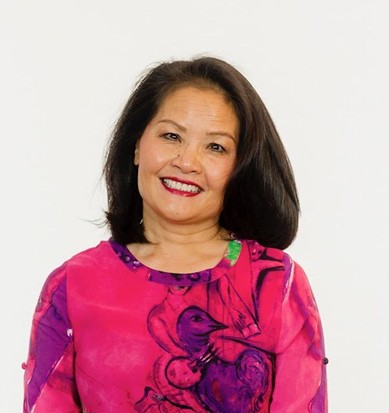
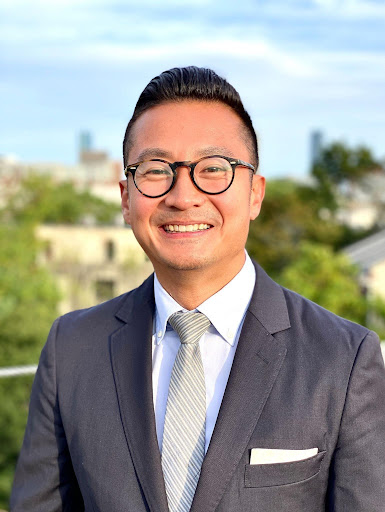
Authors
Discover more from Three-Fifths
Subscribe to get the latest posts sent to your email.

