
This time, it wasn’t a microaggression—my friend was wrong—but it was just as painful.
I learned a lot from the story she told me and if you’re “white,” I hope you do, too.
A punch in the face is easy to understand. It’s a traumatic, tangible incident. If we haven’t experienced it firsthand, we’ve seen it on TV or at a boxing match. Maybe we’ve seen a stranger at the mall with a black eye. It hurts, and we all know it. But a punch in the face is straightforward. It has a beginning and an end, and often, there’s a build-up. Maybe a conversation escalates into violence, a sibling loses their temper, or you do something to provoke them.
But today, I will tell you about a different kind of punch. One without a beginning or end. It can happen anytime, anywhere, anyplace. It can strike multiple times a day. You never know when or who will be the aggressor. The constant anticipation keeps you on edge. It may never actually happen that day, but you just don’t know when it might.
A friend of mine once shared a story that’s the closest I’ll ever come to understanding this invisible punch. This is what she told me:
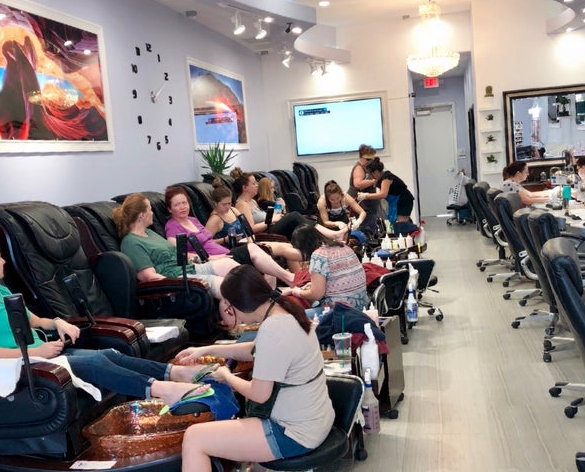
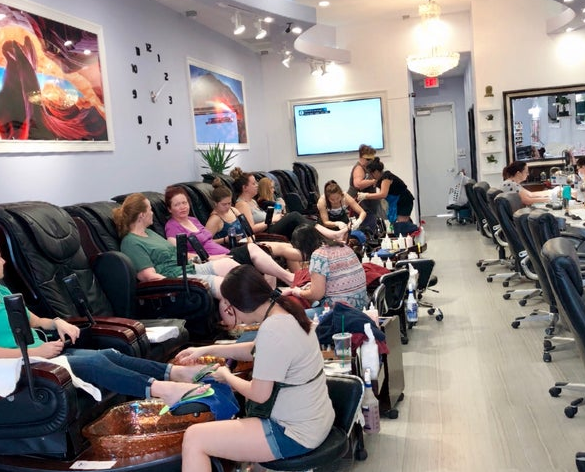
I was at the mall getting my nails done. The salon was bustling, with customers coming and going, appointments, and drop-ins, all on tight schedules. It felt like a crowded doctor’s office where everyone’s appointments were public. I was told to wait in the waiting area for my turn. I took out my phone to check messages, knowing I couldn’t use it for a while until after my nails were completely dry.
As I glanced at my phone, I noticed another customer staring at me. Well, I wasn’t completely sure at first. But then it became clear—she was definitely staring. “Whatever,” I thought as she continued to look at me, no smile, just a steady gaze. “What’s her problem?” I felt my blood pressure rising and my heart beating faster. It wasn’t exactly a dirty look, but it was unnerving.
I waited to be called for twenty minutes, but the staring didn’t stop. It was the kind of stare that made you question yourself. Did I know her? Had I done something wrong? I tried to ignore her but couldn’t shake the feeling of being watched.
There was a moment when I considered leaving. Getting my nails done wasn’t worth this tension. Why was she eyeballing me like that? This was far from relaxing. I thought about confronting her but quickly dismissed the idea. As the only Black woman in the salon, I couldn’t afford to be seen as the aggressor. Images of the angry Black woman stereotype flashed through my mind—police being called, words being exchanged, an ugly scene unfolding. I just wanted my nails done and to go home.
Then, the woman started walking towards me. My heart raced. What was she going to do? Was she offended that a Black woman dared to occupy a “white” space? She was just a few feet away when, through the chatter and nail dryer noise, I heard her say, “You’re not going to believe this, but I have the exact same outfit you’re wearing at home! Where did you get yours?!”
Microaggressions, I’ve been told, are like death by a thousand paper cuts. In most cases, you don’t know when, where, or even why. Was it a microaggression or just a simple misinterpretation? Am I just making a big deal out of nothing? You start losing confidence. Maybe you even start to embrace the pain of being treated as worthless. Sometimes, the perpetrator may be so oblivious they feel they’ve done nothing wrong. Maybe they make it all about them and their feelings. Maybe you don’t say anything, so you don’t make a scene. How dare you accuse them of being racist?
Microaggressions mess with your head. Was it intentional? A misunderstanding? Intimidation? Willful ignorance? Some sort of “white” supremacy power play? Was it my imagination? Could this person be dangerous? Existing in public spaces while Black can certainly mess with your head, your self-esteem, and your life.
You never know when it’s coming and from whom. Was it purposeful? How far will it go? Will there be more just around the corner? It doesn’t have to be purposeful, either.
Maybe microaggressions are worse than a punch in the face. At least a punch is recognizable, intentional, and a tangible act of violence. Microaggressions are an invisible form of violence often denied, gaslighted, and turned around so the perpetrator makes themselves the innocent victim. As my friend told me this story, she began to wonder if maybe she just imagined it all.
This time, it wasn’t a microaggression. It just looked and felt like one. My friend was wrong… this time. But it was only because she had experienced so many with no warning throughout her life that she didn’t know.
Like a terrorist threat, the possibility is ever-present, looming overhead. Even if it never happens, it could happen… and you know it will… you just have no clue when.
As my friend went to pay, the salon told her they took cash only. She could have sworn the woman just ahead of her used a credit card.

Discover more from Three-Fifths
Subscribe to get the latest posts sent to your email.

