
Black Gratitude, Sacred Survival, and the Refusal to Let Suffering Have the Last Word
A form of gratitude urges wounded individuals to thank their wounds. It often arises when suffering is oversimplified, pain is seen as a quick lesson, or victims are told to focus on remaining strengths instead of questioning loss. Although it may seem compassionate or spiritual, it secretly expects sufferers to keep others at ease by enduring without showing too much anger about survival.
Black communities have experienced this kind of gratitude for generations. We’ve been conditioned to acknowledge progress quietly and to celebrate opportunities without questioning why access was restricted for so long. When gratitude is separated from truth, it shifts from a genuine virtue to a tool for social conformity: urging us to feel grateful enough so that others don’t feel compelled to take responsibility for the circumstances we’ve endured.
That is not the gratitude I inherited.
The gratitude I recognize in Black life didn’t depend on thanking God for slavery, segregation, racial violence, economic exclusion, or discrimination. Our ancestors weren’t thankful for the wound but for what it couldn’t destroy. They weren’t grateful suffering was good but because it didn’t take their humanity. Their gratitude showed oppressive conditions wouldn’t define their lives.
Black people laughed, sang, dressed beautifully, and worshiped with dignity despite oppression, creating music, language, cuisine, and traditions despite restrictions. Resilience shows strength, not justification for injustice. Surviving injustice doesn’t excuse it.
Joy can therefore be resistance without turning into denial. It refuses to surrender every room of the human soul to suffering. Gratitude can coexist with anger, mourning, exhaustion, protest, and an uncompromising demand for justice. We diminish people when we require that pain become their entire identity, just as surely as when we ask them to pretend the pain is not there.
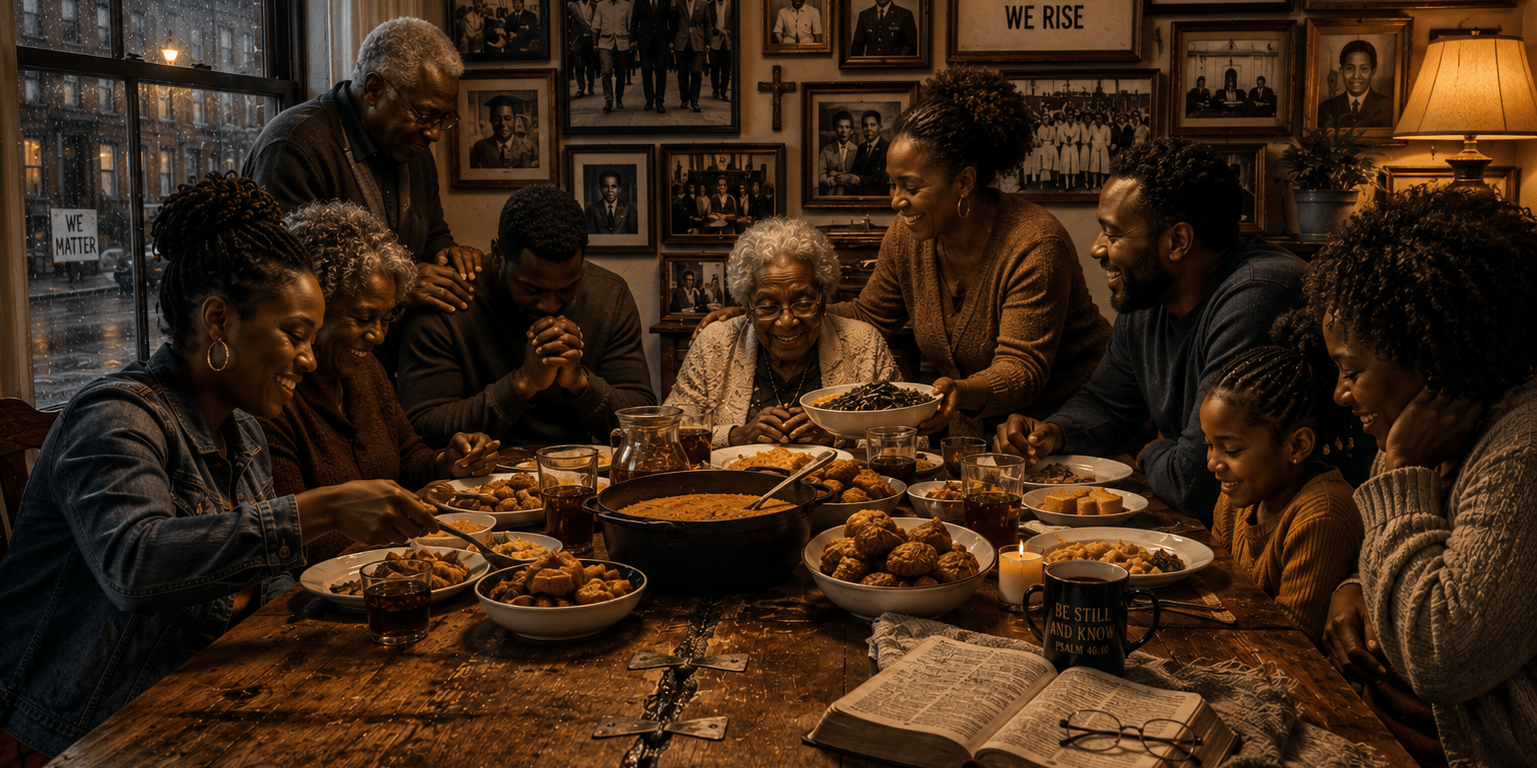
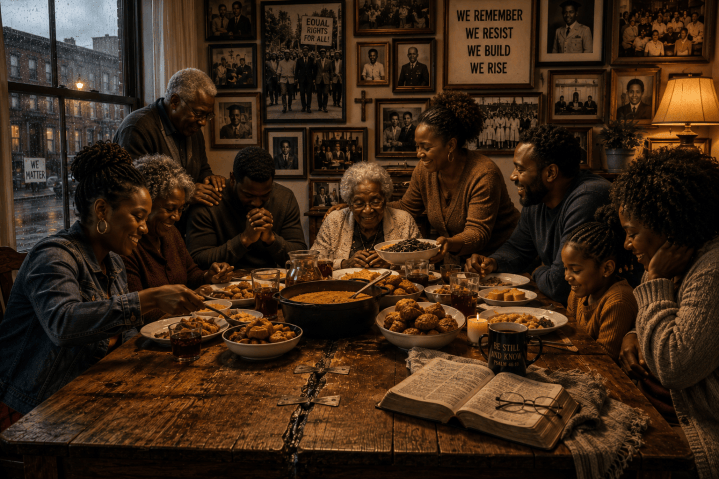
This complexity is most visible around the Black table, which has served as a sanctuary, classroom, counseling space, historical repository, and family wellness center. It helped people discover their identities, origins, face struggles, seek prayer, or receive meals after tough weeks. The table nourished both body and spirit.
Recipes crossed generations without written records, measurements were in hands, and enough food was when guests could still be invited to eat. But scarcity was unjust—families lacked fair wages, safe housing, healthcare, good schools, and opportunity. The shortage was unfair; sharing was sacred. We should honor those who shared without glorifying the conditions that required it.
A key truth about Black wellness is that our survival wasn’t just due to individual resilience. It was rooted in communal support: people watching over children, opening homes, driving others to work, staying through hospital nights, bringing food after funerals, or praying when words failed. Even before “community care” entered wellness language, our communities practiced it because someone’s survival depended on others choosing to care rather than turn away.
In this tradition, gratitude is seen as relational. It honors those who helped us along the way and ancestors who created institutions like churches, schools, businesses, newspapers, mutual-aid societies, neighborhood networks, and family traditions, knowing they might never benefit from their efforts. They understood survival as a multigenerational pursuit. Their gratitude fueled resistance rather than dampening it. When understood properly, gratitude doesn’t lessen our desire for justice; instead, it emphasizes why justice is essential by reflecting people’s worth.
Nevertheless, a risky divide exists between saying “I am grateful” and feeling obliged to accept less. Workers are encouraged to be thankful for their jobs despite low wages. Women are commended for their resilience, yet they are still burdened with heavy loads. Black communities hear how much America has improved, even as they face ongoing struggles. Gratitude turns dangerous when progress is used as a shield against criticism of ongoing issues.
Religion can distort understanding if gratitude is emphasized without addressing justice. While ‘Count your blessings” can be sound spiritual advice, it becomes harsh if it replaces facing the root causes of suffering. Faith does not demand that injured people reframe their wounds as blessings to believe in God’s presence. Theologically, trusting that God can be with us in suffering is different from asserting that all sources of our pain are divine in origin.
Providence should never serve as an excuse for avoidable harm.
Some things deserve lamentation. Some require resistance. Some demand repair, and some should never have happened. Naming them is not a lack of gratitude; it is moral clarity.
This matters for wellness because survival shouldn’t be the sole goal. We can respect ancestors who endured hardships without expecting their descendants to always push limits. Rest suggests our bodies are more than tools for work. Therapy can complement prayer, medicine can coexist with faith, softness can blend with strength, and joy can coexist with seriousness. Respecting endurance isn’t about replicating exhaustion. An inheritance should be a starting point, not another burden.
As November brings families together and gratitude becomes unavoidable, we must reject versions that demand forgetting history, emotional dishonesty, or moral silence. We honor those who suffered by remembering what they preserved, healing wounds, and avoiding passing pain to future generations. Radical gratitude doesn’t mean ignoring pain; it means not letting suffering define us entirely.
We were never grateful for the wound. We were grateful for the hands that dressed it, the people who sat with us as it healed, the ancestors who taught us to survive it, the communities that refused to abandon us, and the faith that reminded many of us that suffering was never the sum of our identity. We were grateful for the laughter that returned, the table that still had room, the song someone remembered, and the story an elder refused to let die.
Perhaps that is what radical gratitude has always meant to people who have had to fight for their humanity: not thanking God for everything that happened, but refusing to let what happened become everything.

Discover more from Three-Fifths
Subscribe to get the latest posts sent to your email.

