
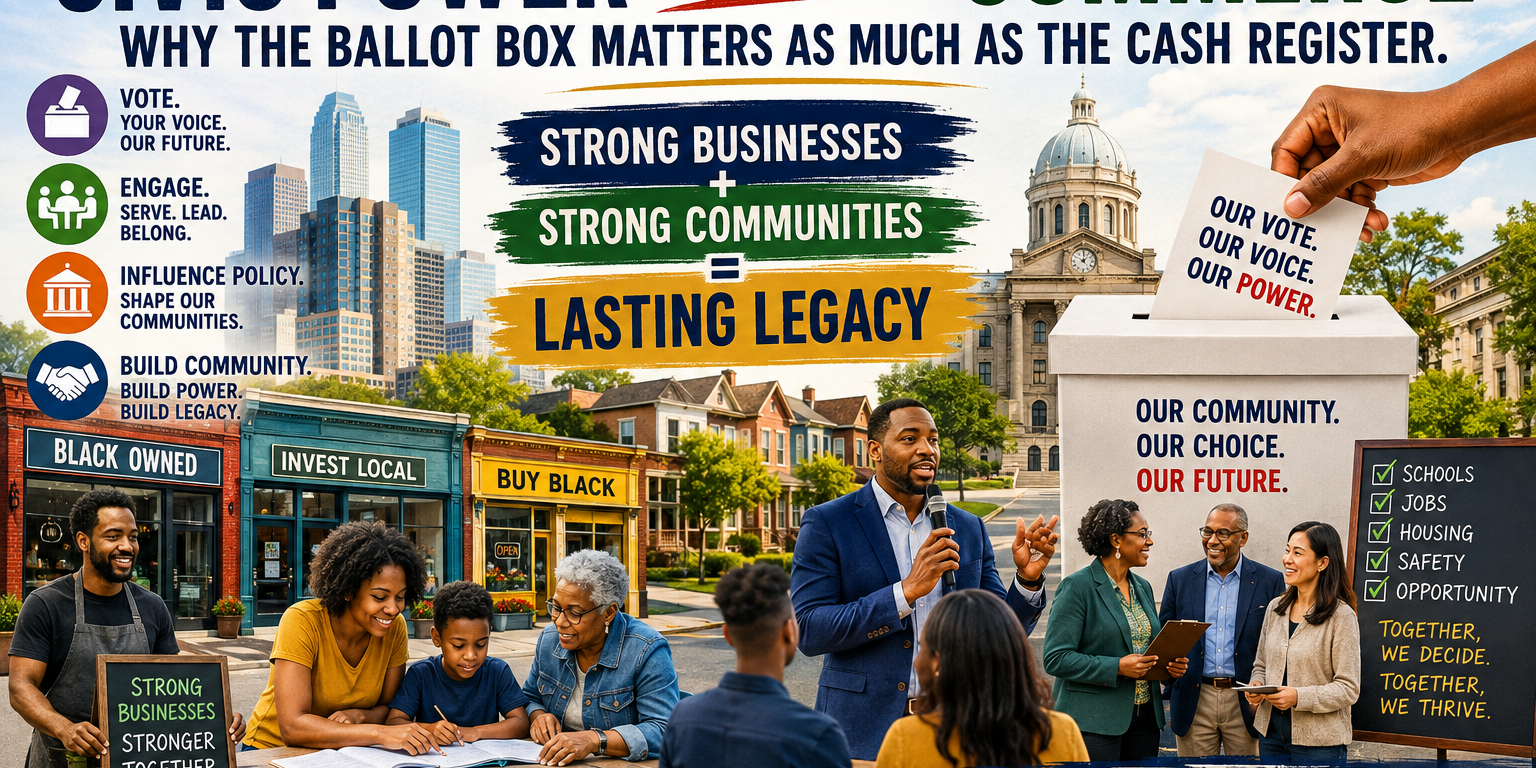
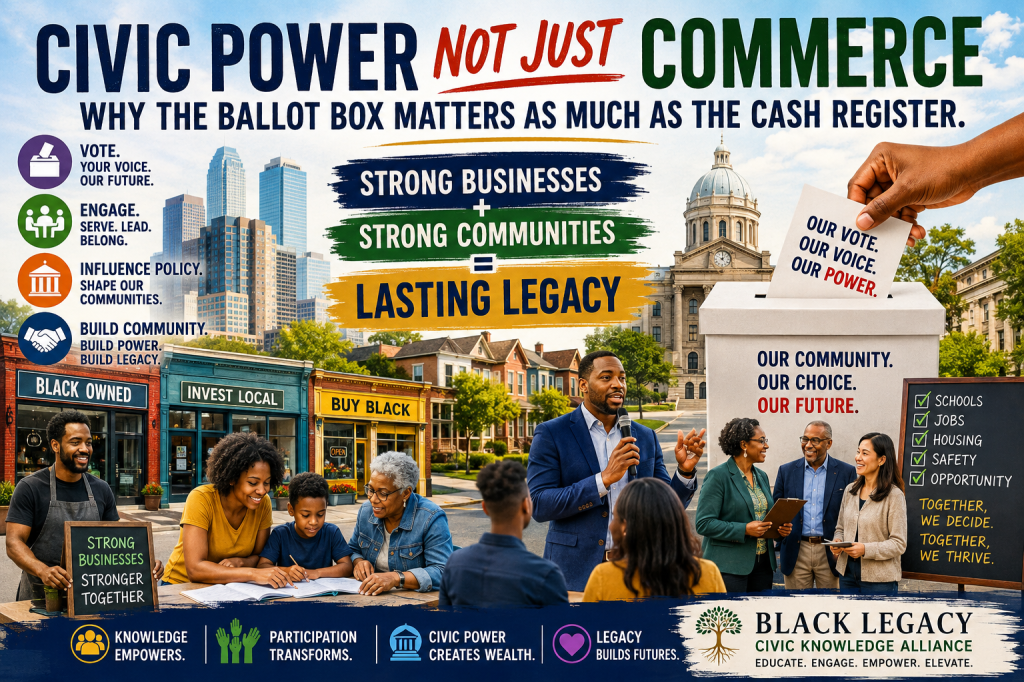
For generations, many people have embraced a simple idea: buy Black, save Black, invest Black, and the community will prosper. The message is appealing because it emphasizes self-determination and places the solution within the community’s own hands. Entrepreneurship and economic support are important tools for advancement, but they are not the complete answer. History shows that individual business success and consumer spending alone have never overcome the structural forces that created and continue to sustain the racial wealth gap.
The greatest progress has come through organized civic power. Voting as a bloc, serving on boards and commissions, influencing public policy, and holding governments accountable have consistently produced measurable results. Economic strength matters, but lasting change requires political and civic engagement.
The Wealth Gap Was Created Through Policy
Understanding the importance of civic engagement begins with understanding how the wealth gap was created. In 2022, the median Black household held approximately 45000 in wealth, while the median White household held about 285000.
These disparities cannot be explained simply by spending habits or a lack of Black-owned businesses. Researchers, including Trevon Logan and Darrick Hamilton, have argued that education, hard work, and personal financial decisions alone cannot close a gap of this magnitude. The problem is larger than individual choices because its causes are too.
Homeownership provides another example. Black families have significantly lower homeownership rates than White families, and homes in predominantly Black neighborhoods are often valued far below comparable properties in other communities. These losses amount to billions of dollars nationwide. Consumer behavior did not create these disparities. Policies and institutions shaped them, and only civic participation and political influence can change them.
Civic Power Produces Results
If the wealth gap is rooted in policy, then civic engagement becomes one of the most effective tools for addressing it. Voting alone will not solve every challenge, but organized civic participation influences who writes the rules governing housing, lending, education, public investment, and economic opportunity.
Research shows that expanded voting rights increased political participation among Black Americans and generated tangible economic benefits for Black communities. These findings reinforce a simple reality. Decisions made at the ballot box often have direct consequences for family finances, business opportunities, and community development.
The relationship between voting and economic well being is not symbolic. It is practical and measurable.
The Importance of Local Government
The impact of civic engagement is often most visible at the local level. Local officials make decisions about schools, infrastructure, public safety, zoning, and economic development. These choices influence daily life more directly than many federal policies.
Yet local elections frequently experience low voter turnout, and participation is often dominated by older, wealthier populations. When communities do not participate fully in local government decisions are made without their voices being adequately represented.
Closing this participation gap requires consistent engagement. Every local election every board meeting and every public hearing presents an opportunity to influence decisions that affect neighborhoods schools and local economies.
Civic Infrastructure Is Economic Infrastructure
Strong communities are built on more than businesses and financial resources. They are strengthened by institutions that bring people together share information and create opportunities for collective action.
Churches neighborhood associations civic organizations and community groups often play a critical role in reducing poverty and improving local outcomes. These institutions create networks of trust support and advocacy that individual consumer spending alone cannot provide.
Economic development and civic development are not separate goals. They reinforce one another. Communities with strong civic institutions are often better equipped to advocate for resources, monitor public spending, and ensure that local governments respond to community needs.
Entrepreneurship Alone Cannot Change the Rules
Supporting Black businesses remains important. Entrepreneurship creates jobs, builds wealth, and strengthens communities. However, businesses must still operate within the systems and policies established by governments and financial institutions.
A Black owned business must obtain loans navigate regulations and compete within markets that have historically shown unequal access and treatment. Black homeowners continue to face challenges related to property valuation and tax burdens that are rooted in broader policy decisions.
Economic success within an unfair system does not automatically make the system fair. Lasting progress requires both economic activity and civic engagement.
Storefronts Alone Cannot Protect a Neighborhood
A neighborhood may have thriving Black owned businesses but its future remains uncertain if critical decisions about taxes zoning development and school funding are being made without meaningful community representation.
Economic activity creates opportunity, but civic engagement protects it. Communities that are organized, informed, and consistently involved in local government are better positioned to preserve their gains and secure long-term stability.
This means more than voting every few years. It means serving on local boards and commissions, participating in school governance, attending public meetings, and demanding accountability in how public resources are allocated. It means building institutions that engage elected officials throughout the year, not only during election season.
Why Black Legacy Civic Knowledge Alliance Exists
Black Legacy Civic Knowledge Alliance exists to support this broader vision. Its mission is not to replace entrepreneurship, investment, or economic development. Instead, it seeks to strengthen the civic foundation that allows those investments to endure.
Business ownership can open the doors of opportunity. Civic engagement helps ensure that the neighborhood around those businesses remains strong, stable, and responsive to the people who live there.
Economic empowerment and civic empowerment are not competing strategies. Together they create the conditions for lasting community progress. When communities build wealth while also building political influence, they gain the power not only to succeed within existing systems but also to shape those systems for future generations.

Sources & Further Reading
-Logan, Trevon, and Darrick Hamilton. Research cited by the Brookings Institution on the racial wealth gap.
– Brookings Institution. “Title of Study.” 2022.
– Derenoncourt, Ellora. Research on the Voting Rights Act and Black economic outcomes, cited in Alexander Razes’s 2022 study, *Economic Inquiry*.
– National Civic League. Data on local officials and local government spending.
– Doctoral study on civic community, church and civic association density, and county poverty rates.
Sources available upon request.
Discover more from Three-Fifths
Subscribe to get the latest posts sent to your email.

