
Emancipation, Backlash, and the Recurring Chains That Bind Us
In June 2026, New York Times opinion writer Mara Gay published a piece condemning the systematic dismantling of Black-majority congressional districts across the South as a “shocking betrayal” of the democratic promise. Enabled by Supreme Court decisions that have progressively weakened the Voting Rights Act of 1965, the erosion Gay describes is not accidental. It is, she argues, a calculated effort to eradicate Black political power at the very moment when that power was beginning to matter. The rock that Nina Simone sang about is melting again.
Gay’s alarm is not new, except in its particulars. It belongs to a recurring pattern that stretches back to the moment the last plantation owner surrendered his documents and the first freed person dared to believe that the country had meant what it said. It is the pattern of the legal victory that carries within it the mechanism of its own undoing, of the right extended on paper and retracted in practice, of the franchise granted in one generation and gerrymandered into irrelevance in the next. The history of Black political life in America is, in this sense, a history of jubilees followed by new codes, of amendments followed by exceptions, of progress made real enough to photograph and then, quietly or violently, unmade.
The essay that follows moves through that history. It is written in a mood of moral urgency and structured grief, in the tradition of those who have insisted that witness is itself a form of action. It names the lynching and the song written to describe it. It follows Harriet Tubman into the dark and the flying African into the air. It traces the architecture of the backlash with the precision it deserves, not to rehearse despair, but because the pattern cannot be broken by those who refuse to see it. What Gay heard in the Supreme Court’s most recent rulings, what she named as betrayal, is the same sound that has been made, at regular intervals, since 1865. This is an attempt to listen to all of it at once.
The Proclamation
They say the word went out like a fire across a dry field. January 1, 1863. And those who had been held within the machinery of the plantation, those who had served as the soil from which profit was extracted, straightened their spines and heard it. Free. They gathered in churches, in clearings, in the dark places where no overseer could see them, and they wept and prayed and called it Jubilee.
But here is what the history books do not linger on: even as the word was still warm in the air, even as it traveled south on the mouths of soldiers and the feet of the formerly enslaved, the law was already being remade. The ink of the Emancipation Proclamation had not dried before the architects of control were at their drawing tables, measuring what could be salvaged from what had been lost.
Nature does not stop being controlled simply because someone signs a paper. The river does not suddenly run free because a map redraws its banks. The body does not stop being the site of someone else’s ambition because a document renames what it is.
Strange Fruit
Billie Holiday stood at the microphone in 1939 and sang what the newspapers would not print. She had been given the song by a white Jewish schoolteacher named Abel Meeropol who had seen a photograph and could not sleep afterward. She sang it slowly, the way you approach something you are afraid of but cannot look away from.
Southern trees bear strange fruit,Blood on the leaves and blood at the root,Black bodies swinging in the southern breeze,Strange fruit hanging from the poplar trees.
Between 1877 and 1950, more than 4,000 Black men, women, and children were lynched in the United States. These were not accidents of history. They were performances. They were held at midday, in town squares, advertised in newspapers. Families brought their children. Photographs were made into postcards and sent through the United States mail.
Emmett Till. Fourteen years old. August 1955. His mother, Mamie Till, demanded an open casket. She said: I want the world to see what they did to my baby. And the world looked, and some wept, and some organized, and some passed laws. And then the mechanisms of backlash turned, like a great stone wheel that never fully stops, and began again.
Jesse Washington. Waco, Texas. May 1916. Seventeen years old. He was burned alive in front of a crowd estimated at fifteen thousand. The mayor watched. The fire chief watched. The university students watched and cheered. The NAACP sent a reporter who described what he saw in a report titled The Waco Horror. The report was placed in the hands of senators. Nothing was done.
The strange fruit was never only a metaphor. It was a policy. It was a message. It was the body made public again, returned to the condition of property, of spectacle, of thing.
In 2026, the trees are still bearing fruit. In Cleveland, Mississippi, a twenty-one-year-old Black freshman named Demartravion “Trey” Reed was found hanging from a tree on the campus of Delta State University. He had been found by a group of student athletes in the early morning. In Charlotte, North Carolina, a sixteen-year-old girl named Juliana Nzita was found hanging from a tree on the property of the United House of Prayer for All People. She was sixteen years old. Both deaths are under investigation. Both families are waiting for answers that the institutions charged with providing them have given communities reason, over and over and over again, not to expect. The country has not yet decided what to call these deaths. History knows what to call them. Billie Holiday sang it in 1939 and the song has not yet been retired.
Sinnerman
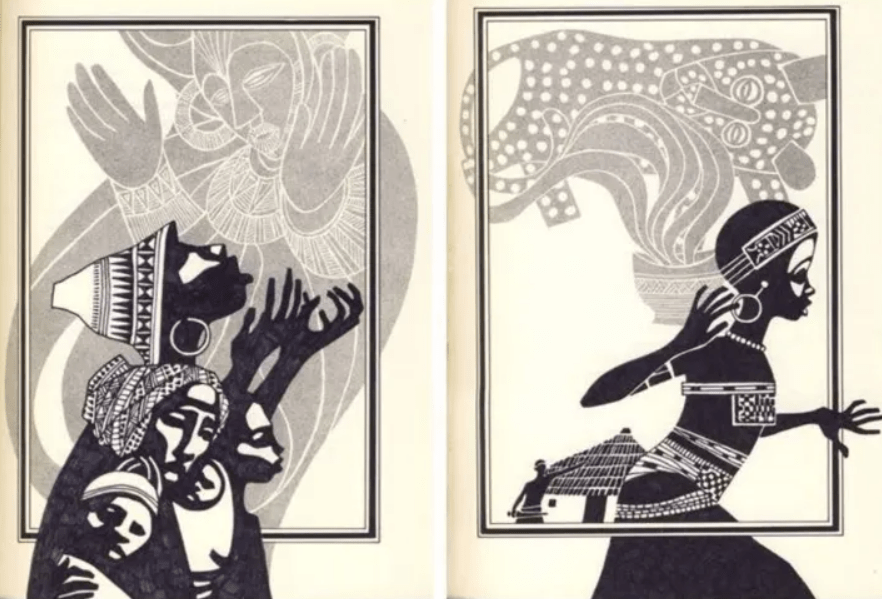
Nina Simone understood that running and reckoning are the same motion. In 1965 she recorded Sinnerman, a spiritual she had known since childhood, a song about a soul fleeing judgment, seeking shelter in the rocks, the river, the sea, the Lord, and finding none.
Run to the rock, the rock was melting, Run to the sea, the sea was boiling,Run to the Lord, Lord, won’t you hide me,Power, Lord.
This is the song of Reconstruction. Of the Great Migration. Of the Civil Rights Act. Of the Obama presidency. Of May 25, 2020, when a Minneapolis police officer pressed his knee into a Black man’s neck for eight minutes and forty-six seconds while George Floyd called for his mother, and a bystander filmed it, and the world watched, and the streets filled from Minneapolis to Melbourne, and for a moment it seemed as though the stone had finally cracked. The sinner in the song is not only the soul seeking forgiveness. The sinner is also the system, running from its own accounting, seeking to outpace the evidence of what it has done.
The Black American has always been running. Running north on the Underground Railroad. Running from the lynch mob. Running to the polls before they close the office. Running from the redlined neighborhood before the bank forecloses. Running toward the microphone, the courtroom, the oval office. Running, and finding the rock melting, the sea rising, the power remaking itself into a new shape of the same old thing.
Sinnerman, where you gonna run to? All on that day.
The Underground and the Ones Who Flew
Harriet Tubman made nineteen journeys into the South and brought out more than three hundred people. She carried a pistol and she was not afraid to use it, not on slave catchers, but on the freedom seekers who, in their terror, threatened to turn back and betray the others. She understood that the individual crisis could not be allowed to undo the collective escape.
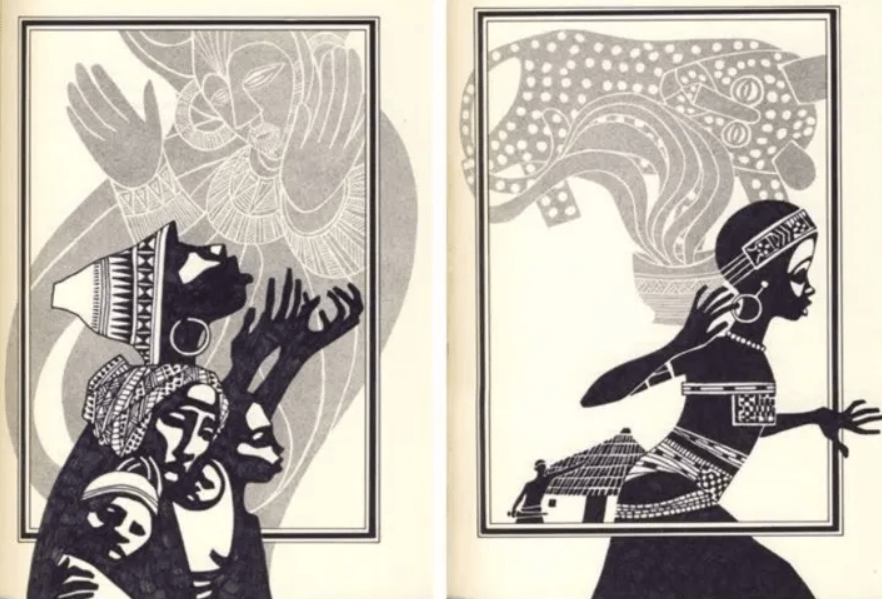
There is another story, older and stranger, that ran alongside the Underground Railroad in the tradition of the enslaved. It is the story of the Igbo Landing, of the people who walked into Dunbar Creek in Georgia in 1803 rather than be taken. It is the story, told and retold in the hush harbors and the quarters, of the flying African. The man, or the woman, who one day simply lifted from the field and flew home. Who refused the condition of the body as owned, as fixed, as bound to the earth. Who went up.
The flying African is a theological claim. It is a claim about what the body is allowed to do when it refuses to be only what the master says it is. It is the imagination insisting on a freedom the law has not yet granted and may never grant. It is the soul practicing escape before the body can follow.
Toni Morrison wrote about it. Zora Neale Hurston wrote about it. It runs through Song of Solomon, through Beloved, through the whole tradition of Black American letters: the body that would not stay bound, the spirit that found its own door, the voice that sang its way out of the field and into the permanent record of what human beings are capable of under the most extreme duress.
The Architecture of Backlash
Here is the pattern. It does not vary much.
The moment of rupture: A war ends. A law is signed. A man with Black daughters moves into the White House. An uprising fills the streets of a hundred cities. For a moment, the machinery of control stutters. There is genuine joy. There is genuine belief. Something has shifted. Something has finally, permanently, changed.
The brief window: Black men are elected to the Senate during Reconstruction. Hiram Revels of Mississippi. Blanche Bruce. Black Wall Street rises in the Greenwood District of Tulsa, a self-sufficient city within a city, banks and hospitals and theaters all built by and for a people the larger economy had decided not to include. The Great Migration fills Chicago and Harlem and Detroit with Black professionals, artists, organizers, families buying homes.
The backlash: The Black Codes are passed before the ink of the Emancipation Proclamation is a year old. Jim Crow replaces the whip with the law. The Federal Housing Administration draws its red lines around Black neighborhoods and denies them the mortgages that will build the white middle class. The Greenwood District is burned to the ground by a white mob on May 31, 1921. Three hundred Black residents are killed. Thirty five square blocks are destroyed. The perpetrators are not prosecuted. The city of Tulsa charges the Black survivors with inciting the riot.
And then: be patient. Trust the process. The process that has just revealed itself, once again, not to have been designed with you in mind.
What the Body Knows
Author Susan Griffin (1978) wrote that woman and naturehave been made to serve the same function: to be the ground from which everything else grows, and to be invisible while doing it. The parallels are not accidental. They emerge from the same philosophical tradition, the same Enlightenment project that separated mind from body and then assigned the body to those it wished to control.
The enslaved body was explicitly written into the logic of Enlightenment rationality. The same century that produced declarations of the rights of man produced elaborate scientific taxonomies to explain why certain men did not qualify. Samuel Morton collected skulls. Josiah Nott published theories. The plantation was a laboratory in which nature, women, and Black and Brown bodies were all made into resources to be managed, extracted, cataloged, and controlled.
The Thirteenth Amendment ended slavery, except as punishment for crime. This was not an oversight. It was a door left deliberately open. Within a decade, the convict leasing system was filling that door with Black men arrested for vagrancy, for loitering, for the crime of existing without a white person to vouch for them. They were leased to the same plantations where their parents had been enslaved. The machinery had been oiled and restarted. It simply ran under a different name.
Mass incarceration is that system, modernized. The War on Drugs is that system, renamed. The school to prison pipeline is that system, routed through childhood. The body that was once the explicit property of the plantation has become the implicit property of the carceral state, generating profit for private prison corporations, providing the legal basis for disenfranchisement, functioning as the mechanism by which the exception in the Thirteenth Amendment is still being exercised, one hundred and sixty years later.
Dancing Shadows and the Ceiling
April 4, 1968. Martin Luther King Jr. is shot on the balcony of the Lorraine Motel in Memphis. Four days later, the Fair Housing Act is signed. This is how it has always worked. The law arrives as the body is being carried out.
The Fair Housing Act promised an end to redlining, to discriminatory lending, to the covenants that had kept Black families out of the neighborhoods where wealth was being made. Black families believed it. They bought homes. They moved into suburbs. They discovered that the law could promise equality without compelling it, that appraisers would still undervalue their properties, that lenders would still steer them toward subprime mortgages, that the neighborhood association would still find ways to make them unwelcome.
The electoral mirage, like dancing shadows, works the same way. Barack Obama was elected in 2008. Millions of Black Americans wept in the streets. The symbolism was real, and the joy was earned. And then came the birther movement, and the Tea Party, and the explicit racial animus that had been managed out of polite political discourse for forty years, returning now with a flag and a grievance and a television network.
On the night of August 11, 2017, white nationalists carrying tiki torches marched through the campus of the University of Virginia in Charlottesville, their faces lit orange, their mouths shaping words the country had taught itself to believe it no longer meant. The march was the preview. The main event came the next morning under the banner of “Unite the Right,” a convergence of neo-Nazis, Klansmen, and self-described alt-right groups who descended on a city that had voted to remove its Confederate monuments. A car drove into a crowd of counterprotesters and killed Heather Heyer. The president of the United States said there were very fine people on both sides. The rock was melting. The sea was boiling. The power was naming itself plainly for the first time in a generation, and finding that it could.
Three years later, George Floyd died on a Minneapolis street with a police officer’s knee on his neck, and the accumulated weight of every unprosecuted killing, every unanswered petition, every told-to-be-patient generation broke open at once. The Black Lives Matter movement surged into the largest sustained protest in American history. Confederate statues fell. Corporations pledged billions. The phrase “defund the police” entered mainstream discourse. For a season, many believed they were witnessing a genuine moral reckoning, the kind that changes things permanently. Within two years, most of the pledges had gone unfulfilled, the statue debates had been weaponized into a culture war, and the language of racial equity had been reframed by its opponents as itself a form of racism. The window had opened and been closed again from the outside.
The election of a Black president did not prevent Black death at police hands. It did not close the racial wealth gap. It did not stop the erosion of the Voting Rights Act that the Supreme Court would begin the following year. What it did was demonstrate, once again, that the arc of the moral universe is not self bending. It requires hands on it, constantly, against resistance that does not tire.
The Patience Asked Of Them
After each backlash, Black communities are told to be patient. To trust the process. To work within the system. This advice is offered by the institutions that the system was designed to protect, to the people the system was designed to exclude.
The patience asked of them is not the patience of waiting for rain. It is the patience of being asked to hold still while the wound is made again.
Fannie Lou Hamer was beaten in a Mississippi jail in 1963 for trying to register to vote. She told the story plainly, before the credentials committee of the Democratic National Convention in 1964, live on national television. President Johnson called an emergency press conference to pull the cameras away from her. She said: I am sick and tired of being sick and tired. She did not mean it as a metaphor. She meant it as a medical report.
The Underground Railroad operated because waiting was not viable. The flying African flew because the ground would not release him and so he released the ground. The sinnerman runs because the judgment is real and the rock is melting and there is nowhere to hide except forward.
What Grows Anyway
And yet.
Mutual aid networks that bypass hostile institutions. Community land trusts that hold land in common so it cannot be taken by the market or the bank. Black labor unions and participatory defense campaigns and abolitionist organizations that do not ask permission from the systems they intend to replace.
Joy as a practice of resistance. Not the joy that denies the wound, but the joy that insists on existing alongside it. The second line parade that moves through the neighborhood where the shooting happened. The festival in the street that says: we are still here, we are still making something, the field has not taken everything from us.
The Boca de Oro Festival of Literary, Visual, and Performing Arts in Santa Ana, California. Ten years of poets and muralists and musicians and children and elders gathering in a city that the larger culture had written off as a problem to be managed. The festival does not solve the problem of redlining, ICE raids, police violence or the school to prison pipeline. But it insists on the existence of a community that is more than its wounds, that has a culture worth naming and celebrating and transmitting to the children who will inherit both the harm and the response to it.
The flying African understood something the plantation could not afford to let him know: that the body is not only a body. That the person living inside it has a capacity for flight that no system of control has ever fully extinguished. That the imagination is a form of infrastructure. That hope, disciplined and collective and strategically organized, is itself a form of power.
The Recurring Chains
The dark paradox is this: every mechanism of liberation has been met with a mechanism of re-enclosure. Every law has been followed by the erosion of its enforcement. Every electoral victory has been followed by a redrawn district. Every moment of believed progress has, in time, revealed the next room of the same house.
The second Trump presidency, beginning in 2025, moved through these rooms with unusual speed and unusual candor about its intentions. Diversity, Equity, and Inclusion offices were dismantled by executive order across federal agencies and universities. The Environmental Protection Agency was gutted, its protections stripped away from the communities, disproportionately Black and Brown, that depended on them most. ICE conducted raids across the country with a theatrical visibility that was not accidental, each raid a message to certain bodies about their conditional belonging, their revocable presence in the only country most of them had ever known. Far-right and white supremacist groups found themselves not merely tolerated but emboldened, their rhetoric laundered through policy language, their agenda enacted by cabinet officials in suits. And in the same season, the government that was prosecuting Black and Brown people at the border and dismantling the institutions built to protect them deployed its moral vocabulary in service of Israel’s bombardment of Gaza, where children were being pulled from rubble while American officials spoke of self-defense. The pattern had not changed. Only the geography had expanded. The logic of who is expendable, of which bodies may be broken in the service of which interests, had merely found new theaters in which to perform itself.
This is not an argument for despair. It is an argument for clarity. You cannot fight what you cannot name. You cannot navigate the recurring pattern if you insist on treating each instance as unprecedented. The history is not hidden. It has been told, in the songs and the speeches and the first person accounts of the sharecropper’s daughter and the mother of the boy who was shot and the organizer who has been doing this work for forty years and has seen this particular backlash before and knows what comes next.
Martin Luther King Jr. named it on August 31, 1967, eight months before Memphis. He called it a “triple-prong sickness that has been lurking within our body politic from its very beginning”: the sickness of racism, the sickness of excessive materialism, and the sickness of militarism. He said it plainly, to an audience that had grown accustomed to hearing him speak of dreams. This was not a dream. This was a diagnosis. And what has happened in the years since his assassination on April 4, 1968, is what happens when a disease goes untreated: it metastasizes. The racism that structured the plantation reorganized itself into the prison and the gerrymandered district. The materialism that required the unpaid labor of millions reorganized itself into predatory lending, wage suppression, and the private prison industry. The militarism that sent Black men to die in wars fought in the name of freedoms they were denied at home reorganized itself into the permanent war economy, the thousand overseas bases, the weapons systems funded while the schools in Black neighborhoods fell apart. The three evils are not historical. They are present tense. They are the mechanism. They are what the backlash is made of.
Run to the rock, the rock was melting. Yes. And the people kept running. They organized and they built and they documented and they mourned and they returned to the field the next morning. Not because the rock had stopped melting. But because standing still was not an option. Because the children needed to eat. Because the song was not finished.
The trees bore their strange fruit and Billie Holiday sang it back to the trees and the trees did not change and the singing did not stop.
This is not a story with a resolution. It is a story that is still being written, in the bodies of the living and the names of the dead and the voices of those who refuse, generation after generation, to let either be forgotten.
The Origin of Our Discontents
On May 25, 2026, the same date that marks six years since George Floyd’s killing, Pope Leo XIV released his first major encyclical. He titled it Magnifica Humanitas — Magnificent Humanity — and in it he issued a direct apology on behalf of the Vatican for the Church’s historical role in legitimizing slavery and failing to condemn it. The Catholic Church, which had provided theological scaffolding for the conquest of Africa and the Americas, which had blessed the ships and the charters and the doctrine of discovery that made the trade in human beings into a sanctioned enterprise, looked at what it had done and said: we were wrong. The date was not accidental. Or perhaps it was. Either way, the coincidence is its own kind of argument about how long it takes for institutions to say what history has been saying for centuries.
In the same period, several African leaders, nations, and tribal delegates have issued their own formal apologies for the role that African kingdoms and merchants played in the Trans-Atlantic slave trade: the capture and sale of human beings by those who shared their ancestry, their land, their gods. These are not simple apologies to receive. They open old wounds inside old wounds. They ask the diaspora to hold two truths at once: that the primary architects of the trade were European, that the legal, financial, and theological infrastructure was built by empires whose descendants still hold the wealth it generated, and also that some among the enslaved’s own kin sold them to the ship. The African apologies do not resolve this complexity. They enter it. And in doing so they offer something the United States has never offered: the acknowledgment that a reckoning is owed, that the debt is real, that the wound requires more than patience to close.
The United States has not offered that acknowledgment. In 2026, the United States — alongside Israel and Argentina — voted against a United Nations General Assembly resolution that would have declared the transatlantic slave trade a crime against humanity. The resolution had been led by Ghana and the African Union, part of a global push for formal apology and reparatory justice. The country that built its wealth on the bodies of the enslaved, that fought a war to preserve the right to do so, that then spent a century and a half designing legal mechanisms to approximate what the war had ended, voted no. This is not a surprise. But it is a datum. It belongs in the record alongside the Emancipation Proclamation and the Black Codes, the Voting Rights Act and its gutting, the election of Barack Obama and the January 6th insurrection. The pattern does not lie.
Author Isabel Wilkerson, in Caste: The Origins of Our Discontents, documents what should be among the most disturbing facts in the American historical record: that the architects of the Nazi regime studied American Jim Crow law as a structural model for their own racial legislation. Hitler and his theorists examined how the United States had legally subjugated Black Americans, how it had disenfranchised, segregated, and humiliated an entire population through the machinery of law rather than merely through extralegal violence. The resulting research informed the 1935 Nuremberg Race Laws. The Nazis sent researchers to America. They consulted American eugenicists. They admired what had been built. Wilkerson notes an extraordinary detail: the Nazi jurists ultimately found the American one-drop rule — the legal classification of anyone with any African ancestry as Black — to be too extreme, too blunt an instrument even for their purposes. They implemented more graduated definitions. The United States had out-raced the people who were building the death camps. Hitler also drew from the displacement and genocide of Native Americans as a blueprint for territorial expansion, for the logic that some peoples exist to be cleared so that others may settle. The American caste system was not a regional embarrassment. It was an export. It taught the world what was possible.
The Middle Passage ended as a legal enterprise, but the commodification of human bodies did not end with it. Jeffrey Epstein’s trafficking networks, dismantled in full view of a horrified public, revealed that the trade in human beings had not been abolished so much as restructured, privatized, laundered through wealth and access and the institutional protection of powerful men. The victims were children. The networks spanned continents. The powerful people who enabled and participated in this trade moved through the same institutions — the same banks, governments, universities, and social circles — that had built the original economy of extraction. The logic had not changed. Only the paperwork had. What slavery systemized and the plantation made routine, later centuries refined into different forms of capture, different vocabularies of ownership, different mechanisms for turning the vulnerable into the exploited. The body that was once listed in a manifest is now listed in a file that law enforcement cannot always access or will not.
I am convinced that Wilkerson is right. White supremacy is the origin of caste. Slavery — the commodification, subjugation, and violent oppression of human beings — is the origin of our discontent, not only in America but throughout the world. The American plantation did not stay in America. Its logic crossed the Atlantic in both directions. It infected the legal imagination of Europe’s most murderous regime. It underwrote the colonial projects that redrew the map of the world in the interest of extraction. It is operating now, in the prison, in the redlined neighborhood, in the gerrymandered district, in the ICE raid, in the child trafficked across a border that exists to protect the wealth of some and criminalize the movement of others. In the tree in Cleveland. In the tree in Charlotte.
The apologies now being offered — by African kings and tribal delegates, by a pope in his first encyclical — are not sufficient. Nothing is sufficient. But they are not nothing, either. They are the acknowledgment that the accounting is real, that the wound has a name, that the people who were taken and the people who were never given what was promised to them are owed more than patience and more than silence. They are the crack in the rock that the sinnerman could not find. They are the first word of a sentence that has not yet been finished.
The body that would not stay free is still running. Still building. Still singing the song back to the trees. The trees have not changed. The singing has not stopped. And the arc… the arc does not bend by itself. It bends because people with their hands on it, generation after generation, refuse to let it straighten.
Backlash Blues
Mister Backlash, Mister Backlash,
Just who do you think I am?
You raise my taxes, freeze my wages,
Send my son to Vietnam.
You give me second class houses,
Second class schools.
Do you think that colored folks
Are just second class fools?
When I try to find a job
To earn a little cash,
All you got to offer
Is a white backlash.
But the world is big,
Big and bright and round—
And it’s full of folks like me who are
Black, Yellow, Beige, and Brown.
Mister Backlash, Mister Backlash,
What do you think I got to lose?
I’m gonna leave you, Mister Backlash,
Singing your mean old backlash blues.
You’re the one
Will have the blues.
Not me—
Wait and see!
Langston Hughes, January 1967
Set to music by Nina Simone
Hughes’s last protest poem before his death in May 1967. One of Nina Simone’s last recordings before her own exile.

References
Primary Literary and Artistic Sources
Hughes, Langston. 1967. Backlash Blues. Poem. Published in The New York Post, January 1967. Subsequently set to music and recorded by Nina Simone on Nina Simone Sings the Blues. RCA Victor, 1967.
Holiday, Billie, and Abel Meeropol. 1939. Strange Fruit. Recorded at Commodore Records, New York. Originally composed as a poem by Abel Meeropol (writing as Lewis Allan), published in The New York Teacher, 1937. First recorded by Billie Holiday, April 20, 1939.
Morrison, Toni. 1987. Beloved. New York: Alfred A. Knopf.
Morrison, Toni. 1977. Song of Solomon. New York: Alfred A. Knopf.
Simone, Nina. 1965. Sinnerman. Recorded on Pastel Blues. Philips Records. Traditional spiritual, arrangement by Nina Simone.
Simone, Nina. 1967. Nina Simone Sings the Blues. RCA Victor LSP-3789. Includes recording of Langston Hughes’s Backlash Blues.
Historical Scholarship
Alexander, Michelle. 2010. The New Jim Crow: Mass Incarceration in the Age of Colorblindness. New York: The New Press.
Baptist, Edward E. 2014. The Half Has Never Been Told: Slavery and the Making of American Capitalism. New York: Basic Books.
Berlin, Ira. 1998. Many Thousands Gone: The First Two Centuries of Slavery in North America. Cambridge, MA: Harvard University Press.
Berry, Mary Frances. 1994. Black Resistance, White Law: A History of Constitutional Racism in America. New York: Penguin Books.
Du Bois, W. E. B. 1935. Black Reconstruction in America, 1860–1880. New York: Harcourt, Brace and Company.
Equal Justice Initiative. 2015. Lynching in America: Confronting the Legacy of Racial Terror. 3rd ed. Montgomery, AL: Equal Justice Initiative. https://eji.org/reports/lynching-in-america/.
Foner, Eric. 1988. Reconstruction: America’s Unfinished Revolution, 1863–1877. New York: Harper and Row.
Franklin, John Hope, and Loren Schweninger. 1999. Runaway Slaves: Rebels on the Plantation. Oxford: Oxford University Press.
Hahn, Steven. 2003. A Nation Under Our Feet: Black Political Struggles in the Rural South from Slavery to the Great Migration. Cambridge, MA: Harvard University Press.
Klarman, Michael J. 2004. From Jim Crow to Civil Rights: The Supreme Court and the Struggle for Racial Equality. Oxford: Oxford University Press.
Litwack, Leon F. 1979. Been in the Storm So Long: The Aftermath of Slavery. New York: Alfred A. Knopf.
Litwack, Leon F. 1998. Trouble in Mind: Black Southerners in the Age of Jim Crow. New York: Alfred A. Knopf.
Painter, Nell Irvin. 2010. The History of White People. New York: W. W. Norton.
Rothstein, Richard. 2017. The Color of Law: A Forgotten History of How Our Government Segregated America. New York: Liveright.
Tolnay, Stewart E., and E. M. Beck. 1995. A Festival of Violence: An Analysis of Southern Lynchings, 1882–1930. Urbana: University of Illinois Press.
Wilkerson, Isabel. 2020. Caste: The Origins of Our Discontents. New York: Random House.
Woodward, C. Vann. 1955. The Strange Career of Jim Crow. Oxford: Oxford University Press.
Specific Historical Cases and Events
Brophy, Alfred L. 2002. Reconstructing the Dreamland: The Tulsa Riot of 1921 — Race, Reparations, and Reconciliation. Oxford: Oxford University Press.
Dray, Philip. 2002. At the Hands of Persons Unknown: The Lynching of Black America. New York: Random House.
Ellsworth, Scott. 1982. Death in a Promised Land: The Tulsa Race Riot of 1921. Baton Rouge: Louisiana State University Press.
NAACP. 1916. The Waco Horror. Supplement to The Crisis, July 1916. Authored by Elisabeth Freeman. New York: NAACP.
Till-Mobley, Mamie, and Christopher Benson. 2003. Death of Innocence: The Story of the Hate Crime That Changed America. New York: Random House.
Civil Rights and Political Movements
Branch, Taylor. 1988. Parting the Waters: America in the King Years, 1954–1963. New York: Simon and Schuster.
Davis, Angela Y. 1981. Women, Race and Class. New York: Random House.
Davis, Angela Y. 2003. Are Prisons Obsolete? New York: Seven Stories Press.
Hamer, Fannie Lou. 1964. Testimony Before the Credentials Committee of the Democratic National Convention. Atlantic City, NJ, August 22, 1964. Transcript available through the Lyndon B. Johnson Presidential Library.
Jackson, George. 1970. Soledad Brother: The Prison Letters of George Jackson. New York: Coward-McCann.
King, Martin Luther, Jr. 1967. Address to the National Conference on New Politics. Chicago, IL, August 31, 1967. King Center Archives, Atlanta, GA.
King, Martin Luther, Jr. 1967. Where Do We Go from Here: Chaos or Community? New York: Harper and Row.
Lewis, John, and Michael D’Orso. 1998. Walking with the Wind: A Memoir of the Movement. New York: Simon and Schuster.
Sellers, Cleveland, and Robert Terrell. 1973. The River of No Return: The Autobiography of a Black Militant and the Life and Death of SNCC. New York: William Morrow.
Depth Psychology, Feminist Theory, and Ecophilosophy
Fanon, Frantz. 1952. Black Skin, White Masks. Translated by Richard Philcox. New York: Grove Press, 2008.
Fanon, Frantz. 1961. The Wretched of the Earth. Translated by Richard Philcox. New York: Grove Press, 2004.
Freire, Paulo. 1968. Pedagogy of the Oppressed. Translated by Myra Bergman Ramos. New York: Herder and Herder, 1970.
Griffin, Susan. 1978. Woman and Nature: The Roaring Inside Her. New York: Harper and Row.
Hillman, James. 1975. Re-Visioning Psychology. New York: Harper and Row.
hooks, bell. 1981. Ain’t I a Woman: Black Women and Feminism. Boston: South End Press.
Lorde, Audre. 1984. Sister Outsider: Essays and Speeches. Trumansburg, NY: The Crossing Press.
Urban Theory and Placemaking
Jacobs, Jane. 1961. The Death and Life of Great American Cities. New York: Random House.
Sharpe, Christina. 2016. In the Wake: On Blackness and Being. Durham, NC: Duke University Press.
Caste, Eugenics, and Comparative Jurisprudence
Gould, Stephen Jay. 1981. The Mismeasure of Man. New York: W. W. Norton.
Kühl, Stefan. 1994. The Nazi Connection: Eugenics, American Racism, and German National Socialism. Oxford: Oxford University Press.
Nott, Josiah C., and George R. Gliddon. 1854. Types of Mankind. Philadelphia: Lippincott, Grambo.
Stannard, David E. 1992. American Holocaust: The Conquest of the New World. Oxford: Oxford University Press.
Whitman, James Q. 2017. Hitler’s American Model: The United States and the Making of Nazi Race Law. Princeton, NJ: Princeton University Press.
Contemporary Sources: Politics, Journalism, and Policy
Gay, Mara. 2026. “The Systematic Dismantling of Black Political Power.” New York Times, June 2026. Opinion.
Haley, Alex. 1976. Roots: The Saga of an American Family. Garden City, NY: Doubleday.
Kendi, Ibram X. 2019. How to Be an Antiracist. New York: One World.
NAACP Legal Defense Fund. 2023. Democracy Diminished: State and Local Threats to Voting Post-Shelby County, Alabama v. Holder. New York: NAACP Legal Defense and Educational Fund.
Obama, Barack. 2020. A Promised Land. New York: Crown.
Pope Leo XIV. 2026. Magnifica Humanitas. Encyclical letter. Vatican City: Libreria Editrice Vaticana. Released May 25, 2026.
Southern Poverty Law Center. 2017. “Charlottesville: Unite the Right Rally.” SPLC Intelligence Report, August 2017. https://www.splcenter.org.
United Nations General Assembly. 2026. Resolution on the Transatlantic Slave Trade as a Crime Against Humanity. Introduced by Ghana and the African Union, June 2026. United States, Israel, and Argentina cast dissenting votes.
Oral Tradition, Folklore, and the African Diaspora
Georgia Writers’ Project. 1940. Drums and Shadows: Survival Studies Among the Georgia Coastal Negroes. Athens: University of Georgia Press.
Hurston, Zora Neale. 1935. Mules and Men. Philadelphia: J. B. Lippincott.
Hurston, Zora Neale. 1937. Their Eyes Were Watching God. Philadelphia: J. B. Lippincott.
Walker, Margaret. 1966. Jubilee. Boston: Houghton Mifflin.
The Underground Railroad and Harriet Tubman
Bordewich, Fergus M. 2005. Bound for Canaan: The Epic Story of the Underground Railroad. New York: Amistad.
Clinton, Catherine. 2004. Harriet Tubman: The Road to Freedom. New York: Little, Brown.
Larson, Kate Clifford. 2004. Bound for the Promised Land: Harriet Tubman, Portrait of an American Hero. New York: Ballantine Books.
Reparations, Reconciliation, and African Apologies
Coates, Ta-Nehisi. 2014. “The Case for Reparations.” The Atlantic, June 2014.
Darity, William A., Jr., and A. Kirsten Mullen. 2020. From Here to Equality: Reparations for Black Americans in the Twenty-First Century. Chapel Hill: University of North Carolina Press.
Henry, Charles P. 2007. Long Overdue: The Politics of Racial Reparations. New York: New York University Press.
Republic of Ghana. 2019. “Year of Return” Reconciliation Initiative. Government of Ghana, Ministry of Tourism, Arts and Culture. Accra, Ghana.
Senghor, Augustine. 2020. “Apology for the Role of African Kingdoms in the Slave Trade.” Address delivered at the Cape Coast Castle, Ghana, August 2020. Government of Benin reconciliation initiative.
Human Trafficking and Contemporary Exploitation
Kara, Siddharth. 2009. Sex Trafficking: Inside the Business of Modern Slavery. New York: Columbia University Press.
Malarek, Victor. 2003. The Natashas: Inside the New Global Sex Trade. New York: Arcade Publishing.
Patterson, Orlando. 1982. Slavery and Social Death: A Comparative Study. Cambridge, MA: Harvard University Press.
United States Department of Justice. 2019. United States v. Jeffrey Edward Epstein. Case No. 19-cr-80061. Southern District of New York. Indictment filed July 8, 2019.
Mass Incarceration and the Thirteenth Amendment
Blackmon, Douglas A. 2008. Slavery by Another Name: The Re-Enslavement of Black Americans from the Civil War to World War II. New York: Doubleday.
Davis, Angela Y., and Gina Dent. 2001. “Prison as a Border: A Conversation on Gender, Globalization, and Punishment.” Signs: Journal of Women in Culture and Society 26 (4): 1235–1241.
Gottschalk, Marie. 2006. The Prison and the Gallows: The Politics of Mass Incarceration in America. Cambridge: Cambridge University Press.
Wacquant, Loïc. 2009. Punishing the Poor: The Neoliberal Government of Social Insecurity. Durham, NC: Duke University Press.
Note on Sources
This essay draws on a wide tradition of Black intellectual production, activist scholarship, and first-person witness literature. Where primary sources are unavailable in published form (speeches, testimonies, oral histories), secondary accounts by credentialed historians have been cited. The 2026 references to Mara Gay’s New York Times opinion piece, Pope Leo XIV’s encyclical Magnifica Humanitas, and the United Nations General Assembly vote reflect events occurring within the essay’s contemporary frame. The cases of Demartravion Reed (Delta State University, Cleveland, Mississippi) and Juliana Nzita (Charlotte, North Carolina) were under active investigation at the time of writing and should be verified through current news sources. All musical citations refer to original recordings and their liner notes where available.
Discover more from Three-Fifths
Subscribe to get the latest posts sent to your email.


