
Don’t you deserve more than the commonly recycled stories as the United States celebrates its 250th anniversary of the Declaration of Independence?
History is more than trivia about the past – it is the precedent upon which we stand today. Our (mis)understanding of it will shape our future toward freedom or fascism.
At Three-Fifths Magazine, we agree that it should be “self-evident” that we’re “created equal,” yet we see systems of inequality all around us.
Here are 12 resources to help inoculate us against the fevered imaginations that haunt us whenever we insist that “unalienable rights” applies to “all men” and extends to all people.
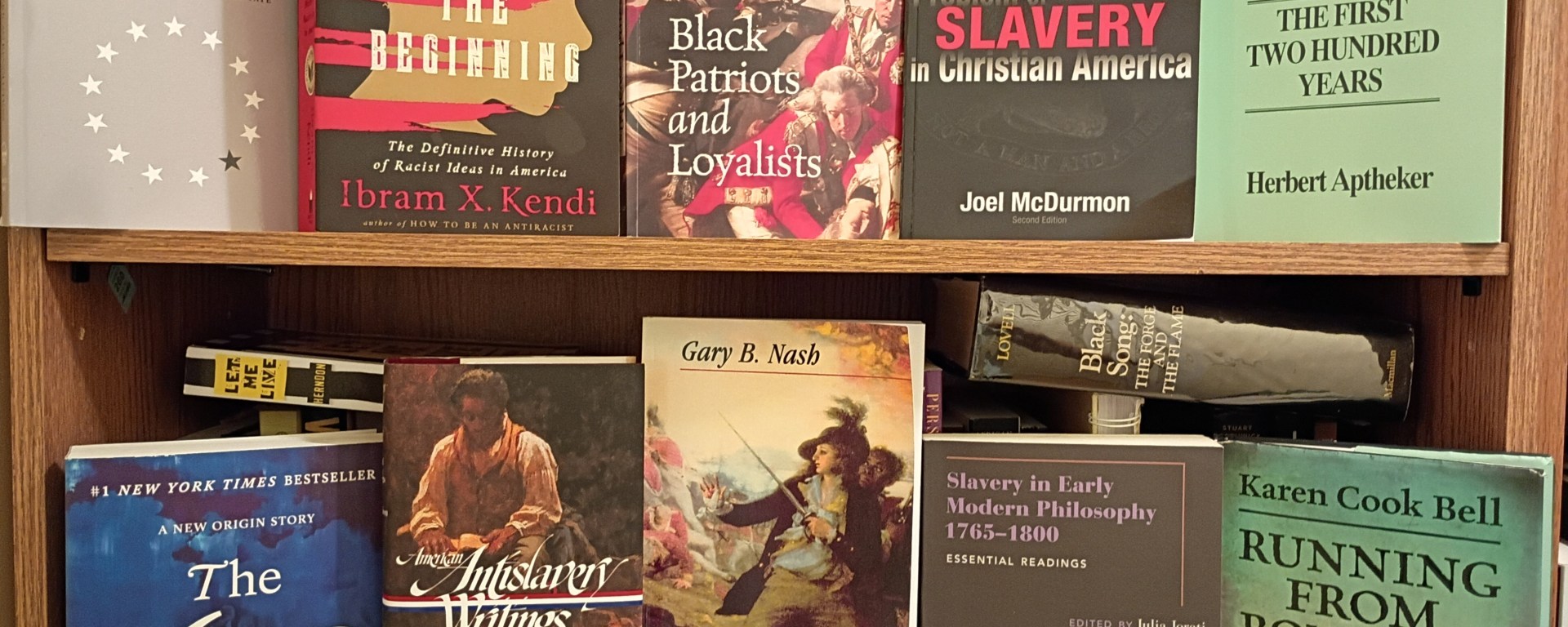
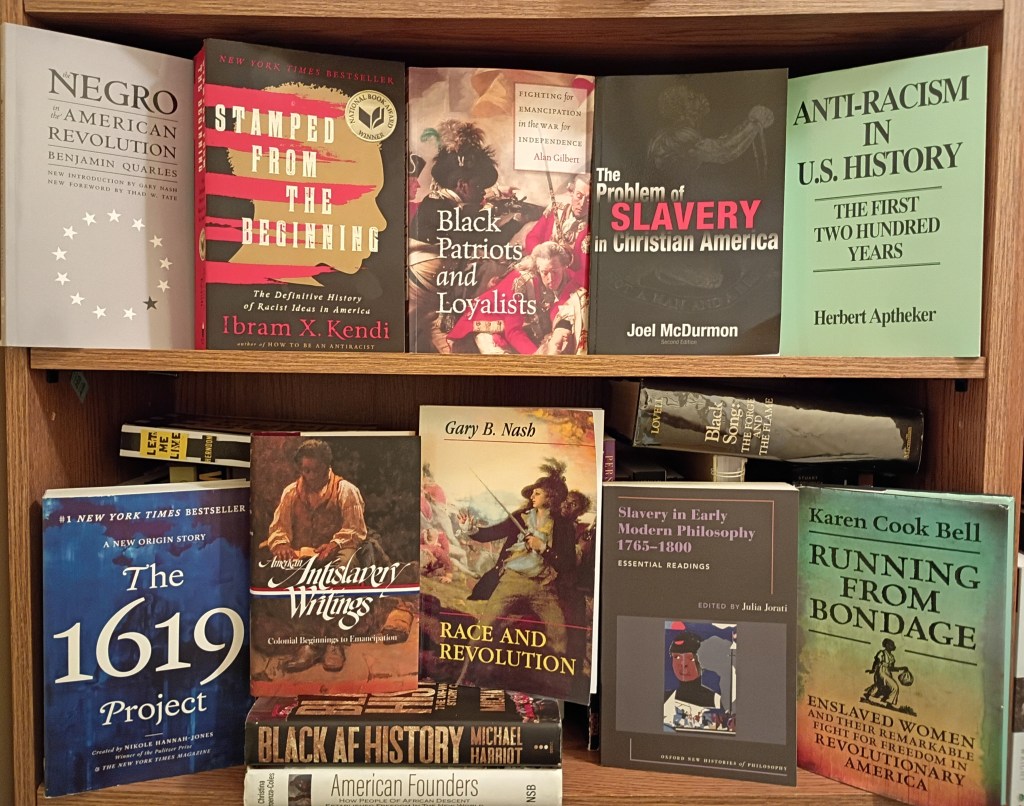
Black Patriots and Loyalists: Fighting for Emancipation in the War for Independence by Alan Gilbert. I love Gilbert’s thesis of there being two revolutions going on at the same time. One is the colonial fight for freedom from Britain. The other is enslaved people seeking their literal bodily freedom from America’s liberty-loving enslavers. One of America’s greatest tragedies is that the two revolutions didn’t become one. Instead, one revolution’s victory meant defeat for the other.
The Negro in the American Revolution by Benjamin Quarles. First published in 1961, this book helped build momentum for closer historical studies of the impact of Blacks in the American Revolution. It focuses on their military contributions to both the British and American sides of the conflict. In the chapter “Behind the Man Behind the Gun,” there is an ironic highlight about General Lafayette sending an urgent letter to Virginia Governor Thomas Jefferson in 1781. Lafayette was asking for 400 “negroes” to assist his troops as laborers and wagoners. Jefferson couldn’t help him because he already came up short fulfilling a similar request for General Steuben. The problem was that thousands of Virginia’s enslaved Black people self-emancipated and began joining the British ranks since Lord Dunmore promised them freedom in November 1775. Most slave-owning Americans weren’t willing to part with the few able-bodied men who remained. Ok, no more spoilers – go get the book.
Black AF History: The Un-Whitewashed Story of America by Michael Harriot. This is the most enjoyable read of them all, but don’t let the humor fool you. Harriott brings out overlooked perspectives and provides the historical receipts. You’ll also learn some fun stuff about his family. If you couldn’t tell, the “AF” in the title indicates it has some edginess to it, but far less than a “PG” movie.
Running from Bondage: Enslaved Women and Their Remarkable Fight for Freedom in Revolutionary America by Karen Cook Bell. In contrast to great men’s history, we are treated with some amazing stories of Black women who either fought or fled for their freedom. Bell put lots of persistent sleuthing into finding details from newspaper ads for runaway slaves, court records, and other original documents. However, this isn’t copying and pasting a bunch of archival material. The author opens our eyes to the motives and methods of people who many times sought anonymity.
Stamped from the Beginning: The Definitive History of Racist Ideas in America by Ibram X. Kendi. “Definitive” is a bold word to use in your title, so it makes sense to back it up with 150 pages of end notes. Of course, there is significant coverage of racism vs. antiracism during the Revolutionary War. This is about the battle of ideas behind the war’s carnal weapons – including the documented civil war within Thomas Jefferson’s own beliefs and practices. You’ll learn about the competing racist narratives of Black inferiority that were promoted from theological and scientific circles. Even many anti-slavery thought leaders promoted racist ideology that was appropriated by pro-slavery leaders.
Race and Revolution by Gary B. Nash. Nash argues that abolitionism was a major point of contention during the Revolution. He also gives 5 reasons why this would have been the perfect time for abolition to occur. Of course, he also covers why it failed. The book is roughly divided into halves. The first half is comprised of 3 chapters and the last half is comprised of the major documents that the first half is based on. This is an excellent time saver for those looking for source material from that era.
Slavery in Early Modern Philosophy 1765-1800: Essential Readings edited by Julia Jorati. This book compiles the writings of abolitionists and enslavers in chronological order. One of the strengths of this book is that the author sets the stage and lets the people speak for themselves – including the enslaved and formerly enslaved of that era. Some of these documents are found in bits and pieces elsewhere, but presented whole here.
American Antislavery Writings: Colonial Beginnings to Emancipation edited by James G. Basker. This 1,000-page anthology provides a variety of voices and genres, including the conflicted arguments of slaveholders who shared their anti-slavery sentiments – like Patrick Henry and George Washington. This is one of the best investments for people who want to read the actual words of the people living in these formative centuries of the nation’s history.
American Founders: How People of African Descent Established Freedom in the New World by Christina Proenza-Coles. With timelines dating back to 3500 BCE, Proenza-Coles provides a global framing of slavery vs liberation that leads us to 20th century freedom fighters in America. It is amazing how succinctly she covers so many people, dates, and places in this book, while connecting them with a narrative arc. This broad perspective makes it difficult to cleanly label people or people groups as villains or heroes.
The Problem of Slavery in Christian America: An Ethical-Judicial History of American Slavery and Racism by Joel McDurmon. McDurmon’s coverage is from “The Colonial Foundations” of the 1600s to “Emancipation” after the Civil War. With his legal and theological background, McDurmon’s seeks to provide historical and moral clarity about Christian complicity with American slavery. He brings a lot of primary source material into the conversation as he appeals to “otherwise well-intended Christians and conservatives” who he feels just need a deeper understanding of the issues. McDurmon seeks more than acknowledgment of facts; he is calling for action to remedy the effects of inequitable structures built with the assistance of racist theological architecture.
Anti-Racism in U.S. History: The First Two Hundred Years. When discussing slavery in Revolutionary America, people frequently raise the argument about whether it’s fair to judge enslavers of that era by today’s standards. Aptheker shows that numerous white Americans who were confronting the proslavery element from the 1600s through the 1860s. There were voices of conscience the whole time, so criticism of America’s original sin can’t honestly be discarded as presentism.
The 1619 Project by Nicole Hannah Jones. So much of this relates to the Revolutionary era, but what stands out to me as I reread it is the chapter on “Sugar” by Khalil Gibran Muhammad. Sometimes it can be easy to get fixated on the role of cotton in American slavery but we can’t overlook how sugar (aka “white gold”) was instrumental to global commerce and the trafficking of enslaved Africans. Most of the sugar cane plantations were started by the Portuguese and Spanish colonizers in Brazil and the Caribbean. But Dr. Muhammad enlarges our perspective to see how sugar impacted the economics and politics of Britain and the colonies that would become the United States – including the smallest of them all: Rhode Island.

Discover more from Three-Fifths
Subscribe to get the latest posts sent to your email.


