
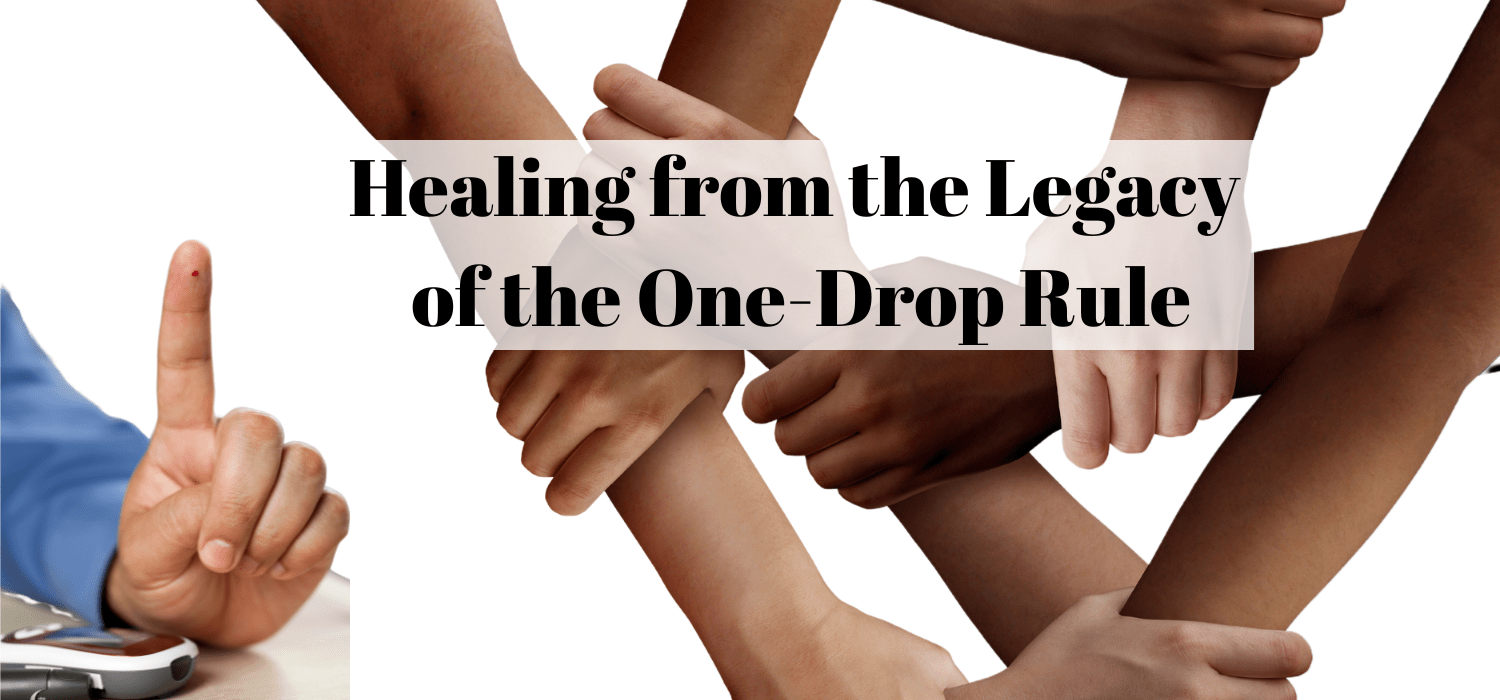
The One-Drop Rule has always been more than just a historical concept —it’s a reminder of the deeply ingrained ways in which society has tried to define and control us. This rule, birthed in an era of slavery and segregation, was not just about race; it was a tool of power, a way to enforce an artificial sense of racial purity that upheld white supremacy. And even now, its shadow lingers, influencing how we perceive race, identity, and each other in subtle and profound ways.
The distinct classification of Black identity determined by the one-drop rule is widely acknowledged in American society (Roth, 2005). When I reflect on the impact of the One-Drop Rule, I see it as a collective trauma that has been passed down through generations. For those of us who identify as people of color, especially if we’re of mixed race, the rule has often felt like a knife that slices through our sense of self. It forces us to navigate a world that insists on defining us by arbitrary racial distinctions, often at the cost of our mental and emotional well-being. Anxiety, depression, a sense of alienation—these are not just abstract concepts but lived experiences for many of us who have struggled to reconcile our identities with a society that categorizes us in ways that don’t fit.
This ushers in the concept of miscegenation, the blending of races through relationships. The term miscegenation captures how the One-Drop Rule distorted what should have been seen as natural and inevitable—the blending of cultures and peoples—into something feared and stigmatized. This concept has expanded on the One-Drop Rule, leading our nation into troubling territory, where it has become a source of fear within American society. Winston Churchill’s description of a “riddle wrapped in a mystery inside an enigma” perfectly captures the complexity and difficulty of comprehending the intentions behind this rule, as well as the unpredictable outcomes it produces. The One-Drop Rule has magnified this fear, embedding the idea that even the smallest trace of African ancestry was enough to brand someone as Black, to other them. This rigid classification didn’t just marginalize those of us who are mixed race—it fueled a broader societal anxiety about racial mixing, a fear that has been woven into the fabric of American culture since its inception.
The trauma of miscegenation isn’t just ours to bear. White Americans, too, have been conditioned to internalize a sense of racial superiority and to fear the loss of status and identity as our nation grows more diverse. This fear, often lurking beneath the surface, fuels resistance to racial integration and equality. It manifests in biases, discrimination, and the barriers that keep us divided. And it compromises the health and wellness of our entire society, creating a climate of tension, mistrust, and division that affects us all.
To heal from this, we need to take a holistic approach—one that addresses the full spectrum of our well-being, from the physical to the mental, emotional, and social. Education is a crucial first step. We need to understand the historical context of the One-Drop Rule and miscegenation to begin dismantling the myths that have sustained these fears. But education shouldn’t be confined to classrooms; it should be woven into the fabric of our communities, our public health initiatives, and our media. It needs to be accessible, inclusive, and relevant to people of all ages and backgrounds.
Beyond education, we need to foster spaces where emotional and psychological healing can take place—spaces where we can talk about our fears and biases openly, without judgment. Therapy, counseling, and mindfulness practices—these are tools that can help us process the trauma of racial identity and build emotional resilience and self-awareness. But healing isn’t just an individual journey; it’s something we need to do together, as communities.
Community-building is key. The divisions created by the One-Drop Rule and the fears surrounding miscegenation have frayed the social fabric of our society, making it harder for us to connect across racial lines. But by coming together—through community gardens, cultural exchanges, collaborative art projects—we can start to mend those tears, to build stronger, more resilient bonds. We can create spaces where diversity is not just accepted but celebrated, where our differences are seen as strengths.
Of course, none of this can happen without systemic change. The fears and anxieties rooted in the One-Drop Rule and miscegenation are embedded in the very institutions that govern our lives. Reforming these systems—our criminal justice system, our schools, our healthcare—so they reflect equity and justice is essential. As health and wellness professionals, educators, and community members, we all have a role to play in advocating for these changes.
Confronting the legacy of the One-Drop Rule and miscegenation is about more than just addressing the past. It’s about building a future where we are all valued, respected, and seen for who we truly are, not just what society tells us we should be. This journey toward healing and unity is not just a personal commitment—it’s a collective one, vital for the health and well-being of our entire nation.

References
Roth, W. D. (2005). The end of the one-drop rule? labeling of multiracial children in black intermarriages. Sociological Forum (Randolph, N.J.), 20(1), 35-67. https://doi.org/10.1007/s11206-005-1897-0
Discover more from Three-Fifths
Subscribe to get the latest posts sent to your email.


