
In 1655, Elizabeth Key Grinstead, a multiethnic woman filed suit in Virginia seeking freedom based on her father’s European lineage and won her court case. Not long after Elizabeth’s verdict the State of Virginia sought to ensure other multiethnic people could not sue and be granted their freedom. In 1691, Interracial relations were outlawed, and then in 1662, the Virginia General Assembly declared that a child would be defined by the race of their mother no matter the father’s race. Currently, in America, most multiethnic people are considered “Black” even when their mothers are the European “White” parent. The one-drop rule was put in effect in 1924 in the State of Virginia in hopes of keeping the “white” race pure and ensuring that anyone who had a “black” lineage could not benefit from white privilege. The construct of race in America is fluid and has changed over time.
My parents married in 1962, which is not uncommon, but my parents are of different ethnicities. In America, I realize that we use the term race to describe people who look like my parents, as my mom would be identified as white, and my dad would be identified as black. As an urban Sociologist who specializes in race, class, gender and ethnicity, I will be using the correct verbiage to describe my family, which is multiethnic. Race is a social construct and not biologically real, although we continue to see it have real-world implications in America. Even though race isn’t biologically real, almost every form we fill out in America asks for our race. People who are multiethnic, such as me, were not included in the census until 2010. Before then we had to check both “Black” and “White” or other. I can’t keep count of how many times people have asked me what I am, and while I know they are asking about my ancestry I always tell them I am human, just like them.
My mom is German, English, and Welsh, while my dad, who has passed away, was African American, Negro, or Black, depending on what time frame and census data we are reviewing. When my parents married, my mother was disowned by her family as marrying outside of your ethnic group was/is frowned upon, especially if you’re marrying someone of color. My mom happened to fall in love with an African American man even though she was reared to be a racist as her father would say very racialized things. Her mother, my grandmother, would ask the last names of people she was engaging with so she knew their ethnicity. The funny thing is that she wasn’t taught just to dislike African Americans but also Irish, Italian, Hispanic, and Polish.
My father’s family was not to thrilled about him marrying a European American woman, but they handled it much better than her family did. They accepted her, he wasn’t disowned. Loving v. Virginia 1967, the landmark case that outlawed the ban of interracial/multiethnic marriages was five years after my parents married. Although my parents married before the U.S. Supreme Court decision in Loving they did so in a midwestern state, Wisconsin.
When they got married at the courthouse in Milwaukee, WI, the first two judges wouldn’t perform the ceremony as they explained to my mom that she really needed to do some soul-searching before she married a man of color. The third judge reluctantly married my parents but did warn her about having kids and how society would treat us.
Milwaukee, WI is the third most segregated metropolitan statistical area in America. When they married in 1962 my father could not live in my mom’s community, so she had to move to the “Black” side of town. My mom was the only European American living in the neighborhood. She shared stories with us about how it was back in the day in a “Black” community. She didn’t have any issues; she said there were two-parent households, typically with both parents working to make ends meet. No one treated her poorly or differently, although she knew she was different. In the community there were doctors, lawyers, teachers, janitors, maids, etc., all living together and sending their children to the neighborhood school. Like most African American families that could afford to, once the housing market opened to them, they moved away.
For as long as I can remember we grew up in a predominantly European neighborhood. My classmates, teachers, and friends were European Americans. We understood early on as multiethnic kids whose parents were welcoming to us and whose house we could not enter, although we played with their kids. I remember the first time one of us was called the N-word, it was my brother, as he was cutting through Mr. Vance’s yard along with about three or four of his European American friends. My brother came home and told my mother, who proceeded to march down to Mr. Vance’s house and knock on his door and let him know he would not speak to her children in that manner nor call us out by our name. The anger in a mother’s eye when someone has messed with their kids is something you don’t forget.
This whole idea about The Great Replacement Theory is a bit of a joke to me as I know that many European Americans don’t even know their ancestry, in their mind they are white, but that is a color, not a nation or a culture. Sixty years ago, many of those who marched in Charlottesville and other places screaming that “they won’t be replaced” would not even be considered “White.” Irish, Polish, Italian, and other Eastern Europeans were not seen as desirable. We had immigration policies targeting them and limiting their access to opportunities and perpetuating stereotypes and biases, but due to the social construction of race, we have seen people who were not seen as (White) be absorbed into “Whiteness.” Living in the state of Florida and having an anti-diversity, equity and inclusion Italian Governor is another bit of a joke to me. My mom, who was reared to dislike people like him is so confused by his policies and ideologies surrounding the social construct of race. In her day, he would not be considered “White.” Italians in my mom’s generation were considered “dago,” and she was warned to stay away from “those people.”
National Geographic has provided insight into what Americans will look like in 2050; racially ambiguous. They state that “more than 7% of the 3.5 million children born in 2009, the year before the 2010 census, were of two or more races. [1] Fear is the factor that is playing out in The Great Replacement Theory—fear that we will treat others as we have been treated. As a multiethnic person who identifies as multiethnic, as to not deny either parent, I am always surprised at how naïve people are about their own ethnicity.
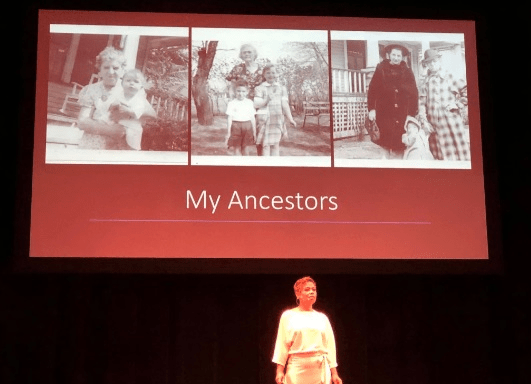
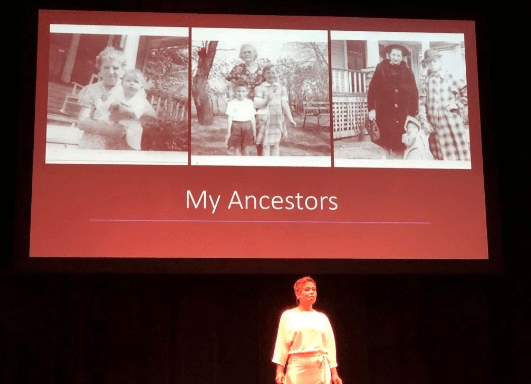
I conducted a TEDx talk about the social construct of race entitled: The Social Implications of Race. I break down census data to show how race is created, inhabited, and then destroyed. I would encourage you to watch the talk as it is a history lesson for Americans as I trace census data and how categories change over time.
I often wonder if there is a correlation between the overturning of Roe v. Wade and The Great Replacement Theory. Are people so afraid of the browning of America that they want to limit health care to women? Regardless of what others try to do, multiethnic families will continue to exist. Love is love and no one can change that. As a multiethnic person whose mom was reared to be racist, I know that love wins every time!
[1] https://www.mic.com/impact/national-geographic-determined-what-americans-will-look-like-in-2050-its-beautiful-16166684
Discover more from Three-Fifths
Subscribe to get the latest posts sent to your email.


