

Adapted from an Address Given at Vincennes University in Vincennes, IN, on February 13, 2024
I. Growing Up in Billy Penn’s Shadow
Picture a typical summer day in a suburban American childhood. This would be a typical summer day in my childhood, growing up in a south Jersey suburb like I did. Coincidentally, that suburb is Moorestown, and in 2005, Money Magazine named it the #1 best place to live in the U.S.A.
I knew my small town was founded by Quakers—a Friends school still thrives there, in fact. I knew all about William Penn’s founding of Philadelphia, too—the locals, my mother included, still refer to him as “Billy Penn.” I knew my town was affluent, and yet my Dad’s occupation as a hospital pharmacist back then placed us in the middle-of-the-road middle class, and I suffered the slings and arrows of outrageous fortune as my classmates got Trans Ams as gifts on their 16th birthdays and trips to Aruba for Christmas.
My brother, sister, and I tried out ice skating on Strawbridge Lake across the street and played whiffle ball games in our backyard with the neighborhood kids. I didn’t buy my first car until after I graduated from college, and even then, it was a Ford Escort.
And in those years, we all played with cap guns. And my father’s hero, well, I knew all about him, too: The Lone Ranger, Clayton Moore, the star of the show we watched with my Dad, who loved the certainty of his hero.
He didn’t know about Bass Reeves, the African American U.S. Marshall who inspired the radio show that then turned into the TV Show we watched over and over again. I only learned about Reeves myself several years ago, and like most writers do, took to the page to reckon with the literally white-washed version of my father’s hero. (Now Paramount TV runs a show called Lawman: Bass Reeves, so if you subscribe to that service, you can learn about him too. The show is getting rave reviews, and so is Daniel Oyelowo, who plays the lead role.)
During that time, I also was exploring much of American history that had remain hidden from me as I grew up in the shadow of Billy Penn.
For instance, I certainly didn’t know that Penn, that pacifist Quaker, owned slaves, despite the fact that at most, 7% of the population in the area were slave holders at that time. The slaves numbered a dozen, twelve humans in bondage, who built the estate in Pennsbury. Penn said he found African slaves “more dependable” than the indentured servants at his Morrisville, Pennsylvania residence.
And these slaves had names: Yaff, whom Penn remarked was “an able planter, and good Husbandman.” Sam and Sue, whose marriage Penn recognized and to whom Penn at one point willed 100 acres. But Penn was a flip-flopper, and by the time he left his eponymous colony to return to London, he sold them off instead. Jack lost his wife forever when Penn sold her off to an owner in Barbados. Then there was Peter. And Susannah and Virgil Worder.
In 1688, Quakers organized The Germantown Protest, the first movement against slavery in the colonies — but it would be another fifty years until Quakers unanimously agreed that slavery was wrong. Penn would die twenty years before that time and not, as it turned out, leave anything to Sue, who survived her husband.
I didn’t know any of this. I thought all Quakers were abolitionists. The history was not made clear to me in my classes.
I also didn’t know that Alice Paul, who helped lead the women’s suffragist movement and secure the right to vote for women, was born and raised in Moorestown. She was alive for the first twelve years of my life, too, but I had no idea.
I didn’t know either that the 19th Amendment only secured the right to vote for white women. Nor did I know that during the Reconstruction era, “some 2,000 Blacks held public office, from the local level all the way up to the U.S. Senate, though they never achieved representation in government proportionate to their numbers.”
I didn’t know that “During the state constitutional conventions held in 1867-69, Black and white Americans stood side by side for the first time in political life. Or that Black citizens made up the overwhelming majority of southern Republican voters.”
Imagine that!
Likewise, I didn’t know that “16 African Americans served in the U.S. Congress during Reconstruction; that more than 600 more were elected to the state legislatures, and hundreds more held local offices across the South.”
I didn’t know that once Jim Crow had its way with America—not just the South but the entire nation—the last African American left office in 1901. No Black people served in Congress for the next 28 years, and none represented any Southern state for the next 72 years.
I didn’t know about redlining or convict leasing. I’d heard only whispers about racial terror lynchings but certainly didn’t know there’d been over 4,000, including in northern states like Indiana.
I was oblivious about the 1930 lynchings of Thomas Shipp and Abram Smith in Marion, Indiana, where I now live, too. And how James Cameron might have been the third lynched adolescent that evening without some sort of miraculous intervention. The Indiana State Library says the most requested item from their archives is the one taken by local photographer Laurence Beitler on August 7 that year, a photo of Shipp’s and Smith’s bodies hanging from the tree that later inspired Abel Meeropol’s lyrics in “Strange Fruit,” which Billie Holiday made legendary.
I certainly didn’t know at least 10,000 Hoosiers witnessed those lynchings, congregating at the courthouse where the maple tree stood for the public spectacle like a town fair. They had a thirst for racial violence. In the north. (Reading Timothy Egan’s A Fever in the Heartland will also explain why.)
How did I begin to learn this history, which is American history, our nation’s history, my history? I wish I could say that Moorestown, which is still renowned for its exceptional school system, taught me these things, but alas, it didn’t.
I wish I could say I learned much history in college or even later on in graduate school. But alas, I did not. Yet, after graduate school, my first job landed me at Wilberforce University.
II. Sojourner Truth & Book Bans
Our nation’s oldest, private, liberal arts Historically Black College or University (HBCU), Wilberforce University in Wilberforce, Ohio, was founded along the Underground Railroad, which I did know about—and knew about Harriet Tubman, too. But not much. I’m embarrassed to admit that all throughout high school, I thought the railroad was literal!
So what was a conservative, white, evangelical woman doing at Wilberforce? I was a fish out of water, to say the least.
Yet, the ten years I spent at Wilberforce University changed my life. That’s where I learned who Frederick Douglass and Harriet Jacobs were—and began to teach their influential slave narratives. It’s also where I learned who Carter G. Woodson was, the man who founded Black History Month, though he never lived to see it come to fruition. It’s also where I began reading the poetry of Phillis Wheatley and the incredible work of James Baldwin. It’s where I learned who Isabella Baumfree was. (It’s where I realized that African American women fought for abolition and suffrage, too.)
If you haven’t heard of Isabella Baumfree before, it may be because you, too, have been robbed of an inclusive education. Or maybe it’s because you recognize her by her other name, the name she chose for herself after she converted to Christianity and became a preacher: Sojourner Truth.
At the 1851 Women’s Rights Convention held in Akron, Ohio, Sojourner Truth delivered what is now recognized as one of the most powerful abolitionist and women’s rights speeches in American history, “Ain’t I a Woman?” In her brief, impromptu speech, she exclaims, “I have borne thirteen children and seen most all sold off to slavery, and when I cried out with my mother’s grief, none but Jesus heard me! And ain’t I a woman?”
And as she ends, she continues to tie her raison d’être to the Holy Bible:
Then that little man in black there, he says women can’t have as much rights as men, ‘cause Christ wasn’t a woman! Where did your Christ come from? Where did your Christ come from? From God and a woman! Man had nothing to do with Him. If the first woman God ever made was strong enough to turn the world upside down all alone, these women together ought to be able to turn it back, and get it right side up again! And now they is asking to do it. The men better let them.
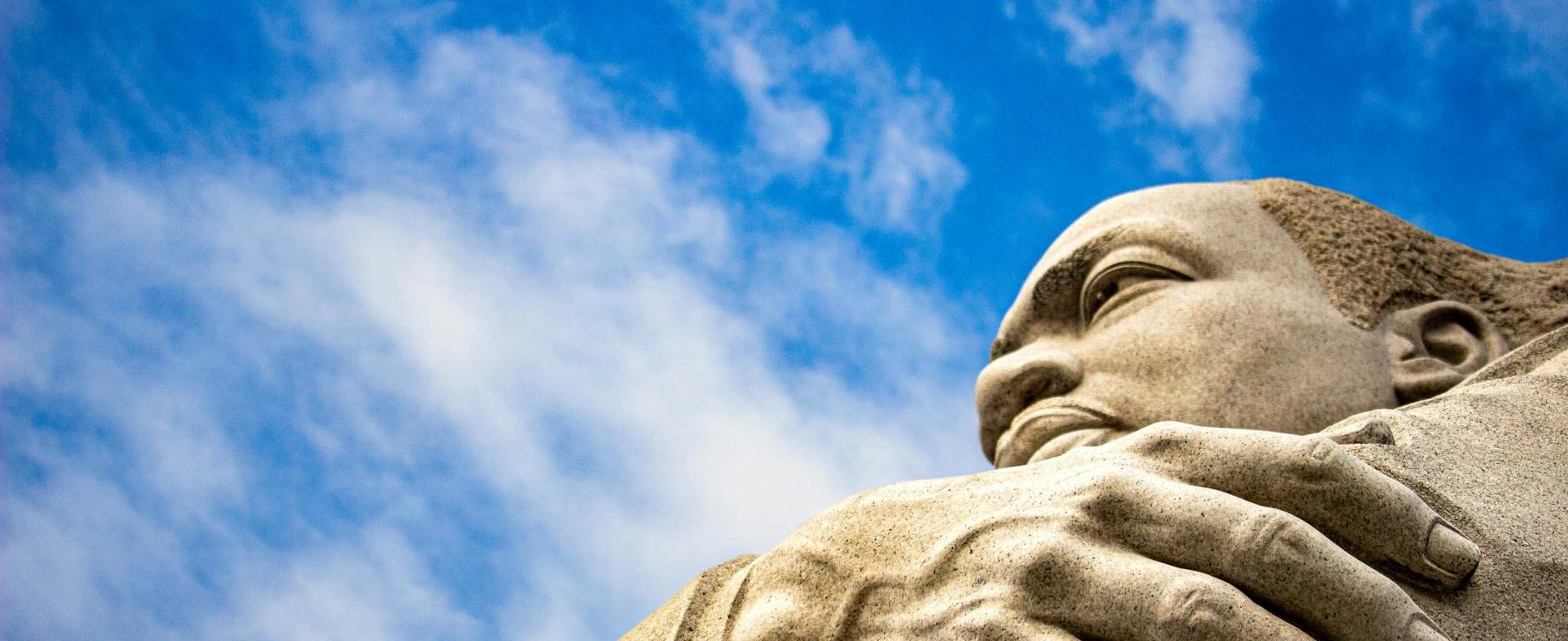
I quote Sojourner Truth here because her fight for human rights shows the clear connection between her Christian faith and the concern for justice, yes, social justice. Her vision gets echoed, of course, by none other than the Baptist minister, Dr. Martin Luther King, Jr. during the Civil Rights era.
So how have we come to this moment in our nation’s history—the one being written as I speak—where so many self-professing Christians, the block of voters made up of white evangelicals in particular (my people), who claim the same Jesus that Sojourner Truth and Frederick Douglass and Harriet Tubman and Martin Luther King, Jr. claimed, now oppose social justice while simultaneously quoting King’s dream of being “judged by the content of our character not the color of our skin”?
Did their schooling fail them, too? Or do these white supremacist roots just go too deep? (See Jemar Tisby’s The Color of Compromise and Kristen Kobes Du Mez’s Jesus and John Wayne).
And what is the state of schooling and higher education right now?
In his memoir After Whiteness: An Education in Belonging, Willie James Jennings incisively writes that there are two main types of “Academies” in the U.S. at this point: “Anxiety Academies” and “Silent Academies.”
Anxiety Academies, Jennings says, have “students who are learning of their liberation and are seeking the revolution.” Yet, in such academies, he notes that “motives are always mixed and clarity is usually elusive.” He points out that its flaws arise from the fact the “political, social, ideological, or theological critique of the prevailing orders” suffers from a lack of community because it forgets that “[c]ritique must aim at communion.”
While learning the skill of critique is necessary and valuable, Jennings points out that such schools need to do more: They need to deconstruct harmful theories and systems in order to construct healthy ones where the community can thrive. Yet, such schools tend to use the tools of deconstruction for construction, a costly tactical error.
Moreover, schools can’t use the tools of whiteness to deconstruct /construct systems of thought either. That leads to hands thrown up in the air and quitting on the entire enterprise altogether, as many do with, say faith. Whiteness, in other words, has no ability to build a Revelation 7:9 community.
There is another way.
Jennings then defines the other type of academy: Silent Academies. He notes that “these schools seek a clarity of purpose that joins all involved in a shared project of building” and yet “often forget that clarity deepens and grows new like a perennial plant that returns for another season…new is always emerging” (emphasis mine).
Jennings thus argues that although schools, such as the seminaries he has in mind specifically (and in my mind, most predominately white, evangelical universities and colleges), “live in the soil of the overturning,” they also “have learned to see the overturning as what God is doing in the world but not in their schools” (emphasis mine). At such schools, ideologies rooted in doctrine are fixed and certain, and new interpretations are met with great suspicion and discomfort. Dangerously, ideologies rooted in conservative political agendas also have grown quite fixed and oppressive, conflating politics with doctrine.
Therefore, Jennings argues that these academies are no better at forming community than the anxiety academies. They maintain a well-groomed image of community, but it’s just a façade, the shadow of the flame in Plato’s cave.
What I have seen in my own story is that many predominately white evangelical schools are “silent academies” because white evangelicalism—forged in the furnace of whiteness itself—is so dominant in American culture at large. It’s not just a subculture but in fact, a cultural power, as evidenced by the new Speaker of the House, who is a self-avowed Christian nationalist—and because 81% of white evangelicals still support Donald Trump, even though, as Christian columnist David French observes, Trump is “a man who has been found liable for sexual abuse and who has declared vengeance and retribution as the core objectives of his second term.”
So we find ourselves at a surreal and frightening moment: Secular legislatures and schools are forming “silent academies,” too.
When I left Cedarville University in Ohio in 2017 after it was taken over by fundamentalist Southern Baptists of Paige Patterson’s ilk, for instance, I left because of a censorship policy the administration foisted upon the faculty against our wishes. (The censorship policy is still in place there.) I was living in a real-life Fahrenheit 451.
I never thought I’d see state legislatures passing similar laws and policies less than a decade later.
PEN America’s new Index of School Book Bans provides a comprehensive list of books banned in the 2022-2023 school year. PEN America found “3,362 instances of individual books banned, affecting 1,557 unique titles.” This number “represents an increase of 33% from the 2021-22 school year.”
Book bans have been reported in at least 32 states. The bans target books that center Black history, ethnically diverse stories, and LGBTQ+ self-hood. In particular, eight states — Florida, Missouri, Utah, Virginia, Tennessee, Georgia, Oklahoma, and West Virginia — compose 63% of all book bans and library censorship.
But two states have also recently passed similar legislation, Texas and Iowa.
Indiana has joined in the fray, too. The Indiana House Enrolled ACT 1447, which now requires schools to remove library books and other materials that are “obscene” or “harmful to minors.” A key problem with the law, of course, is not only how it defines those terms but also who defines those terms.
What is most disturbing is that Indiana’s Attorney General Todd Rokita initiated a website in February of this year that now solicits complaints against teachers and schools. Called “Eyes on Education” (what could be a more Orwellian title? Are we in 2024 or 1984?), the site hosts a portal where parents and community members can submit complaints about curriculum in K-12 schools and universities alike.
Neither Indiana’s Department of Education nor school districts had any forewarning about the site. Although Rokita, a Republican who has already endorsed Trump in the 2024 Presidential race, claims the portal is not politically motivated, it clearly is, as he has said its purpose is to show “real examples of socialist indoctrination from classrooms.” Yet, the vast majority of complaints target curriculum centering the stories of marginalized people, such as Black, Indigenous, and other people of color (BIPOC), as well as LGBTQIA folks.
Backlash immediately ensued, and teachers even feared for their safety. Yet, the portal still exists.
All this is in a state that “is experiencing historic teacher shortages” that, of course, continue to worsen. Indiana teachers are famously underpaid in a public school system that requires more and more work from them while likewise paying them little respect. I actually think it’s amazing that anyone would want to become a teacher in Indiana at this point!
So what is the result of censorship of curriculum and book bans in schools?
III. Best Stay Woke
In my own case, it was white, patriarchal, evangelical men who ended up banning literature written by female and BIPOC authors. Intentional or not, the impact of the censorship policy at CU is that students there cannot read Native American trickster myths, memoirs about sexual abuse, or many graphic novels, including Marjane Satrapi’s award-winning Persepolis. They can’t watch Schindler’s List either. Thus, censorship policies like this one usually silence the voices whom we need to hear most—the voices in the margins who’ve suffered great abuse and oppression.
And such an impact is quite intentional in states like Florida, where its governor Ron DeSantis has infamously – said “Florida is where ‘woke’ goes to die.”
Considering the origin of the term “woke,” Gov. DeSantis’s remark is terrifying.
The word has a long history. It was used in Black protest songs dating back to the early 20th century, including by Huddie Ledbetter, better known as Lead Belly, the singer of the 1938 song “Scottsboro Boys.” Of course, the Scottsboro Boys were nine African American teenagers unjustly convicted of a rape in Alabama they never committed. They became the symbol of racism in U.S. the world.
In an interview about his song, Ledbetter said, “I advise everybody, be a little careful when they go along through there — best stay woke, keep their eyes open.”
If you’re Black and you’re going through Alabama, he added, you “best stay woke.”
That’s where the term “woke” comes from. The Scottsboro Boys and Huddie Ledbetter singing about them. It means, Watch out! Beware! Know what it means to be Black in the U.S. Know what it means if you don’t show deference to a white person in power. Know what it means if you don’t keep your hands at 10 and 2 on the wheel of the car when you’re stopped.
Know what power a white woman’s words and tears have over you.
So when Ron DeSantis said, “Florida is where woke goes to die,” that was horrifying. Because if we’re not allowed to learn our history, none of us will be alert. And if African Americans are not allowed to watch out, then they, too, can face the same fate as the Scottsboro boys or Emmett Till. And, of course, many have.
So allow me to follow in Sojourner Truth’s footsteps in saying that the Bible has plenty to say about being asleep and waking up. In fact, Revelation 3:2 says, “Wake up, and strengthen what remains and is about to die, for I have not found your works complete in the sight of my God.” And I Thessalonians 5: 5-6 says, “You are all children of the light and children of the day. We do not belong to the night or to the darkness. So then, let us not be like others, who are asleep, but let us be awake and sober.”
Wake up, for the impact of this kind of censorship is that states like Florida, which have adopted PragerU curriculum for its public schools, are using propaganda rather than facts to educate school children. For instance, one PragerU video features Frederick Douglass teaching two white children that our nation’s founding fathers knew slavery was wrong but allowed it anyway, for a greater good—unity. By allowing slavery, we got the U.S.ofA. after all!
When I read about this story, I immediately thought of Douglass’s famous speech, “What, to the Slave, Is the 4th of July?” I could not help my sarcasm: So, really, the same man who said that Independence Day revealed to every slave “more than all other days in the year, the gross injustice and cruelty to which he is the constant victim” justifies slavery in the PragerU video?
In the same speech, Douglass is just downright prophetic in his knife-like declaration:
Go where you may, search where you will, roam through all the monarchies and despotisms of the old world, travel through South America, search out every abuse, and when you have found the last, lay your facts by the side of the every day practices of this nation, and you will say with me, that, for revolting barbarity and shameless hypocrisy, America reigns without a rival.
Where’s that in the PragerU video?
Douglass was a Christian. He embraced the truth—the complexities of our nation formed both by a brilliant Constitution, yes (his focus of the first half of his speech) and a barbaric evil (he turns that knife in the second half).
Look: If we cannot educate students—children, adolescents, and adults—about the truth of our history, we can never truly be free. After all, it is the Gospel of John that teaches us that knowing the truth is what sets us free. And according to Sojourners Magazine, there are over 2000—2000!—verses in the Bible that address poverty and justice. God cares about injustice, including economic and racial injustices. Start with Proverbs 3: 27-28, for instance:
Do not withhold good from those to whom it is due,
when it is in your power to do it.
Do not say to your neighbor, ‘Go, and come again,
tomorrow I will give it’—when you have it with you.
Proceed to Psalm 146:5-9:
Happy are those whose help is the God of Jacob, whose hope is in the Lord their God, who made heaven and earth, the sea, and all that is in them; who keeps faith forever; who executes justice for the oppressed; who gives food to the hungry. The Lord sets the prisoners free…
Toni Morrison famously said, “If you are free, you need to free somebody else. If you have some power, then it’s your job to empower somebody else.” Her reasoning is well supported by Scripture, indeed. As Isaiah 1:17 tells us, “Learn to do right; seek justice. Defend the oppressed. Take up the cause of the fatherless; plead the case of the widow.”
Martin Luther King, Jr. also said, “Injustice anywhere is a threat to justice everywhere. We are caught in an inescapable network of mutuality tied in a single garment of destiny. Whatever affects one directly affects us all indirectly.”
This is what community means. What affects one affects all. Education must aim to create a community that recognizes this fact and appeals to reason and truth, compassion and empathy—even if the curriculum distresses us.
As one good friend of mine repeatedly says, if education doesn’t make you feel uncomfortable, you’re doing it wrong.

Discover more from Three-Fifths
Subscribe to get the latest posts sent to your email.
 Three-Fifths