
By Robin Schlenger and Robin Mallison Alpern
Hashtag: whitewomen, racism, socialjustice, Thearcofwhitewomanhood, whitefeminism
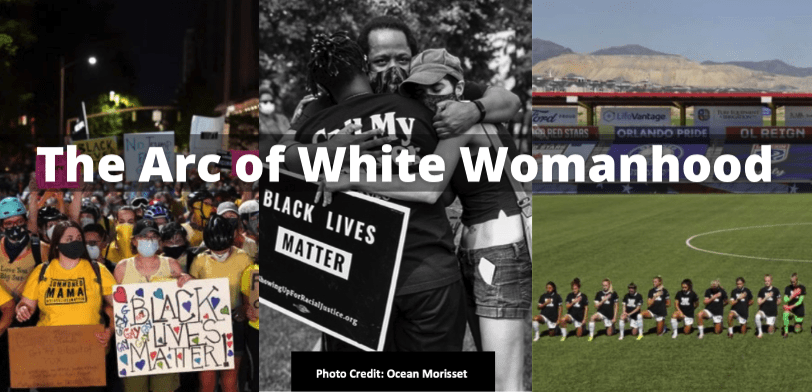
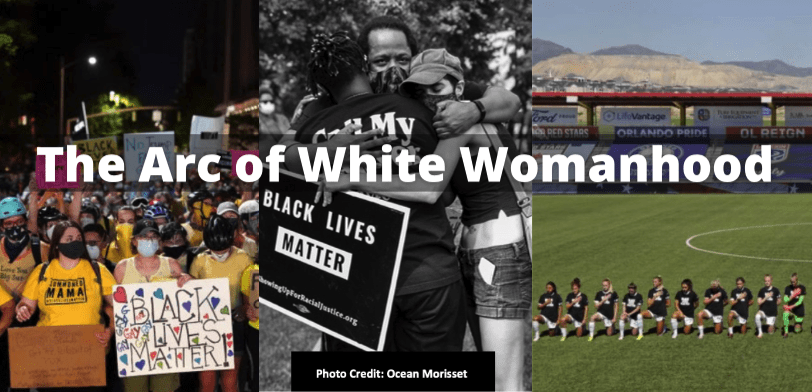
We came together several years ago to collaborate on creating an anti-racist training series for white women. Our purpose in creating The Arc of White Womanhood is to explore with other white-bodied women, our shared background as people socialized as female and white. This includes critical ways we have been shaped by and help to shape white supremacy, as well as ways white women have opposed racism. Our goal is to educate, inspire, and equip white women (to borrow from Dr. King) to bend our arc toward justice. We challenge ourselves to look at our “true colors” (especially the dark and ugly ones) so that we can use what we’ve learned and together work toward turning over a new leaf.
True Colors of white womanhood
White women’s role in the history of racism is often obscured, allowing us to build a story of false innocence. The truth is that, throughout history, white women have constructed and abetted the spread of white supremacy and received an undeserved pass. White men have taken most of the blame. In her May 5, 2018 article in Mandemics.com, Danielle Slaughter states that, “The most dangerous person in America is the white woman.” Slaughter reminds us that 63 years after Emmett Till’s death, white women still have the power to “lie and get black people arrested or killed.”
In her book, White Tears, Brown Scars, Ruby Hamad discusses how evoking “the damsel in distress ensured white women to be at least considered human (although subordinate) but it did so by ruthlessly excluding non white women from the construction of womanhood.” She reminds us that today “when white women invoke the damsel, we resurrect the bloody history that goes with it.”
White women’s role in racism dates back to the time of chattel slavery in this country. According to scholar Stephanie Jones-Rogers, (They Were Her Property) records show that many white women owned African people. It wasn’t simply that the woman was married to a man who owned African people; instead the enslaved people were the direct property of the white woman. White women orchestrated the sale, purchase and exchange of enslaved people. Enslavement of Black people represented freedom for white women, allowing them to invest in the economy and own property in their own right. Enslavement was a route to power as well as a measure of economic independence.
In the second half of the 1800s, suffragists such as Elizabeth Cady Stanton and Susan B. Anthony railed against the concurrent movement to grant Black men the vote. Black women were relegated to the back of the Woman Suffrage Movement. The 19th amendment ratified in 1920 essentially granted the vote to white women, while their “sisters” of color were easily kept from the polls by racist election officials.
White women were integral to the lynchings of Black men and women. No damsels in distress, they encouraged their families to attend lynchings and even set up family picnics. White women can be seen smiling on postcards from gruesome scenes of torture and murder. They smiled because this violence was happening on their behalf. The extent to which white men would go to protect white women’s bodies and virtue gave them a vested interest in maintaining themselves as a protected class, albeit one with inherent limitations, since they were second class citizens.
In the 1920s, half a million women joined the Women’s KKK. Kathleen Blee, author of Women of the Klan, points out that the “WKKK was chillingly effective and maybe even more so than their male counterparts, specifically because they were better at public relations and could hide their white supremacist mission behind a facade of social welfare.
Elizabeth Gillespie McRae documented in her book Mothers of Massive Resistance the grassroots Jim Crow organizing conducted by white women from the 1920s to 1970s. Their highly successful efforts included whitewashing history textbooks, segregating schools and mobilizing voters to support white supremacist policies.
In 2016 white women helped vote Donald Trump into office, and they are at the forefront of current campaigns to ban books and classes that teach anti-racism.
In short, white women have built and maintained white supremacy culture from the beginnings of our country to the present, and too few white women have opposed this.
Turning over a new leaf
In her book about white womanhood, Raising Our Hands, Jenna Arnold says, “We must stop walking in the tracks we have been contentedly strolling in for many generations, pivot, and take bold new strides in a drastically different direction. Our sins aren’t the entirety of what defines us; our willingness to escape from our ignorance and find grace – that is our measuring stick. We must begin to rewrite our stories, even if we’re not yet completely clear on what the new, better story will look like.”
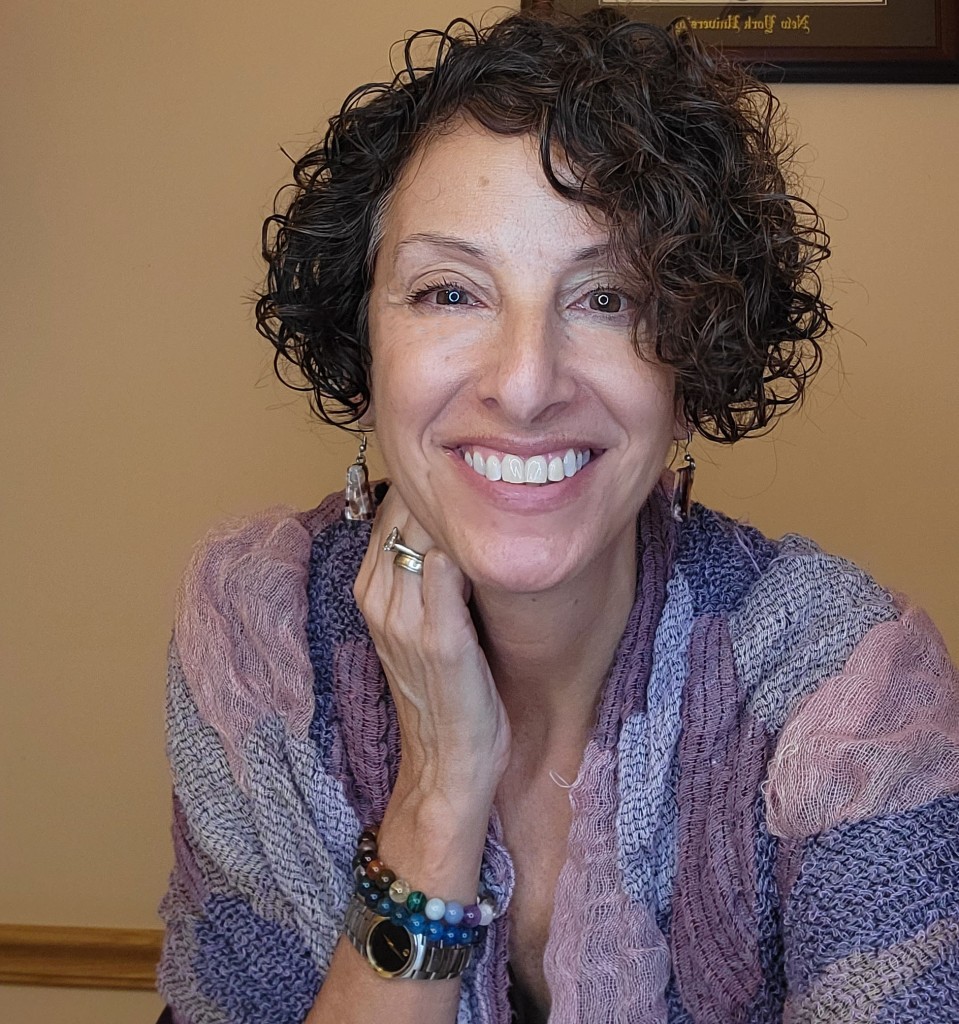
Robin Alpern: Through teaching this course, my eyes have opened to the degree to which I unconsciously enjoyed my white female privilege, especially an unearned sense of moral superiority. Accompanying members of my community — people socialized as white and female – as they wrestle with the realities of having been “white supremacized” is often painful work. The reward is anti-racist activists with a clearer sense of self and purpose.
Robin Schlenger: Doing the research for this training has been both excruciating and vitalizing. I never get “over” the ugliness of the ways in which my sisters and I have acted out racism and at the same time, sharing this experience with other people socialized as white and female gives me hope for the future. Every time we facilitate one of these trainings, I am gifted with the opportunity to actually watch minds and hearts move. Being a part of this shift feeds my commitment and passion to continue to do my own life work.
One of the most profound compliments we ever received from a participant during a session was, “I hate you two.” She went on to say she can no longer look at white women without seeing through to our racist history.
Another participant realized that “in the lives of Black people … we white women actually function as an armed patrol in the white supremacy surveillance system.” Others have observed that patriarchy and white supremacy are not separate systems but go hand in hand. These new points of critique and analysis lodge in participants’ hearts and minds, informing their anti-racist actions and expression.
In our course we have come together to take an unflinching look at where white women have gone terribly wrong. We want to keep in mind what we’ve learned about history that helps us understand why white women have not been in sisterhood with WOC, and have compassion and forgiveness for ourselves around that. And we ask ourselves how we can use our knowledge and power to change things and do better. In other words, turn over a new leaf
Discover more from Three-Fifths
Subscribe to get the latest posts sent to your email.


This is such a powerful insight into the role white women have had on racism. I grew up in the north and it was easy to say it’s those in the south that have committed these horrible acts of racism. But that allowed us to be detached and not really see the horrible results of racism. I am a 70 yr old woman who has been on a quest in the past few years to really understand and see what has transpired and continues to happen. I am so saddened and embarrassed that I haven’t been more aware throughout my life. I am determined to be more involved and pro active in fighting racism .
LikeLike