
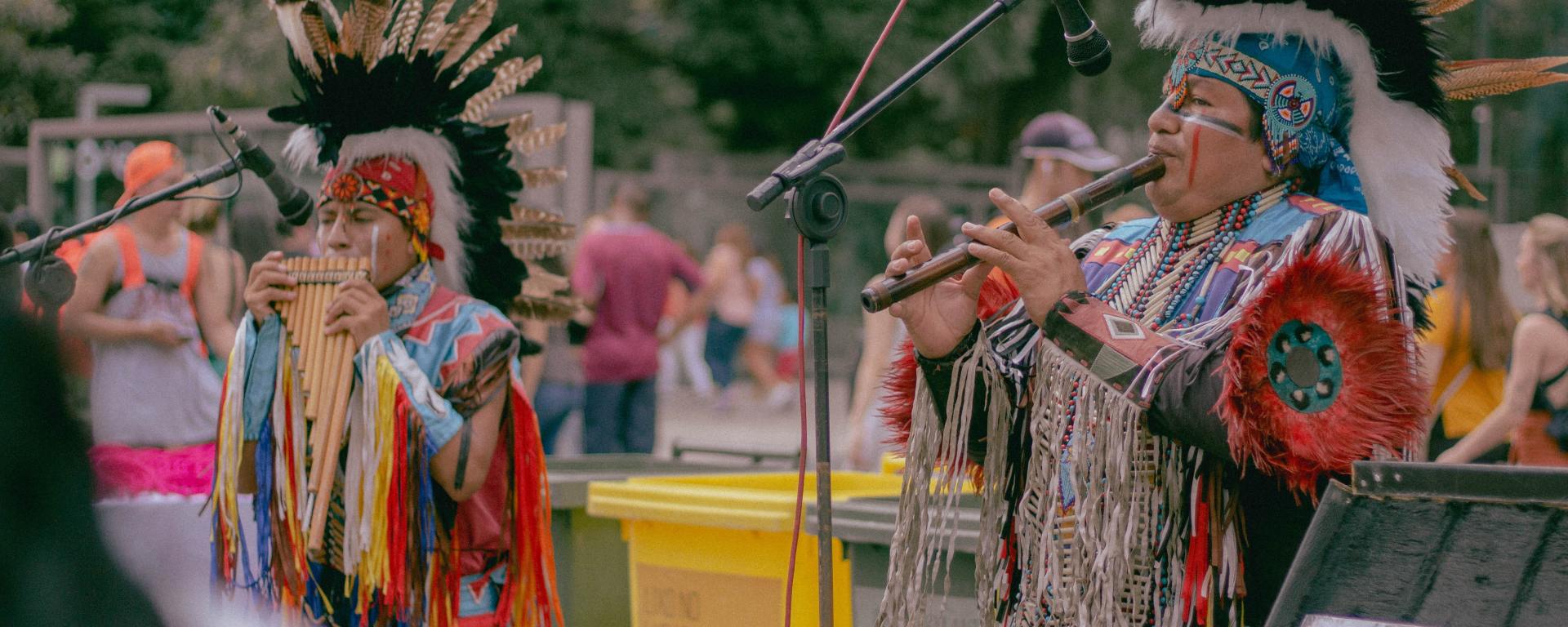
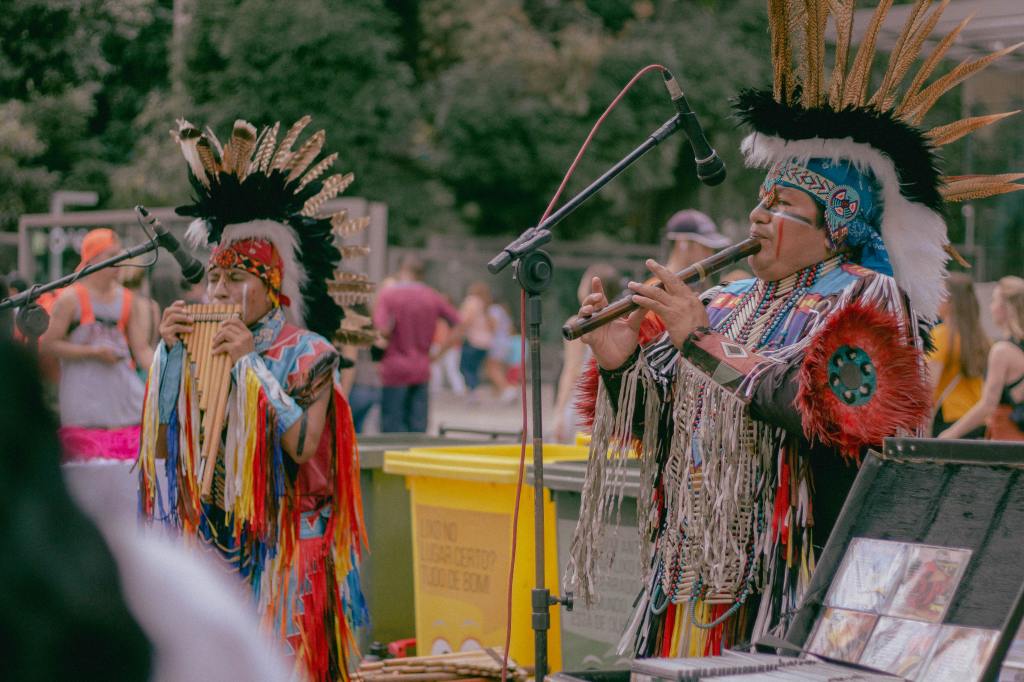
As we move into the month of September, we can see how various celebrations begin to take shape. One of these celebrations, rooted in the Hispanic heritage, has aroused in recent years a deep sense of reflection not only in relation to the name but also around the very essence of the festivity.
Much of what we identify as “Hispanic” in the United States carries with it the connotation of Spanish descent. However, in a fascinating contrast, many of the symbols and elements associated with these celebrations have deep roots in the original people on this continent. This amalgamation of assimilation, oppression, and resistance is highlighted in the various festivities that come to life in the country.
Although it is a significant achievement to have a month dedicated to the celebration of this heritage, it also raises a paradox derived from Spanish colonialism: the persistent imposition of a name on native populations that speak English, Spanish, or both languages. This imposition tends to obscure the most deeply rooted and ancestral expressions, not due to simple naivety but for reasons of convenience.
The fundamental question then arises: How can we open ourselves to the diverse ethnicities and ancestry present in the Spanish-speaking community in the United States? How can we understand the process of colonization and the suffering that is now framed in a celebration?
As a result of European arrival in America and a long colonization process, indigenous people have been forced to erase their identity, languages, and cultures. This identity struggle to fight for recognition has brought both trauma and pain. Indigenous people have been denied self-identification and self-determination, first under Spanish colonizers and then under English rule. There is an existential crisis as a result of the erasure of self for indigenous people and their descendants who live in the United States. This erasure has been further exacerbated as millions of the native populations, brown people with Spanish last names, have been forced to adapt to labels such as “Hispanic” or “Latino.”
Throughout the American continent (Abya Yala), the native cultures shared a vibrant trade and development from the Andes through to the Rockies. However, the encounter in 1492 with European invaders, Spanish first and later English, forever changed their indigenous ways of living. It led to loss and destruction. The continent was inhabited by over 100 million people living in different communities. The invaders forced these populations not to speak their language, cut their hair, change customs and dress, and forced assimilation into what was considered “Western Culture.”
The European invaders saw an opportunity for wealth, growth, and possession of the new world; for the native population, the result was genocide, slavery, rape, and trans-generational oppression. In history akin to magical realism, an entire population of descendants from indigenous women has transformed in the last decades to identify as Latin Americans rather than Native Americans. Because the Spanish invaders in the West and South taught a racial superiority similar to the English, assimilation was the only option for survival.
The United States’ founding narrative is that a brave group of white men who believed that representation must accompany taxation led to a war to secure inalienable rights. However, these British colonists’ insatiable land grab was one of the most understated drivers behind the Revolutionary conflict. After the colonists defeated the British troops and formed the United States of America, the westward expansion proceeded with wars between the native population and Spanish/ English in the west.
White European-Americans then perpetuated one of the most insidious acts of disappearance through a paper genocide. This act was “the deliberate and systematic destruction of Native American culture, language, and identity as a unique racial group by way of the “Blood Indians” to the Non-Indian races of Black/African American, White, Latino or Hispanic.” The erasure started on the East Coast, where census officials between 1790 and 1840 registered native peoples as black, mulatos, mustee, or colored, resulting in millions becoming enslaved. This classification, framed by a white supremacist system, created an administrative archive of false documents to support the idea that only European descendants controlled the land here.
One of the most significant westward expansionism land acquisitions came after the Mexican (Spanish) – United States (English) War and the Treaty of Guadalupe Hidalgo, which led to incorporating the current areas representing Arizona, California, Oklahoma, New Mexico, Utah, and Texas. However, this acquired land was not empty but native people who lived under Spanish rule for over 300 years. However, just as on the East Coast, white colonizers subsumed native populations and forced another round of assimilation.
Understanding this process in the US context is certainly challenging. The diversity of ancestry presents itself as a range of vitality, and by recognizing this, we immerse ourselves in deeply necessary knowledge. By creating an intimate connection with history and multiple situations, we approach an awakening of consciousness.
In this way, we have the opportunity to incorporate diverse stories, voices, insights, and insights into our understanding.
These reflections call us to embrace empathy as a powerful tool to connect with a community that endures and beats with passion at its heart:
Within the Spanish-speaking community, there are individuals whose roots are intertwined with ancestral native heritages. These deep ties add significant layers to their identities, enriching their cultures and perpetuating traditions that have stood the test of time. Understanding these connections invites us to recognize the richness that flows from this diversity, enriching the palette of experiences that make up the collective identity.
As we observe these celebrations, we cannot ignore the intrinsic resilience that defines ancient cultures. Throughout history, these communities have bravely faced challenges and kept their heritage alive despite adversity. In this fight to survive and prosper, they have shown an unwavering fortitude that is worthy of admiration. By acknowledging and honoring this tenacity, we demonstrate genuine respect for the very essence of their existence and their fight for survival.
Empathy toward these experiences gives us the opportunity to cultivate a true understanding. By opening ourselves to the perspectives and narratives of this community, we move closer to a deeper truth about the complexity of its historical trajectory and its current challenges. This enriching understanding prompts us to question previous assumptions, acknowledge our own limitations in perception, and transcend any cultural barriers that may have existed.
Ultimately, practicing empathy towards this community invites us to a mutual and respectful learning process. It gives us the opportunity to build bridges of understanding, foster intercultural dialogue, and celebrate the valuable contributions that each individual brings to the cultural mosaic of society. On this journey to deeper empathy, we can forge a genuine connection that transcends differences and embraces the shared humanity that unites everyone.

Discover more from Three-Fifths
Subscribe to get the latest posts sent to your email.

 Three-Fifths
Good, important article, thanks. It’s very important for everyone to be aware of and appreciate the historical significance of the struggles and suffering of indigenous populations in general due to colonization. And the fact that such communities are still being sidelined in current times.
LikeLike