
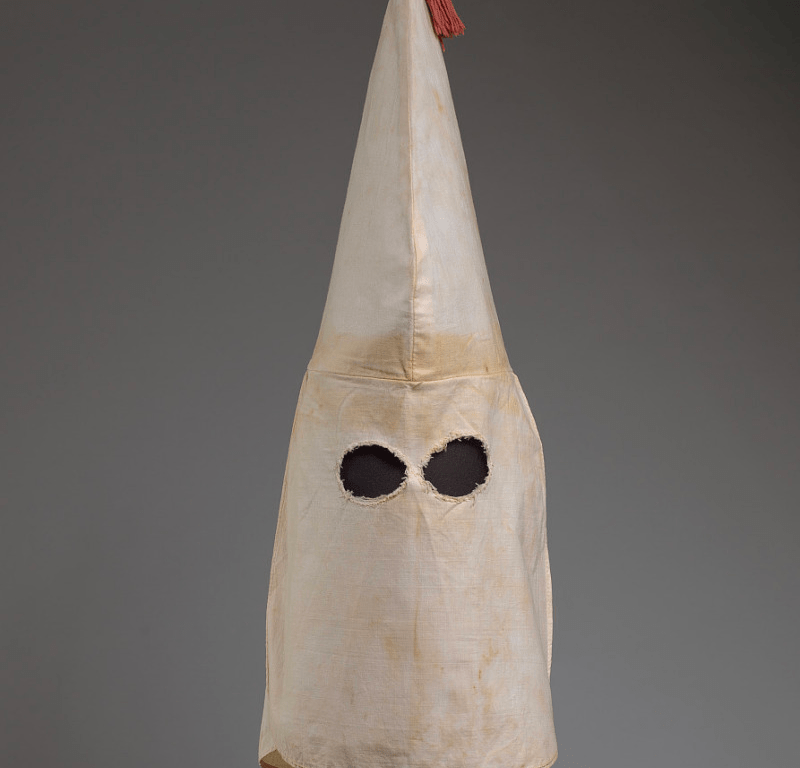
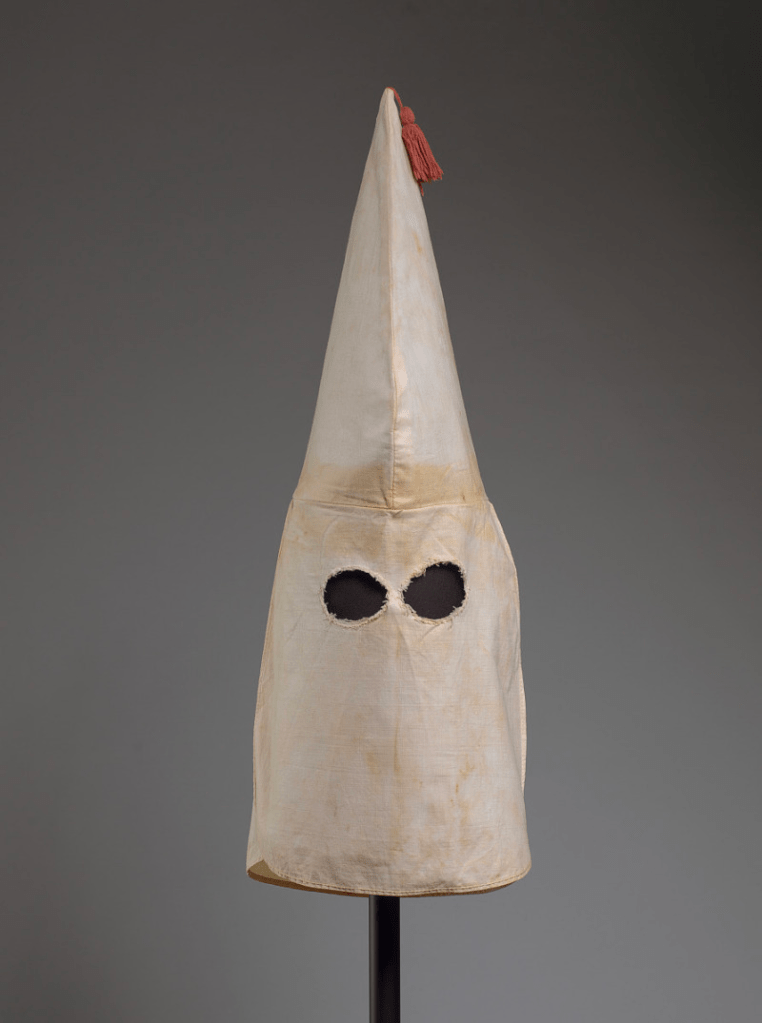
On December 23, 1921, the mayor of Portland, Oregon, announced that he was forming a vigilante group to assist the Portland Police. One hundred civilians would be armed—with guns, badges, the power to make arrests, and the cloak of anonymity—and set loose to patrol their communities at will. These men were to be selected in consultation with a local “patriotic order.” What the mayor did not announce was the name of the “patriotic order” with which he planned to coordinate the establishment of his vigilante mob squad. It was the Ku Klux Klan.
Seven months later, a crowd of two thousand people gathered a few miles outside the city of Portland. “Under a flaming red cross that loomed as a solitary beacon in the moonlit field,” the 1922 newspaper breathlessly reported, the crowd “…craned their necks and listened intently to catch the faint words of the Klansman’s oath.” One hundred ten new Klansmen were being initiated in the park just four blocks down the street from the house where I currently live. That scene was repeated in parks and auditoriums around the state, as Oregon quickly became home to the largest Klan population west of the Mississippi River.
Today, the Southern Poverty Law Center no longer reports the presence of the Ku Klux Klan in Oregon (though other far-right hate groups have arisen to take its place). But guns, like the ones that were freely handed out to the Klan-backed mob, are still very much here. When I drive down the freeway near my home, I often see a popular bumper sticker marking the vehicles of those who self-identify as “OreGUNians.” Just over half of the state’s residents own guns, the fifteenth-highest rate in the nation. An octogenarian at my church recently pulled me aside and whispered that I need not fear for my safety when I’m in the building because whenever he comes to church, he’s packing.
The idea that the presence of a gun leads to greater public safety is a uniquely American thought. “Two-thirds of gun-owning Americans say it’s a way to stay safe,” reports the Center for Public Integrity, “while people in other countries are more likely to believe the presence of a gun adds risk and danger to their lives.” Statistically, this is one instance where people in other countries are right: an increased rate of gun ownership leads to more overall homicides, suicides, and accidental deaths or injuries.
So why do Americans think guns will keep them safe? Perhaps it’s yet another case of American exceptionalism, with Americans believing they can succeed in circumventing expected statistics. Or could the belief in the “safety” of guns persist because some Americans perceive a threat in the presence of fellow Americans who look different from them? Across the United States, the higher the percentage of enslaved residents in any given county in 1860, the more guns are owned there today. Research also shows that White Americans with “high levels of anti-Black sentiments” tend to associate the concept of gun rights with White people, and gun control with Black people. In other words, White Americans who harbor racist attitudes tend to believe that the world will be a safer place if they themselves have more guns and Black people have fewer. Just as in the days of the Klan, guns are perceived to be useful as a means of maintaining vigilante “law and order” over other groups.
But the illusion of vigilante justice is just that: illusory. Certainly for Black citizens and also for White ones, the lesson of Portland’s mob squad is that combining guns with power threatens everyone’s public safety.
Because it didn’t take long for the 1920s mob squads to spiral out of control. In Portland, in addition to the 100-man vigilante group, a nine-man crew called the “Black Patrol” was appointed to “kidnap, manhandle, and mutilate.” Violence spread across the state, with “Klan-related disturbances” occurring in nearly every corner. In Medford, in southern Oregon, “a band of hooded night-riders was terrorizing the town” by picking “undesirable” people off the streets and swinging them from a noose until they were almost dead.
And the Klan’s violence did not extend only along racial lines. Klan orators publicly insulted the state’s Jews, and called for death to its Catholics. The first victim of the Medford gang was a Black man named George Burr, but its second victim was a White piano salesman who’d had the audacity to sue a Klansman for failing to pay for his piano. It turned out that the vigilantes had only ever had their own interests in mind.
Finally, after a Klan raid in neighboring California ended in gun violence and bloodshed, Oregon’s governor had had enough. He insisted on enforcing the state’s ordinances against full masking in the streets. Portland’s mayor agreed to comply (although he first issued a formal statement explaining that the move was only necessary because non-KKK members had supposedly been masquerading as Klansmen and causing trouble). With the ban on white hoods came a sudden drop in street violence. Oregon’s experiment with state-sanctioned mob rule found its end.
One hundred years later, the question of whether we can learn to form a truly safe and just society, for all our citizens, remains to be seen.
Discover more from Three-Fifths
Subscribe to get the latest posts sent to your email.

