
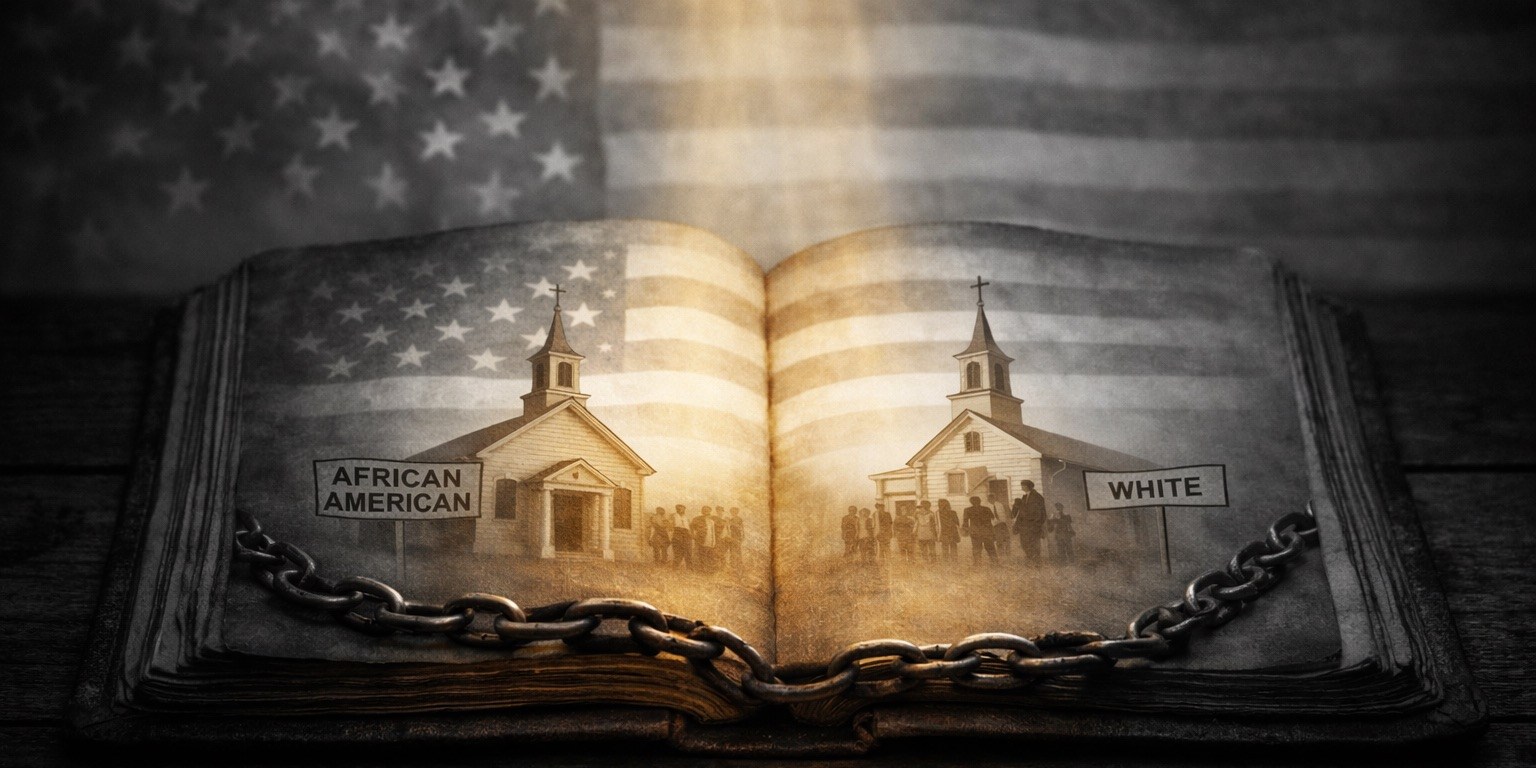
If the history of the United States were written like a book of the Bible, what would it say about us?
Would it speak of a nation wrestling with its own soul. A people proclaiming liberty while struggling to extend it to everyone. A country where faith has been invoked both to uplift humanity and to deny the humanity of others.
The American story is often told as a steady march toward freedom. Yet when examined honestly, another pattern emerges alongside that progress. Each step toward justice has been met with resistance. Again and again, that resistance has wrapped itself in the language of religion.
Long before the United States existed, the foundations of that pattern were already being laid. In 1452, Pope Nicholas V issued the papal bull Dum Diversas, granting Christian rulers the authority to conquer and subdue non-Christian peoples. In 1493, Pope Alexander VI issued Inter Caetera, reinforcing the idea that Christian explorers could claim lands inhabited by non-Christians. Together these declarations helped form what later became known as the Doctrine of Discovery. This theological framework allowed European powers to justify conquest, colonization, and the domination of Indigenous peoples throughout the Western Hemisphere.
By the early 1600s, that hierarchy began to take on a distinctly American form. In 1619, the first recorded group of enslaved Africans arrived in the English colony of Virginia. Over the course of the seventeenth century, colonial leaders constructed a system of racialized slavery that would shape the economic and social foundations of what became the United States. Religious arguments quickly followed. Biblical passages were interpreted to defend the enslavement of Africans, including the so called Curse of Ham from the Book of Genesis. Ministers and theologians argued that Africans were destined for servitude and that slavery could even serve a spiritual purpose by introducing enslaved people to Christianity. In this way, faith became intertwined with the earliest structures of American slavery.
During the American founding, the contradiction between liberty and slavery became impossible to ignore. The nation proclaimed that all men were created equal, yet millions remained in chains. Religious leaders played a central role in defending that contradiction. Pro slavery theologians increasingly argued that slavery was not merely tolerated by scripture but supported by it. Presbyterian minister James Henley Thornwell famously argued in the 1850s that slavery represented a divinely ordered social hierarchy and that opposing it meant rebelling against biblical authority. Entire theological systems were constructed to protect the institution.
The Civil War forced the nation into a profound moral reckoning. Both sides invoked God. Confederate ministers framed their cause as a defense of Christian civilization and a divinely sanctioned racial order. At the same time, President Abraham Lincoln spoke openly about divine judgment and moral responsibility. In his Second Inaugural Address in 1865, Lincoln suggested that the war itself might represent God’s judgment upon a nation that had tolerated slavery for centuries. In Lincoln’s understanding, faith demanded humility and moral reflection. In the Confederacy’s framing, faith justified domination. That divide revealed how profoundly religion could shape the meaning of justice itself.
When the war ended, Reconstruction briefly opened the door to a new democratic future. African Americans established schools, churches, and political institutions across the South. Black churches became centers of education, organizing, and civic leadership. For the first time, formerly enslaved people began exercising political power in meaningful ways.
But as progress appeared, backlash followed.
White religious leaders across the South often preached that Reconstruction had disrupted the natural order that God intended. The result was the emergence of Black Codes and later the Jim Crow system, laws designed to restore white dominance while preserving the language of morality and order. The promise of freedom was met with a new structure of racial control.
My own family history carries the weight of that era. My grandmother grew up in Lowndes County, Alabama in the late 1920s and early 1930s. Because of the hatred and racism that defined that time, she was never given the opportunity to learn to read or go to school. Yet her faith remained unshaken. She believed deeply in what the Lord would do for her people and for the generations that would follow. Her faith was not rooted in domination or exclusion. It was rooted in hope, dignity, and survival.
That same faith would later power one of the most transformative movements in American history.
During the Civil Rights Movement, Black churches became the spiritual and organizational center of a national struggle for equality. Ministers such as Dr. Martin Luther King Jr. drew upon scripture to call the nation toward justice, arguing that true Christianity demanded love, courage, and moral accountability. Faith that had once been used to justify slavery and segregation was now being used to dismantle them.
Yet the backlash did not disappear. It simply evolved.
Following the civil rights victories of the 1960s, religious rhetoric shifted rather than vanished. A growing political movement began to fuse conservative Christianity with a narrow definition of American identity. Over time this movement helped fuel what scholars now describe as Christian nationalism, a political ideology that merges religious identity with a particular vision of national belonging. In some corners of this movement, extremist texts such as The Turner Diaries imagined violent racial conflict and authoritarian rule. Though fringe in many respects, these ideas reflected a broader cultural reaction against the gains of the civil rights era.
Today those echoes remain visible in American politics. Public figures such as Charlie Kirk frame diversity, equity, and inclusion efforts as threats to the nation while invoking the language of faith and patriotism. These arguments are not new. They represent the latest chapter in a long historical pattern in which progress for marginalized people is met with backlash that seeks moral legitimacy through religion.
But there has always been another tradition of faith in America.
I believe in the God that Dr. Martin Luther King Jr. believed in. I have had the privilege of learning from people like Dr. Bernard Lafayette, may his soul now rest in peace, who worked beside King and helped shape the nonviolent movement that transformed this nation. That experience reminds me that I am only one person removed from the living legacy of the Civil Rights Movement.
The Lord that Dr. King prayed to is the Lord I believe in. Not a God of exclusion or domination. Not a God who blesses oppression in the name of nationalism. But a God who calls us to care for the least among us and to pursue justice even when it is difficult.
If the Book of America were written today, it would not only record our failures. It would record our choices.
And the question it would leave for the next chapter is simple.
Which version of faith will define who we become.

Educator & Future Public Servant
(Inspired by those who led with truth)
Discover more from Three-Fifths
Subscribe to get the latest posts sent to your email.
 Three-Fifths