
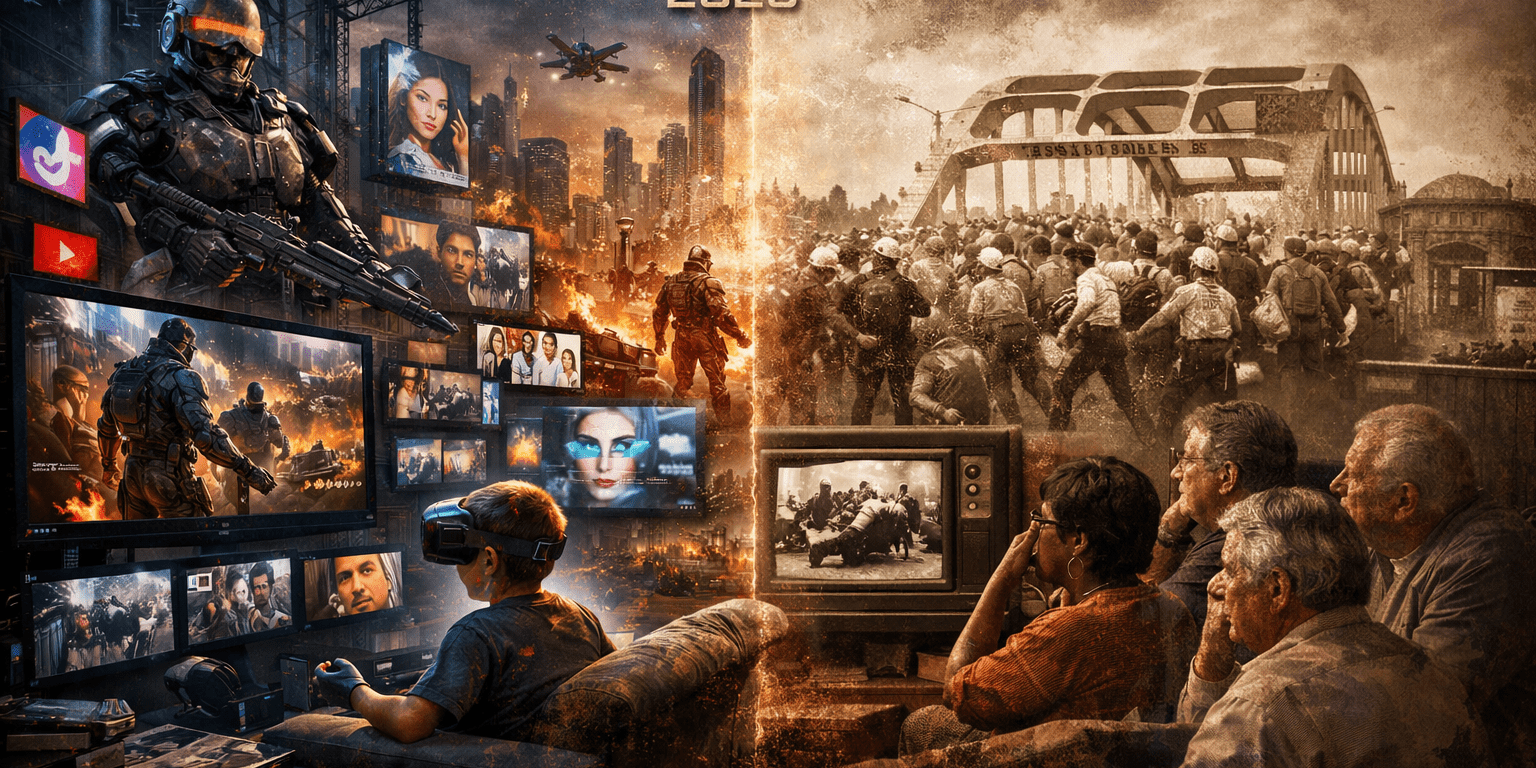
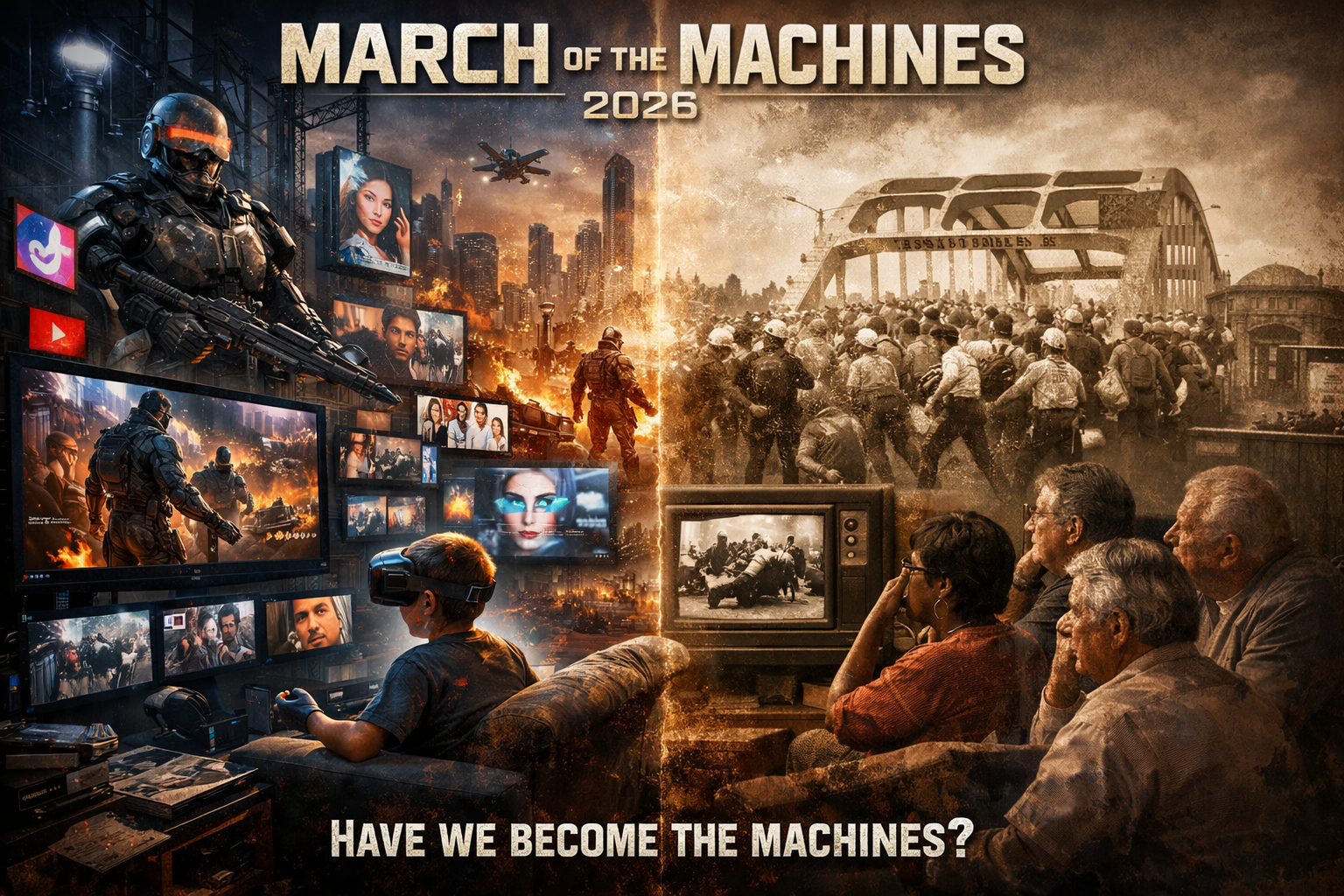
The phrase “March of the Machines” in 2026 paints a stark picture of a world increasingly shaped by advanced technology, where the lines between reality and simulation blur. Deepfake videos, a product of sophisticated AI, challenge our perception of truth, making it difficult to discern what is genuine. Simultaneously, Generation Alpha alone is growing up amidst this technological revolution, is exposed to an unprecedented volume of violence through gaming, social media platforms like TikTok and YouTube, and countless other digital communities. This constant, often unfiltered, stream of content creates an environment where the sheer quantity of disturbing imagery and narratives is overwhelming, accelerating at a pace that defies accurate measurement and comprehension.
Flashback 61 years from 2026 places us in 1965, a time when the nation collectively experienced profound shock and outrage watching the brutal beatings at the Edmund Pettus Bridge in Selma, Alabama, an event now etched in history as Bloody Sunday, March 7th, 1965.
This contemporary landscape stands in stark contrast to the societal reactions of just over six decades ago. Flashback 61 years from 2026 places us in 1965, a time when the nation collectively experienced profound shock and outrage watching the brutal beatings at the Edmund Pettus Bridge in Selma, Alabama, an event now etched in history as Bloody Sunday, March 7th, 1965. The visceral reaction of people sitting in their living rooms, united in their horror and disbelief, underscored a different era of collective consciousness and a more defined threshold for what constituted an unacceptable public spectacle of violence. The shock was palpable, a shared national experience that spurred reflection and action.
The “Rise of the Machines” question isn’t just about AI taking over; it forces a chilling question: have we, as a society, become the very heartless, insensitive machines we fear? In a world where digital noise drowns out genuine outrage, where deep fakes blur truth, and systemic racial injustice is reduced to fleeting content, our collective capacity for empathy has atrophied. If we are now merely processing information without feeling, scrolling past suffering without a flicker of moral shock, then the true threat isn’t just external technology, but internal dehumanization. To achieve racial equity, reconciliation, and justice, we must first escape this self-imposed mechanical state, reclaiming our humanity and the profound sensitivity required to truly see, feel, and act upon the injustices that persist.
To break through this pervasive desensitization, we must move beyond conventional appeals to outrage and instead forge new pathways to understanding and connection. This demands innovative storytelling that transcends the superficiality of the digital age, utilizing immersive narratives, personal testimonies, and even the very technologies that contribute to our desensitization, but repurposed for profound impact. We need to cultivate spaces, both digital and physical, where uncomfortable truths can be confronted without immediate dismissal, where empathy is not just preached but actively practiced, and where the complex nuances of racial injustice are explored with depth and authenticity. The goal is not to simply inform, but to resensitize – to reignite the capacity for moral indignation and compassionate response that is vital for any true societal reckoning.
This is a clarion call to writers, artists, thinkers, and communicators: the task before us is to re-engineer empathy itself. We must craft narratives that pierce through the digital noise, not by shouting louder, but by speaking with a resonance that bypasses the jaded intellect and touches the human spirit. Explore the untold stories, challenge the comfortable narratives, and illuminate the insidious ways in which racial injustice persists in our desensitized world. Your words, your art, your insights are not just commentary; they are vital instruments in the urgent work of reawakening a collective conscience, provoking a genuine racial justice reckoning, and ultimately, charting a path toward a more equitable and reconciled future.
Discover more from Three-Fifths
Subscribe to get the latest posts sent to your email.

 Three-Fifths