
The concept of time is one of humanity’s most enduring constructions. Yes, the Earth rotates around the Sun, but science tells us it doesn’t take exactly 24 hours. The time it takes for the Earth to complete its daily rotation is actually 23 hours, 56 minutes, and 4 seconds, and is referred to as the sidereal day (NASA, 2024). Humans are more familiar with a solar day, which comprises the 24-hour cycle that we experience. In addition to a day not being a full 24 hours, a year is not 365 days, but rather 365.24 days, which is why every four years we add a leap day to keep our calendars aligned. To make sense of sunlight’s shifting presence across the globe, humans created time zones. And to squeeze more daylight into our work schedules, daylight savings time was created, where, begrudgingly, we adjust the clocks twice a year and interrupt our sleep patterns to ensure enough sunlight will fill the workday.
While time is a human construct, nature, however, does not bow to these inventions. The sun rises and sets, the Earth turns, time changes occur, and the seasons follow one another in an unbroken rhythm. It is humans who bend, twist, and fracture the natural circle in the name of progress.
From its inception, the United States has been driven by acquisition and accumulation. Land was taken, resources extracted, and wealth amassed at the expense of Indigenous peoples and enslaved Africans. That drive still shapes us today. We are often urged to measure worth by productivity and success, rather than by connection or care. We often rush against the clock to meet deadlines and complete projects, sometimes at the expense of those around us. We produce harmful chemicals in the environment for the sake of progress, but do not consider the health risks they impose. The desire to acquire and consume silences many voices, leaving our circles fractured.
Our addiction to capitalism has widened that fracture. Once, humans lived in closer connection to the cycles of nature and to one another. Now, in the United States, it is perfectly acceptable, expected even, for someone who experiences trauma or grief to “move on quickly.” The cultural mantra of “pull yourself up by your bootstraps” dictates how suffering is exploited and demanded to accelerate. If the individual cannot cope alone, they are advised to seek professional help, rather than seeking healing within the community. This individualistic approach is another break in the circle. Healing rarely comes from isolation. Healing grows from connection.
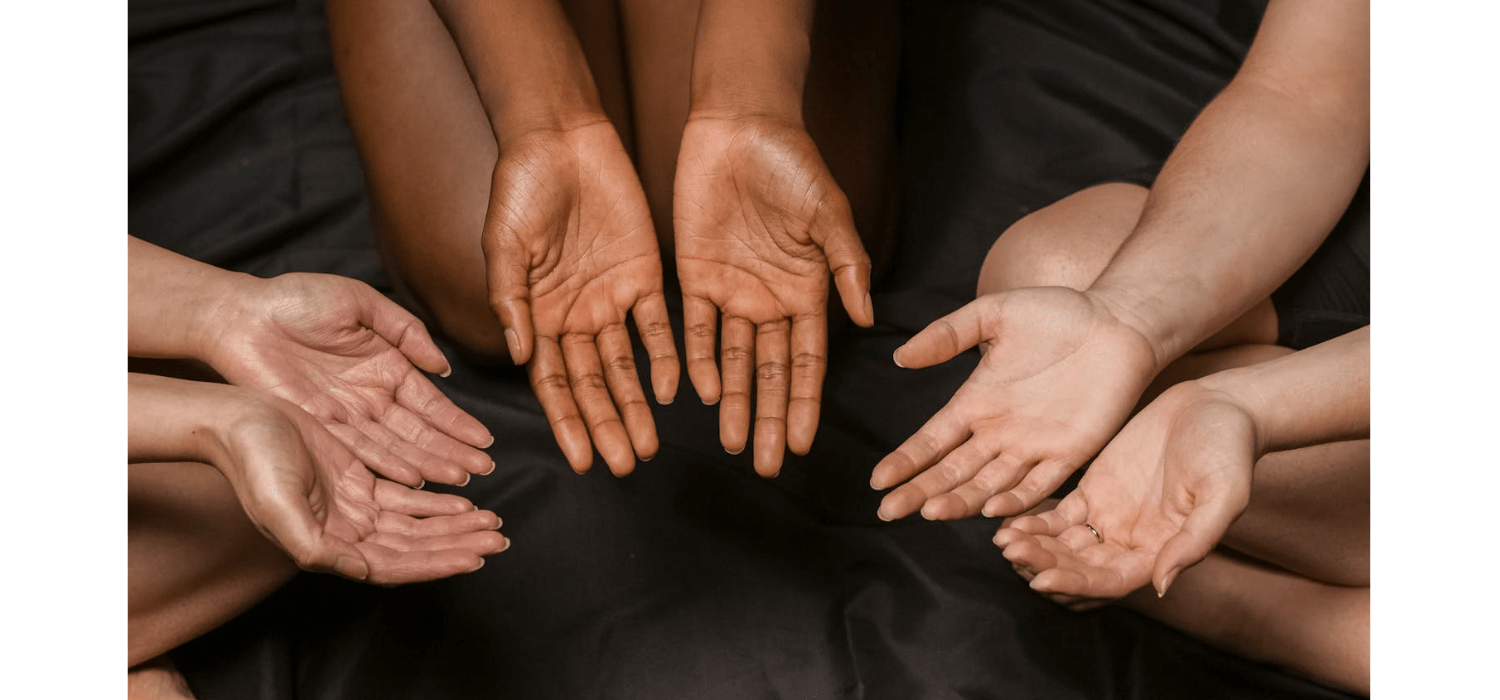
Indigenous cultures have long understood the power of healing within the community circle. Many tribal nations practiced healing circles, where people gathered together, passing a talking stick hand to hand so that every voice could be heard. These circles sought not punishment or judgment, but wholeness, resolution, and peace. In this way, justice was not a process of exclusion, but of restoration.
Across the ocean, the Masai people of East Africa embody this same communal spirit. Their traditional greeting, Kasserian Ingera or “How are the children?” holds deep meaning to the Masai. The expected answer, “All the children are well,” reflects a community that measures its well-being not by wealth or power but by the health of its youngest generation. If the children are thriving, the nation’s future is secure.
These traditions stand in stark contrast to the dominant culture of the United States. The early domination of conquer, colonize, and consume left the 15 million original inhabitants of the land now known as the United States all but extinct. There are 574 federally recognized tribal nations in the United States, and the current 56.2 million acres they inhabit is a mere fraction of the 1.5 billion acres they originally roamed. This land was acquired through treaties and ultimately held in trust by the United States Government (Dunbar-Ortiz, 2019; U.S. Department of the Interior, 2025). Indigenous nations Historian Howard Zinn, in A Young People’s History of the United States, notes that in Indigenous nations, “land did not belong to individuals, it belonged to the entire community. Women were important and respected, and the sexes shared power… The Indians had their own history, laws, and poetry. They lived in greater equality than people in Europe did” (p. 22). There is a fracture within the origin story in the United States, leaving out the point of view and experiences of the people who had already inhabited North America, but rather the story is told from a focus on the Doctrine of Discovery.
The brokenness of America’s origin story set in motion a pattern of fractures born from colonization, assimilation, and following white, European traditions and behavioral expectations. The Doctrine of Discovery did more than justify land theft; it embedded a hierarchy that placed white, European lives at the center and pushed Indigenous, Black, and other communities of color to the margins. That same hierarchy has carried forward, shaping nearly every system we depend on today—education, the church, policing, and health care. Just as First Nations were excluded from the circle of belonging at the nation’s founding, many communities remain excluded from the circle of community today.
This fracture is evident in our health systems, which continue to reflect the legacies of colonization and white supremacy. The circle of health equity in America remains broken, leaving marginalized communities historically vulnerable. Black, Indigenous, and other communities of color often carry the heaviest burdens of illness, environmental harm, and unequal access to care (Harris, 2018). These inequities are not accidental; they were intentionally built into the system. The U.S. government oversaw the forced sterilization of thousands of Indigenous women in the twentieth century, often without their consent (Vashisht, 2023). Black men were exploited in the Tuskegee syphilis study, left untreated for decades so researchers could observe the progression of the disease (CDC, 2024). Latinx communities have long been subjected to environmental racism, with toxic industries disproportionately sited in their neighborhoods (Carter-Pokras, 2007).
These health disparities continue to impact communities of color today. The headlines stare back at the reader with glaring discrimination in our health care system.
- Black women in the United States are three to four times more likely to die from pregnancy-related causes than white women (PRB, 2023).
- Native communities face higher rates of diabetes and shorter life expectancies (IHS, 2019).
- COVID-19 pandemic, Black, Latinx, and Indigenous people experienced higher infection and death rates (Mackey, 2020).
While often tied to systemic inequities in housing, labor, and healthcare access, these headlines should be treated with the same urgency as a four-alarm fire; however, they are not. In fact, their research funding is eliminated, and agencies that had once deemed racism as a public health crisis have since rolled back on their proclamations.
These systemic harms do not just impact statistics; they affect humans. In his groundbreaking book, The Body Keeps the Score, Dr. Van Der Kolk describes how trauma becomes embedded in the body’s physiology. He examines western psychological healing traditions, shaped by individualism, that focus more on solving problems in isolation, excluding global traditions of healing that incorporate mindfulness, movement, rhythms, and collective action (Van Der Kolk, 2014, p. 209). Within a system that glorifies “pulling yourself up by your bootstraps,” people in pain are often left shamed and alone. Yet, as Van Der Kolk (2014) notes, “when traumatized human beings recover in the context of a relationship with families, loved ones… bolster the courage to tolerate, face, and process the reality of what has happened” (p. 212). Human beings recover most fully in relationship with families, loved ones, and communities that bolster the courage to face and process the reality of what has happened. Healing does not occur in isolation; it occurs when the community surrounds the person with respect, honesty, and togetherness.
If the natural world teaches us anything, it is that circles of community sustain life. The Earth’s rotation, the cycles of the moon, and the changing of seasons all move in endless rounds. Indigenous wisdom echoes this truth: circles bring balance, inclusion, and healing. We must restore the circles of belonging that once guided human connection.
The challenge before us is to restore the broken circles of our society. That work begins by listening to voices that have been excluded. It continues by reimagining systems of care, justice, and community that value wholeness over consumption. And it demands that we place well-being, especially of our most vulnerable, our children, at the center.
As we gather this Thanksgiving, a holiday that cannot be separated from the history of First Nations peoples, we are invited to reflect on their traditions of the circle, community, and wholeness. To honor that legacy is to commit ourselves to closing the circle of health equity. Doing so moves us beyond identifying the problem and into the more challenging yet hopeful work of finding solutions together.
The circle, once closed, does not exclude. It gathers us in. It reminds us that healing is not found in racing against the clock, but in reconnecting with the rhythms of nature, with one another, and with ourselves. We will be able to say wholeheartedly, yes, all the children are well.
References
CDC. “About the Untreated Syphilis Study at Tuskegee.” The U.S. Public Health Service Untreated Syphilis Study at Tuskegee, CDC, 4 Sept. 2024, http://www.cdc.gov/tuskegee/about/index.html.
Carter-Pokras O, Zambrana RE, Poppell CF, Logie LA, Guerrero-Preston R. The environmental health of Latino children. J Pediatr Health Care. 2007 Sep-Oct;21(5):307-14. doi: 10.1016/j.pedhc.2006.12.005. PMID: 17825728; PMCID: PMC2967224. Dunbar-Ortiz, R. An Indigenous Peoples’ History of the United States for Young People. Boston, Beacon Press, 2019.
Indian Health Service. “Disparities.” Indian Health Service, 2019, http://www.ihs.gov/newsroom/factsheets/disparities/.
Harris, Nadine Burke. The Deepest Well : Healing the Long-Term Effects of Childhood Adversity. Boston, Houghton Mifflin Harcourt, 2018.
Mackey, Katherine. “Racial and Ethnic Disparities in COVID-19–Related Infections, Hospitalizations, and Deaths.” Annals of Internal Medicine, vol. 174, no. 3, 1 Dec. 2020, https://doi.org/10.7326/m20-6306.
PRB. “Maternal Death among U.S. Black Women.” PRB, 9 Mar. 2023, http://www.prb.org/resources/maternal-death-among-u-s-black-women/.
US Department of Interior. “About Us | Indian Affairs.” Bia.gov, 2019, http://www.bia.gov/about-us.
Van Der Kolk, Bessel. The Body Keeps the Score: Brain, Mind, and Body in the Healing of Trauma. New York, Penguin Books, 25 Sept. 2015.
Vashisht , Meera . “Forced and Coercive Sterilization of Native American Women: Eugenics and the Family Planning Services and Population Research Act 1970-1976 – Yale Journal of Medicine and Law.” Yale.edu, 7 Nov. 2023, campuspress.yale.edu/yjml/2023/11/07/forced-and-coercive-sterilization-of-native-american-women-eugenics-and-the-family-planning-services-and-population-research-act-1970-1976/.
Zinn, Howard. A Young People’s History of the United States. New York, Seven Stories ; London, 2 June 2009.
Discover more from Three-Fifths
Subscribe to get the latest posts sent to your email.
 Three-Fifths