


How faith, justice, and community connection can mend what has been broken in Black and Brown well-being.
The Broken Circle
The circle has always symbolized wholeness. In faith, it represents eternity. In public health, it represents balance. Yet across America, that circle has been broken for many communities of color. Health inequities are not only medical; they are moral. To restore balance, we must return to the first principle of life itself: that every person bears the breath of God and the right to live whole.
There have been many Biblical, clinical, historical, philosophical, and psychological explanations for the human condition. Each tries to name what went wrong. Some claim that “man is selfish and self-centered.” Others argue that “man is intrinsically evil.” The Bible teaches that humanity was born into sin and shaped in iniquity. Yet before focusing on what is broken, we must return to what was whole.
Three Foundational Truths of Wholeness
- In the beginning, God.
Genesis 1:1 establishes life. Everything that exists—every breath, every heartbeat—exists because of God. Life is sacred because it begins in divinity, not in accident. - Life was created in the image of God.
Genesis 1:27 reminds us that humanity was made in the Creator’s image. Every human being carries the imprint of divine worth that cannot be ranked, priced, or rationed. - The Word has power.
John 1:1 declares, “In the beginning was the Word, and the Word was with God, and the Word was God.” Words shape worlds. The way we speak about health, worth, and who “deserves” care can either breathe life or take it away.
If life begins with God, then health equity begins with honoring that divine breath in every person.
The Circle of Health and the Crisis of Disconnection
If life is sacred, then every system that touches life should also be sacred. Yet in the United States, many systems tell another story. The circle of health has been fractured by disconnection, neglect, and disbelief in one another’s humanity. We can hear it in the data and feel it in our communities—when safety is uncertain, when care is unaffordable, and when despair becomes normalized.
These fractures are not isolated. They form an interlocking web of inequity that touches every domain of life—from birth to death and across generations.
Life, Loss, and the Intersections of Inequity
Life Expectancy and Geography
The length of life often depends on the ZIP code of birth. Black Americans live nearly five years shorter on average than White Americans (CDC, 2024). Those years are lost to stress, environmental exposure, and disinvestment. In the U.S. South, where Black families have deep historical roots, rates of chronic disease and premature death remain among the highest in the nation. The same soil that birthed freedom songs now bears the burden of inequity.
Gun Violence and Generational Trauma
Gun violence is now the leading cause of death for Black men under 45 and the second leading cause of death for all American children and teens (CDC, 2024). The firearm homicide rate for Black Americans is twelve times higher than for White Americans. The American Public Health Association calls gun violence a public health crisis, one that must be addressed through prevention, investment, and collective healing—not punishment.
Mental Health and the Cost of Grief
Only one in three Black adults who need mental-health care receive it (APA, 2023). Barriers include affordability, stigma, and deep distrust rooted in historical trauma. Unresolved grief from violence, discrimination, and poverty compounds the crisis, affecting both body and spirit.
Environment and Economy
Environmental injustice remains a silent threat. Black and Brown communities are more likely to live near pollutants, have limited access to green space, and face higher risks of asthma, cancer, and heart disease (Williams & Cooper, 2019). Economic inequities intensify these disparities, shaping access to healthy food, stable housing, and preventive care (Bates & Hodge, 2022).
When connected, these data points reveal a single pattern: a broken circle where violence, poverty, pollution, and neglect orbit a shared center—the devaluation of life.
Spiritual Determinants of Health: The Missing Piece of the Circle
Public health often focuses on the social determinants of health—education, income, housing, and access to care. Yet for many Black and Brown communities, health is also deeply shaped by the spiritual determinants of health—belief, belonging, and purpose.
Spiritual determinants of health describe how faith, hope, and meaning influence health outcomes and resilience. They ask critical questions:
- Do people believe their lives are worth saving?
- Do systems treat them as sacred or expendable?
- Are their cultural and spiritual practices recognized as part of healing?
When people are told across generations that their lives are disposable, the injury is not only social—it is spiritual.
Emerging research affirms what communities of faith have long practiced:
- The World Health Organization recognizes spirituality and meaning as central to well-being and recommends their inclusion in public-health frameworks (WHO, 2024).
- Among Black women, religiosity and spirituality predict higher psychological well-being, with prayer serving as a consistent protective factor (Assari & Lankarani, 2013).
- Historically, faith communities have functioned as informal public-health systems, providing social support, counseling, and mutual aid where institutional systems fell short.
Spiritual determinants are not secondary. They are the connective tissue between health and humanity. They explain how communities sustain themselves under pressure and why wellness cannot be achieved without dignity. But calling for resilience without addressing root causes is another form of harm. Repairing the circle requires valuing both faith and fairness as interdependent forces for equity.
Pathways to Restoration
Closing the circle requires more than awareness. It demands aligned action across personal, communal, and systemic levels.
1. Personal: Honoring Sacred Worth in Care
Health professionals can begin by practicing cultural humility—seeing patients not as cases but as full human beings. Asking what matters most, partnering with spiritual leaders, and acknowledging generational trauma rebuild trust.
2. Communal: Partnering with Faith and Cultural Institutions
Faith-based and community organizations are often the first responders in crises. Health systems can collaborate by funding community-led wellness programs, hosting screenings in trusted spaces, and training lay health ministers and peer counselors who reflect the communities they serve.
3. Systemic: Embedding Spiritual Determinants into Equity Frameworks
Health equity frameworks should integrate spiritual well-being alongside physical and mental health. Policies that fund spiritual care, community healing, and culturally grounded practices transform acknowledgment into accountability.
A Sacred Mandate
Health equity is not just a technical goal or policy metric. It is a sacred mandate—a collective promise that what God created, we will not destroy or dismiss.
The circle reminds us that when it is whole, no one stands above or below, in front or behind. When it is broken, some lives are pushed to the margins while others remain at the center.
To restore the circle, we must treat wellness as both a right and a responsibility. From pews to clinics, classrooms to capitols, the work continues.
If the first truth is that there is life, the next is that we are responsible for one another’s wholeness. A circle, by design, has no end—which means there is always a way back.
References
- American Psychological Association. (2023). Stress in America 2023: A Nation Recovering from Collective Trauma.
- American Public Health Association. (2024). Gun Violence Prevention: A Public Health Priority.
- Assari, S., & Lankarani, M. M. (2013). The Influence of Religiosity and Spirituality on Psychological Well-Being Among Black Women. Journal of Black Psychology.
- Bates, L., & Hodge, D. (2022). Faith, Race, and Health Inequities in the United States. Frontiers in Public Health, 10, 9580265.
- Centers for Disease Control and Prevention. (2024). Firearm Violence: Facts and Statistics.
- Centers for Disease Control and Prevention. (2024). Life Expectancy in the United States, 2023. Data Brief 521.
- Holy Bible, New Living Translation. (2007). Tyndale House Foundation. (Scripture references: Genesis 1:1, Genesis 1:27, John 1:1.)
- Williams, D. R., & Cooper, L. A. (2019). Reducing Racial Inequities in Health: Using What We Already Know to Take Action. International Journal of Environmental Research and Public Health, 16(4), 606.
- World Health Organization. (2024). Achieving Well-Being: A Global Framework for Integrating Well-Being into Public Health.
About the Author
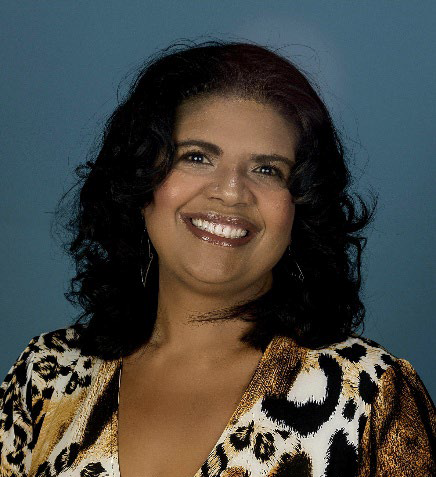
A North Carolina native and true Tar Heel, Fawn N. Rhodes, MPH, ACUE is a Community Health Engagement Strategist, Faith-Based Health Equity Advocate, and Doctoral Student in Global Health Equity at Meharry Medical College School of Global Health. Her research, “When Stories Heal: The Public Health Griot Approach as a Health Equity and Justice Framework,” explores storytelling as a culturally grounded method for addressing historical trauma among Black diaspora female elders. Fawn bridges faith, justice, and community action as the founder and writer of The Public Health Griot and Rhodes To Wellness, LLC, advancing collective healing and health equity through faith, education, and culturally responsive practice.
Discover more from Three-Fifths
Subscribe to get the latest posts sent to your email.
 Three-Fifths