

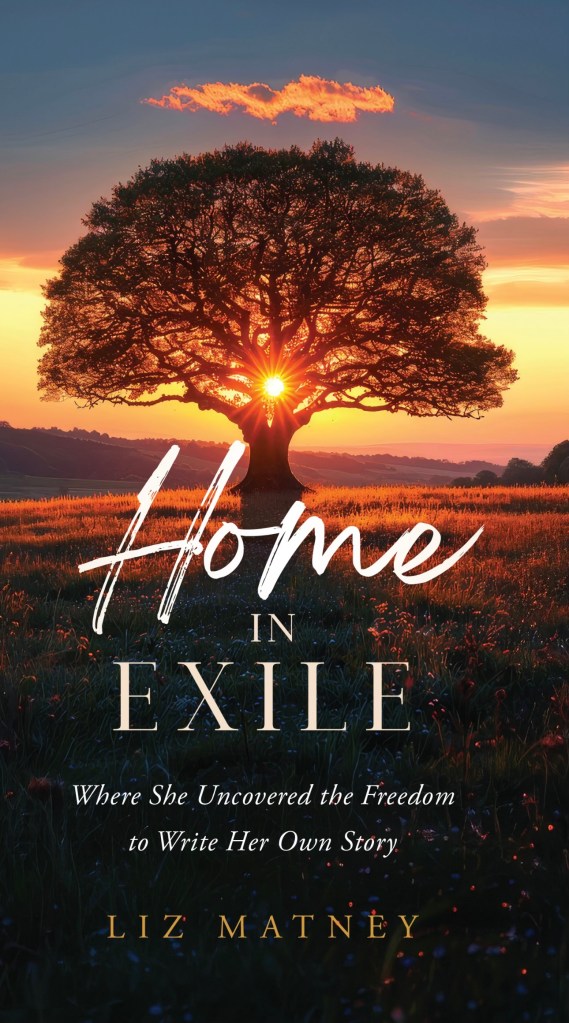
I wrote Home in Exile to trace the fraying and repair of family, faith, and belonging across continents. Small observations stitch together this memoire that talks about the tamarind trees in Dada and Dadi’s (my grandparent’s) garden. Under the shade of these trees, people from every faith and no faith at all shared countless cups of chai. Neighbors and strangers shared remedies and at times we simply sat in the low hum of prayers sliding through the evening breeze. Writing helped me name the joy and the pain.
This memoire nursed the wounds of those anxious days when we did not know if our loved ones were safe. Recalling these experiences reminded me of the human circles that are imperfect, resilient, and that carry us through life. The fraying and repair of a family carries stories of individuals and their health. These human circles contribute to the state of that health. Home in Exile taught me that health is never just medicine. It is memory. It is movement and rhythm. It is care. These circles become vessels of wisdom.
The ruptures in our circles need to be recognized and repaired. When I think of the web of relationships, or shared humanity, I cannot help but think of my grandparents. My Nani, the wife of an England educated plastic surgeon, fell ill from a lack of lithium in her blood. Some over spiritualized her condition and spoke as though prayer and repentance would suffice. Others, who loved her fiercely, felt helpless. And yet, that circle never stopped watching. It was only when her son, my uncle, read his medical textbooks at JohnsHopkins University, he recognized the signs. He prescribed the right medication, and Nani began to heal. It was a miracle, yes, but also a lesson: circles are not broken; they are sometimes hurt because they are too small, too rigid, too narrow. They need expansion. They need understanding. They need the feather to pass.
Circles can fray, not because we are weak, but because life tests us with imbalances, with exile, with uncertainty, the politics behind belonging, and the slow wear of human error. Home in Exile reflects on these fragments, in the hush of verandas, in the grit of dusty lanes, in the smell of wet soil after monsoon. These same circles carry the potential to experience repair. When people dehumanize one another, commit injustice, or forget that we are bound together in this web of humanity, we need to recall memory, honest observation, reverent ritual, and the stubborn persistence of understanding love.
Even when relationships fracture, remembrance keeps the circle intact at a deeper level. I remember in my parent’s home, Maa would teach us kids to mix herbal remedies for a cold. Grinding the ginger and turmeric roots. The crackling sound of roasting peppercorns. Drizzling, golden honey mixing with warm water in a clay pot. Each act performed with attention to details. This was an apprenticeship in care. This is the knowledge that survives exile. The wisdom that is passed down forms the architecture of the circle. We simply need to remember.
Health equity, framed this way, is never top-down. It is the widening of circles that already exist. Families, communities, and Christ-centered faith hold wisdom that modern systems often overlook.
Liz Matney
There is a Kanienkehaka teaching that says, “In a circle, no one is above or below.” This Thanksgiving, as we sit around the table, may we not forget that this occasion is not simply about turkey, stuffing, and pumpkin pie. It is a test of our moral imagination and remembrance. When I thank God for my wellbeing, I am reminded that health is never a mere commodity, that wellness depends on the care we demonstrate to one another. Home in Exile traces these precious acts that deserve attention. I recall the months earlier in 2024 when we did not know if our loved ones were safe. Then I write about the following months of reunion, healing, and finally Christmas in the Rockies where we all gathered, hearts brimming with gratitude because we were together. Not perfect, not flawless, but alive because the birth of our Savior felt like a tangible reality especially that Christmas after the exile.
These circles are ancestral, intergenerational, spiritual. They show how care flows when it is relational, not transactional. They remind us that equity is not simply a policy or a statistic, it is practice. In Nani’s illness, we saw the old and new, prayer and science, intuition and observation, collide and reconcile. The healing was not only physical; it was emotional, something that tugged at the human essence. It was proof that knowledge, when held and passed through the circle, can be transformative.
Health equity, framed this way, is never top-down. It is the widening of circles that already exist. Families, communities, and Christ-centered faith hold wisdom that modern systems often overlook. Indian families, Indigenous communities, African American churches carry practices of care honed across generations, learned through adversity, shared in kitchens, courtyards, and Dada-Dadi’s gardens, taught through repetition and attention. They are not gaps to be filled, they are strengths to be honored. Home in Exile insists that we remember, honor, and pay attention.
The sharing circle is more than a metaphor. It is method. It is ethics. It is politics. In Home in Exile, ordinary people enact justice in big and small ways: neighbors kneeling in prayers during political unrest, families pooling resources and standing in solidarity to demonstrate care, elders translating knowledge to the next generation. These are circles that sustain dignity while building necessary bridges- relational, practical, and ethical. While inequalities appear in Native communities, across immigrant populations, wherever access is uneven – repair is relational, not bureaucratic. Passing the feather is both a gesture and a methodology: observing, listening, acting, and expanding the circle until it holds.
The feather keeps moving as it passes through hands that are careful, hands that tremble, hands that know the weight of responsibility. In Home in Exile, the feather is in every small detail: a shared remedy, a whispered prayer, thoughtful instructions, creating pathways where there seemed to be no way ahead. Health is never abstract. It is relational, lived, inherited, and observed. Passing the feather and expanding the circle asks us to recognize that our responsibility extends beyond our own bodies, our own families, and our own faiths.
Privilege is not erased; it is leveraged, shared, widened. Immigrant families in the United States may arrive with advantages, with education, resources, access. Yet the gift of cultural knowledge, of ritualized care, of intergenerational wisdom, can extend those advantages across the circle, for everyone. That is the moral imagination that can heal the ruptures.
Home in Exile is a record of circles sustained, tested, and repaired. My family’s restored sense of belonging. Restored health of loved ones. The resilient roots of the tamarind trees. The Rockies Christmas filled with tears of gratitude. Each is a proof that the circle can hold even when threatened. The circle will remain unbroken, not by accident or luck, but by attention, care, knowledge, and shared responsibility.
This Thanksgiving, as we reflect on the circles that God graciously gifted to us, may our stories and our voices strengthen this ethic of care. May we observe, and remember, and act. May we widen our circles and heal the ruptures. May we pass on the feather because the circle holds on.

Discover more from Three-Fifths
Subscribe to get the latest posts sent to your email.
 Three-Fifths