

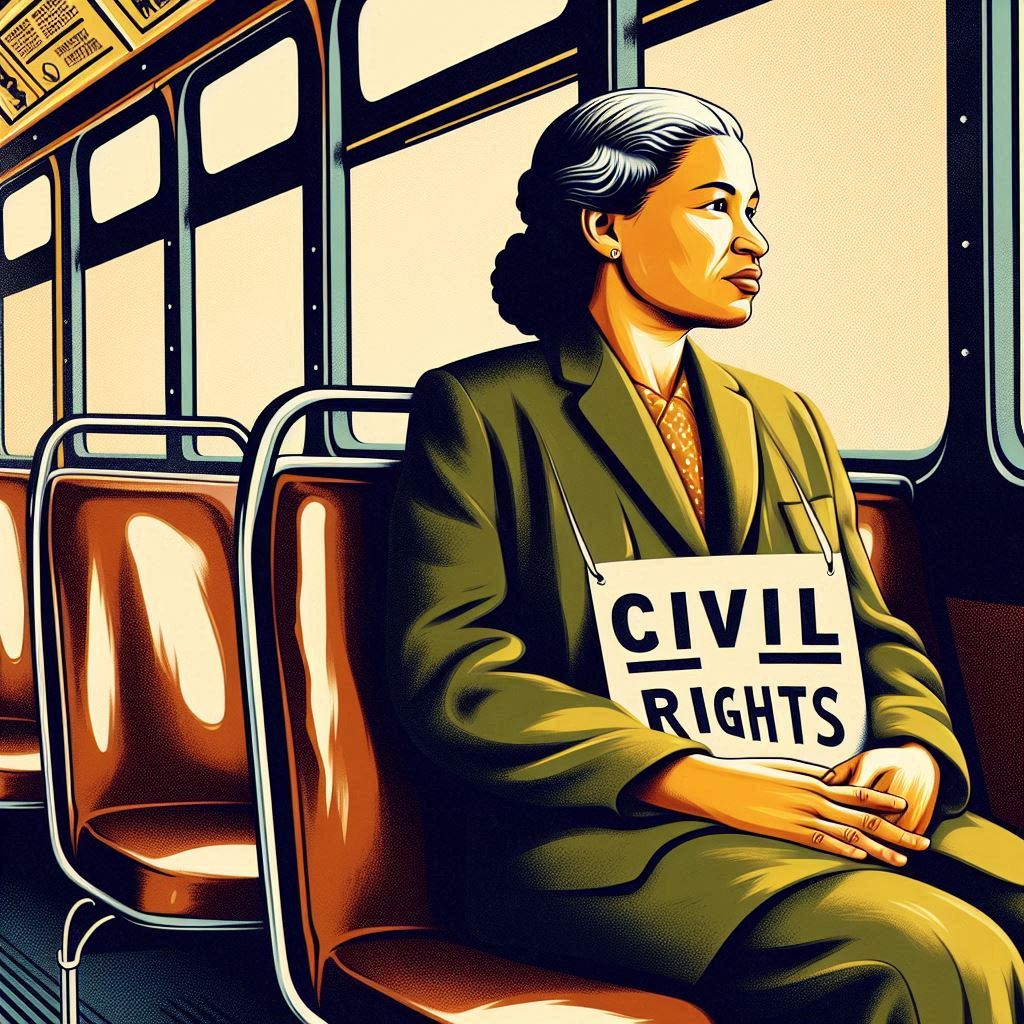
I felt that I was not being treated right, and that I had a right to retain the seat that I had taken as a passenger on the bus. The time had just come when I had been pushed as far as I could stand to be pushed, I suppose.
Rosa Parks
Fall is the most beautiful season of the year. It is like a sermon in motion. It arrives not with fanfare, but with quiet reverence, like a sacred call-and-response. Leaves surrender their green for burnt orange, crimson red, and scorched brown. It’s not decay—it’s transformation. A vibrant array of colors spreads across the land, revealing God’s divine canvas as it transforms into a masterpiece of movement and meaning.
And somehow, the leaves know. They release themselves from the branch, falling with grace to the ground below. The temperature follows suit, cooling with a breeze that whispers, “It’s time.” The Earth spins faithfully on its tilted axis, orbiting the sun, gifting us day and night in perfect balance. Even in places where light and darkness seem uneven, there is still equity.
Look at God. Even nature knows when change is coming. It does not resist; it simply surrenders.
But what does this seasonal rhythm have to do with civil rights and Rosa Parks? Everything. Just as the Earth knows when to shift, so too did Rosa Parks.
It was December 1, 1955, when Mrs. Rosa Louise Parks—an activist, a civil rights strategist, a woman with fire shut up in her bones—boarded a segregated bus in Montgomery, Alabama. She was returning home from work, weary of the daily indignity of racial injustice.
These buses weren’t neutral spaces. They were battlegrounds of humiliation where Black passengers paid their fare like everybody else, but were forced to enter through the back, and give up their seats if a white rider demanded it. It was a ritual of erasure, a daily decree: This is your place in America.
But Rosa Parks refused that narrative. She knew her worth. She remained seated—not out of defiance, but out of dignity. She rejected the notion of being “othered,” of being made less than. Her stillness roared across the segregated South, sending ripples that would become a revolution.
And this moment wasn’t spontaneous. Rosa Parks had lived a life of resistance long before that bus ride. As a child in Pine Level, Alabama, she walked miles to a one-room schoolhouse for Black children, while white children rode buses to better-funded schools. She also picked cotton. At a young age, she watched her grandfather, Sylvester Edwards—a follower of Marcus Garvey—sit armed on the porch, ready to defend his family from racial violence. She joined the NAACP and served as secretary of the Montgomery Branch, documenting injustice and preparing for the moment when truth would meet action.
Her husband, Raymond Parks, was also a fierce advocate and a member of the Montgomery Branch NAACP. Together, they lived the movement before the world named it.
Rosa Parks wasn’t the first to resist bus segregation, but her arrest became the spark for the Montgomery Bus Boycott—a 381-day act of collective courage led by a then-unknown pastor named Dr. Martin Luther King Jr. Black citizens walked to work, organized carpools, endured threats and retaliation. They didn’t just challenge transportation; they redefined the nation’s moral compass.
Rosa Parks bore the weight of her act of resistance. She lost her job. She faced death threats. But she never lost her dignity. She became a national symbol of strength—not because she shouted, but because she sat. Because she knew that sometimes, to restore order, you must interrupt human injustice.
When unjust systems dare to question our right to exist, to belong, to be seen and heard, we do not flinch. We stay seated in our truth—just as Rosa Parks did—and declare with unwavering conviction: We shall not be moved.
Our civil rights are not seasonal. They do not sway with the changing winds of policy or prejudice. They are grounded in the Constitution and carved into the soul of this nation through generations of sacrifice.
For African Americans, our civil rights were forged in the fire of marches and shaped by the rhythm of protest songs. They were uplifted by the prayers of church mothers and carried in the footsteps of weary travelers on segregated buses. These rights emerged from pulpits and porches, cotton fields and courtrooms, from whispered dreams and shouted demands. These rights are not negotiable; they are sacred, and we will not go back.
So yes, nature teaches us about timing, balance, and beauty. But Rosa Parks taught us that when human systems betray that balance, we must become the season of change.

Discover more from Three-Fifths
Subscribe to get the latest posts sent to your email.

 Three-Fifths