
We must call it like we see it, and then we must have the courage to discuss it.
Currently, we are experiencing a moment where politics has seeped into American society and begun to affect people in three major ways that are foundational to understanding how we have become a country: Political, economic, and Social.
In Ohio, where I both learned and later taught history, this isn’t just my perspective; it’s literally the standard. Standard 7 requires that students understand that “the outcome of the American Revolution was national independence and new political, social, and economic relationships for the American people.” That is how I learned it, and that is how I was expected to teach it.
Having taught 8th-grade social studies and being very proud of the education I received, I owe a debt to the people who shaped me. My 8th-grade history teacher first brought the Revolution to life. My high school history and government teacher pushed me to interrogate democracy itself. My principal modeled what it meant to be a consistent leader. At The Ohio State University, my professors demanded that I look at our country honestly. How it came to be, and what role education plays in understanding it.
Together, these educators gave me a foundation not only to study America, but to understand it. They showed me that the political, economic, and social forces that defined our nation at its birth continue to define it today. Policies that benefit some while excluding others, ideology and religion that divide rather than unite, and social tensions that target minorities. These are not new challenges. They are the recurring tests of our democracy.
This government was created for those who had had enough of one-sided politics resulting in unfair policies that affected a certain kind of person. Well, now we have a situation where policies benefit some while majorities of others are suffering from societal exclusion because ideology and religion are caught up in our everyday lives, leading to political, economic, and social divisions that are bad for the future. American history tells us that when minorities are being negatively affected by ideology, government officials, and a political party, it does not end well. I, as an American, and someone who’s witnessing the trends of society, pray that we can all simply acknowledge that when government and policy feel targeted and limit opportunities, close doors and businesses, spur political violence, and cause general harm, hatred, and division.
No. One. Wins.
The portion of the Constitution that speaks of promoting the general welfare and securing the blessings of liberty to “ourselves” is beginning to ring a bit hollow for a certain group of people. Not for lack of love for the country, but because of the way government is promoting the very social tensions that once led to dysfunction and ill-fated living conditions for those of us who do not occupy the places of power.
If slavery is going to be the topic that is sanitized and pushed aside as some sort of insignificant history, let us turn an eye on the political, economic, and social tensions of the 1960s. Those people are still alive. They could tell their unique American story. If you’re a minority, that story shines light on the fallout of when government and political parties function on hatred, division, and one-sided policy outcomes. So here we are, once again, at a crossroads.
We can pretend that history does not matter, that policies targeting certain people are simply “politics as usual.” We can allow religion to be weaponized to excuse division, hatred, and exclusion. Or we can remember that faith has also been a voice for unity, justice, and truth.
Romans 16:17-18 states: “I appeal to you, brothers, to watch out for those who cause divisions and create obstacles contrary to the doctrine that you have been taught; avoid them. For such persons do not serve our Lord Christ, but their own appetites, and by smooth talk and flattery they deceive the hearts of the naive.”
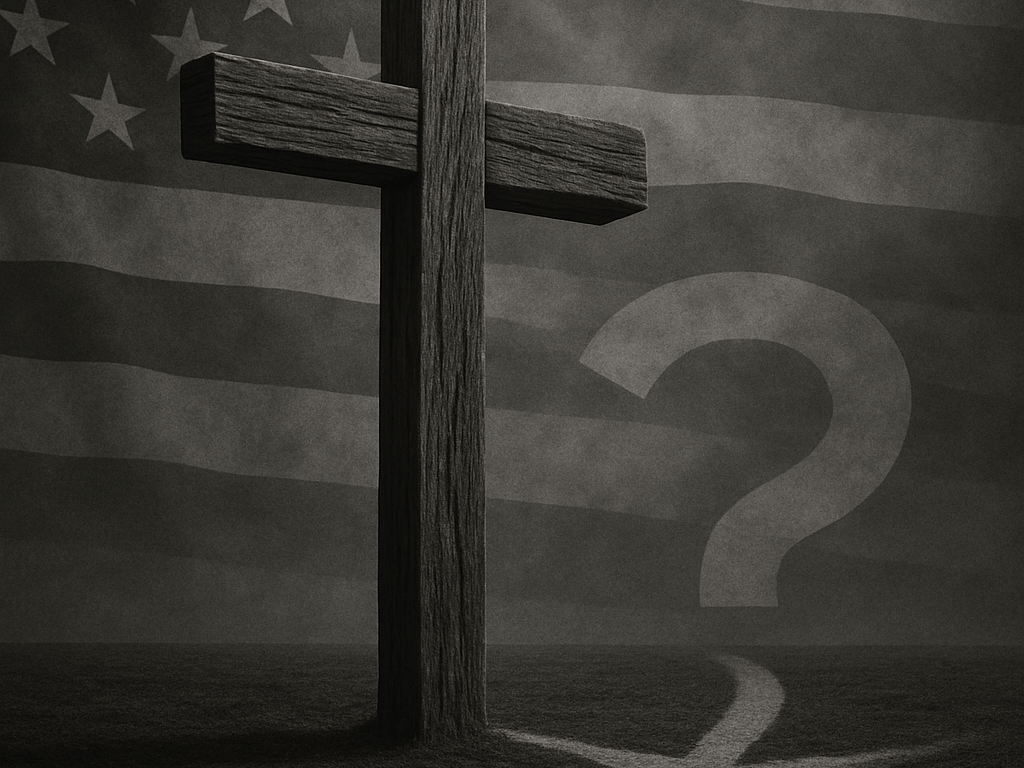
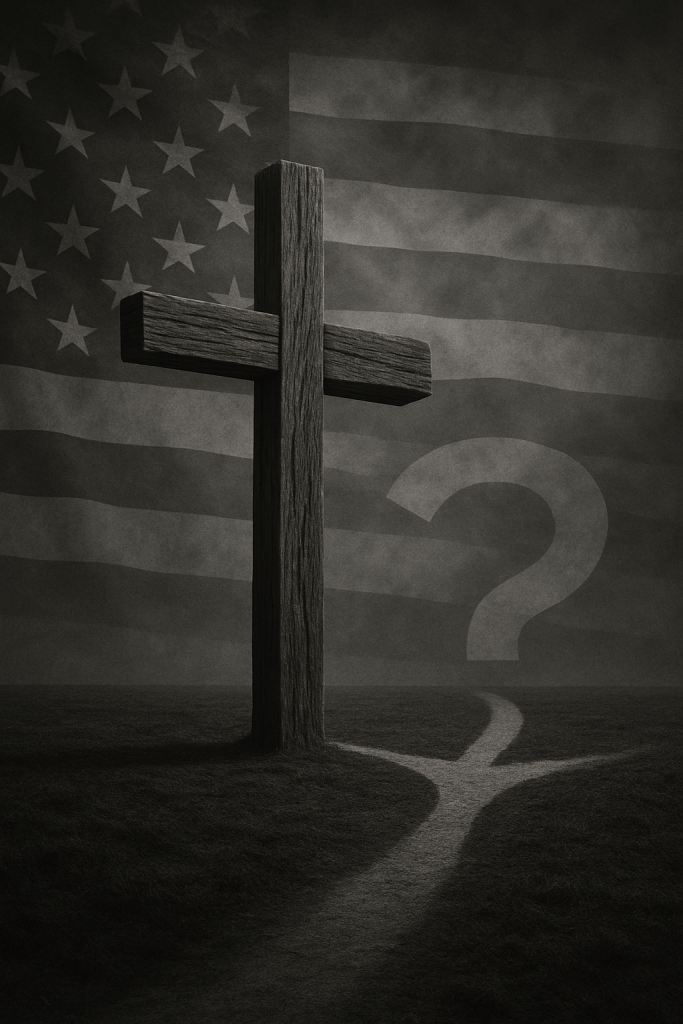
It is not hard to see echoes of that warning in our own day. The question is whether we will listen. The answer lies in which cross we choose to carry down this familiar American road,
at this old, rugged crossroads.

Educator & Future Public Servant
(Inspired by those who led with truth)
Discover more from Three-Fifths
Subscribe to get the latest posts sent to your email.
 Three-Fifths