


When we talk about Truth and Reconciliation, we cannot selectively decide whose truth matters. Nor can we reconcile only for the comfortable, the familiar, or the visible. For Black immigrants in the United States, truth remains suppressed, and reconciliation deferred. In this moment of increasing authoritarianism and strategic erasure, we must say plainly: immigration is a Black issue. Blackness, globally and domestically, continues to be hyper-policed, displaced, and discarded. If we are to reach any form of reconciliation as a multiethnic democracy, we must begin by telling the truth about the war being waged on Black immigrants.
In recent weeks, the images have been haunting—immigration agents detaining brown bodies in broad daylight. But behind those viral clips lies an even more insidious truth: Black immigrants are disproportionately targeted by ICE and suffer the harshest outcomes. According to the American Immigration Council and Human Rights First, Black immigrants are more likely to be detained, more likely to be denied bond, and more likely to face solitary confinement or physical abuse within detention centers (American Immigration Council; Human Rights First).
The violence against Black immigrants does not stop at the border. It is sustained in policy, in practice, and in the silence of our own communities. We must recognize and affirm that many Latin American migrants are Black and part of the African diaspora. As journalist Yesha Callahan reminds us:
“Black people are immigrants, too—and some of us are also Latino. Afro-Dominicans, Afro-Colombians, Garifuna from Central America, Haitians, and others comprise a significant, often overlooked portion of the immigrant population.”
— Yesha Callahan, BET, June 9, 2025 (Source)
These communities—alongside our Cameroonian, Mauritanian, and Jamaican siblings—are subjected to an immigration system designed to criminalize and disappear them. Black migrants, who make up only 7% of the noncitizen population, account for 20% of those facing deportation on criminal grounds (Freedom for Immigrants).
Even legal processes fail to protect them. In immigration court, there is no right to an attorney—and Black immigrants are least likely to have legal representation (Maryland Matters). ICE has continuously refused to report racial demographic data, an intentional obfuscation to hide the scale of this anti-Black violence (Prism Reports).
This is not coincidental. This is systemic. And it demands a systemic response.
Project 2025 and the Return of State Violence
As Donald Trump reemerges with a terrifying blueprint for a second term—one that includes the mass mobilization of military resources for immigration enforcement and the construction of detention camps—the stakes for Black and Brown bodies have never been higher. Project 2025 is not a policy wish list; it is a racialized roadmap back to an era of Jim Crow and state-sanctioned enslavement under new names. For Black immigrants, it is a death sentence.
So we ask again: who are we, and what do we want to be?
Will we be a coalition that chooses silence, comfort, and selective advocacy? Or will we build a radical diasporic solidarity rooted in the truth that none of us are free until all of us are free?
From Truth to Transformation: A Blueprint for Action
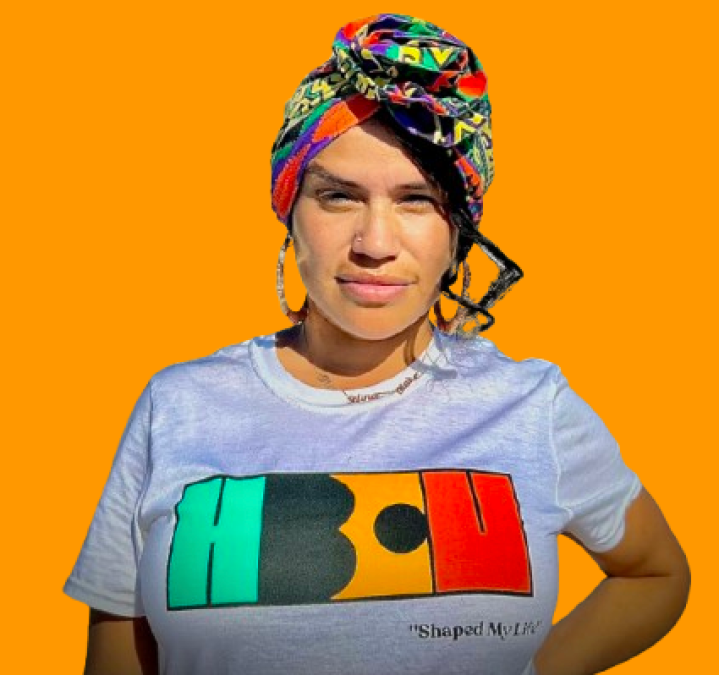
As a scholar, practitioner, and founder of HBCUorgullo—a nonprofit bridging Historically Black Colleges and Universities (HBCUs) and AfroLatinidad—I believe deeply in the urgency of grassroots reconciliation. Our HBCUs have long been sites of Black resistance and liberation. Now, they must also become sites of refuge, education, and political action for our Afro-Caribbean, Afro-Latine, and African migrant siblings.
What would it look like to:
- Train HBCU students, staff, and faculty to be advocates and first responders for immigrant justice?
- Demand transparency from ICE and the Department of Homeland Security on racial data?
- Fund legal defense for Black migrants facing deportation?
- Create safe campus zones and sanctuary spaces within our Black institutions?
This moment calls for nothing less than a radical reimagining of what we mean by community. Truth must precede reconciliation. And reconciliation must come with policy, practice, and power shifts.
What You Can Do Now
- Educate yourself and your community using resources like this ICE guide for Black immigrants and allies.
- Support organizations like Freedom for Immigrants and The Black Alliance for Just Immigration (BAJI).
- Use your platform to amplify the voices of Black immigrants.
- Contact your representatives and demand oversight and reform of immigration enforcement.
- Join local efforts to create sanctuary policies in schools, churches, and community centers.
As we approach the 250th anniversary of this country, let us remember: reconciliation without truth is revisionism. And truth without action is complicity.
Let our truth-telling be inconvenient. Let our reconciliation be rooted in justice. And let our love for one another be the fiercest act of resistance we have left.
Discover more from Three-Fifths
Subscribe to get the latest posts sent to your email.
 Three-Fifths