
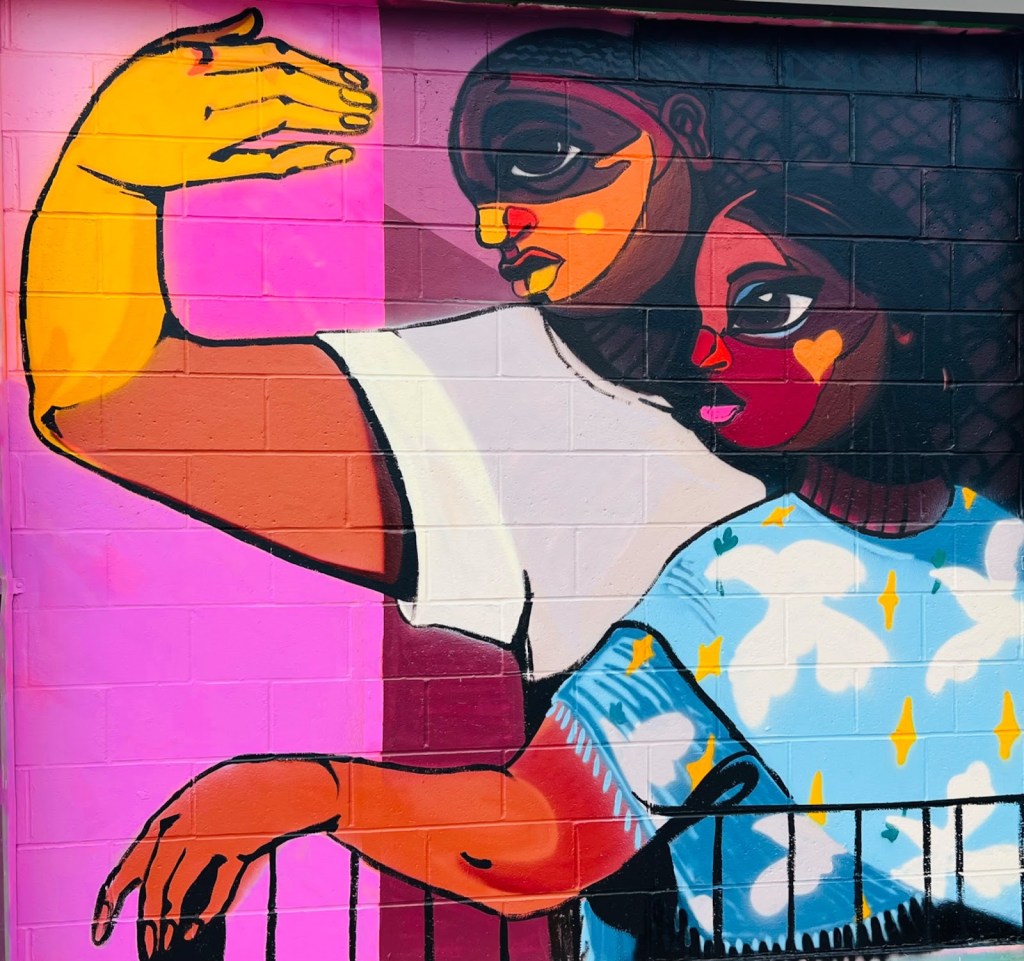
“We’re going to Mars for the same reason Marco Polo rocketed to China, for the same reason Columbus trimmed his sails on a dream of spices, for the very same reason Shackelford was enchanted with penguins, for the reason we fall in love; it’s the only adventure.”
~ Nikki Giovani
In 1808, the United States took a crucial step by banning the importation of slaves. Yet, while this marked the end of the transatlantic slave trade, the grim reality was that those already enslaved remained in bondage. The domestic sale and trade of enslaved people carried on, unbridled and ruthless. It wasn’t until Juneteenth—now proudly recognized as a national holiday—that the last group of enslaved individuals in Texas finally learned of their liberation. This momentous day, June 19, 1865, came a staggering two years after the Emancipation Proclamation was made law. It represented a significant milestone in the relentless struggle for African American freedom, yet it also underscored the deep scars of slavery that remained unhealed.
Fast forward to June 2025—160 years since the end of the Civil War and 425 years since the first enslaved Africans arrived on these shores. As I have journeyed for work across the vast landscape of the United States, I am continually struck by the rich yet painful tapestry of our history, woven together like a patchwork quilt that speaks volumes about a people’s memory. This quilt, however, is often hidden and buried beneath layers of denial, repression, and willful ignorance.
Take, for instance, my experiences in New Orleans during Mardi Gras, when I unearthed the unsettling truth that the domestic slave trade didn’t end with the 1808 mandate to stop the human trafficking of black bodies; the domestic trade thrived for another fifty years. Recently in Asheville, North Carolina, while collaborating on resilience efforts post-Hurricane Helene, I stumbled upon a memorial sign describing the harrowing legacy of lynching—a history where postcards celebrating these heinous acts were once circulated openly nationwide, perpetuating a cycle of violence that still demands in 2025 our urgent proclamation that “Black Lives Matter!”
In Oklahoma, visiting the First People’s Museum I burst into tears when a native woman corrected my “falsely taught narrative” sharing that it was not just one, but hundreds of “trails of tears” forced upon Indigenous peoples, epitomizing this radical spatial segregation of indigenous people in Oklahoma “The Badlands” as they called it. I held the stories of profound suffering and the memories of separation from families and genocide that has been endured after eradication and continued erasure from ancestral lands and history.
At a conference in Newport, Rhode Island, I discovered that the coastline I visited was a pivotal player in the infamous “Triangle Trade,” where rum exchanged hands for enslaved Africans who suffered the brutal journey across the Atlantic to the Americas. And in Africville, Alabama, I only recently learned about the Clotilda, the last slave ship to bring Africans to America, and the poignant ethnography of Cudjo Lewis, as was amazingly documented word for word by Zora Neale Hurston to be released in interviews starting in 2018.
With each location I visit shadows are uncovered of our nation’s turbulent past—whether South or North whether it’s the legacy of the KKK in my state of California or the “sundown town” of Portland, Oregon – all reveal a persistent, unacknowledged history of racial terror that to this day undergirds America’s economic foundations, built on the human beings commodified as property or the labor and abuses of these archetypal colored – Red, Black, Brown and Yellow- bodies. These journeys compel me to beg in my heart for a full reckoning and confrontation with these uncomfortable truths that are interwoven into the fabric of American life—truths that challenge the narrative of progress and redemption we’ve been taught to believe.
Bryan Stevenson’s poignant observation that “The North won the war, but the South won the narrative war” resonates deeply. It reflects how the South has managed for centuries to shape a historical narrative that keeps us in a state of perpetual amnesia regarding our history and cultural memory, distorting the truths we so desperately need to confront in order to morn deeply and heal as a nation.
A Narrative of Hope
“To survive, you must tell stories.”
― Umberto Eco
Our freedom and identity emerge through action, shaped by the chorus of diverse voices collectively forging our vibrant, pluralistic society. In this shared journey, along the way there are three powerful concepts that can illuminate our path: the first is Augustin Boal’s Rainbow of Desire, The Second is Hannah Arendt’s notion of natality, and the third is Alfred Korzybski’s theory of time-binding.
Boal emphasizes that the lack of awareness of oppression often stems from deep-seated social structures. He argues that many modern societies, particularly in the Global North, perpetuate a kind of authoritarianism that manifests as an internalized oppression—what he calls “cops in the head.” This phenomenon reflects how individuals absorb societal norms and expectations that inhibit their potential for action, thereby deepening their feelings of loneliness and isolation. In contrast, the resilience and aliveness of human experience can empower them to break free from these constraints.
Hannah Arendt’s concept of natality underscores the extraordinary potential inherent in every human birth—the capacity to create something entirely new. This idea transcends mere biology; it embodies a political and metaphysical phenomenon, urging us to recognize our roles as agents of change. Just as every generation brings forth new stories and new beginnings, we are reminded that history is not simply a repetitive cycle. Each moment holds the potential for innovation and renewal.
Alfred Korzybski’s notion of time-binding complements Arendt’s natality by highlighting humanity’s unique ability to build upon the knowledge and achievements of past generations. We stand on the shoulders of those who came before us, igniting progress across various fields—from science and technology to social justice and the arts. These two concepts, when viewed together, position us to not only honor our historical roots but also to envision new futures enriched by the lessons of the past.
At this intersection lies the radical potential to reshape our narratives and influence our trajectories in ways that foster flourishing and collective well-being. In this context, Afrofuturism emerges as a vibrant movement that embodies the essence of both natality and time-binding. By intertwining elements of science fiction, fantasy, and African diasporic culture, Afrofuturism reclaims narratives and envisions equitable futures where Black voices are celebrated.
Utilizing the lens of science fiction, Afrofuturism critiques societal norms and imagines a world where technology becomes a tool for empowerment. Prominent figures such as Octavia Butler, Nnedi Okorafor, Malidoma Some and Joy Degrue challenge us to engage critically with issues of race, gender, and societal structures, fostering vital conversations about justice and equity.
This artistic movement transcends traditional genres—spanning literature, music, visual arts, and urban design—while actively engaging communities in narratives of resilience. Artists like Jon Michael Batiste, Jean-Michel Basquiat and Janelle Monáe inspire collective reflection and action, urging us to reimagine our world through creative expression.
”Storytelling is our obligation to the next generation. …”
― Isabel Allende
Reclaiming Narratives for Social Justice
Afrofuturism extends beyond artistic innovation; it serves as a powerful call to action against systemic racism. By challenging dominant narratives surrounding Black existence, it highlights the urgent necessity for justice and equity. Urbanists and activists like Majora Carter, Theaster Gates and Carl Anthony exemplify the intersection of art and activism, advocating for sustainable community development that empowers marginalized voices.
Emphasizing inclusive designs and participatory practices, Afrofuturism reminds us of our collective responsibility to create spaces that authentically reflect the people who inhabit them, thereby re-centering the narrative around community and belonging.
A Collective Vision for Tomorrow
As we navigate the complexities of our time, the synergies between Arendt’s natality, Korzybski’s time-binding, and the vibrant movement of Afrofuturism guide us toward a collective vision of hope. They encourage us to celebrate the rich tapestry of human experiences, understanding that we are all woven from the strands of past struggles and future aspirations.
Together, artists, thinkers, and community leaders forge a path toward a future that embraces Black narratives, intertwining historical threads with innovation and creativity. Through Afrofuturism and a steadfast commitment to social justice, we reaffirm our dedication to reclaiming the stories that shape our identities and inspire transformation.
In conclusion, the interplay of beginnings and continuity—the fusion of Arendt’s natality and Korzybski’s time-binding—illuminates a hopeful narrative for humanity. By integrating these insights and embracing the transformative power of Afrofuturism, we can cultivate a collective future where everyone has the opportunity to thrive. Together, let us harness our unique potentials, foster resilient communities, and imagine a world that celebrates diversity, creativity, and justice. Through this commitment to hope and progress, we can shape the future we desire, one where our stories elevate all voices and inspire generations to come.
Ultimately, Boal’s insights reveal that recognizing and addressing our internalized oppressors is key to breaking free from the cycles of societal oppression. By actively transforming our personal narratives and engaging in the collective artistic dialogue of movements like Afrofuturism, we gain the tools necessary to confront and dismantle the barriers that limit our freedom and expression.
Juneteenth serves as both a celebration of hard-won freedoms and a clarion call—a stark reminder of the ongoing struggle to challenge the narratives that have long obscured and minimized our realities. As we reflect on this significant date, we must also grapple with the uncomfortable legacies of our past and acknowledge that the fight for true justice and equality is far from over.
The real voyage of discovery consists not in seeking new lands but in seeing with new eyes.
― Marcel Proust
Quilting the Black-Eyed Pea (We’re Going to Mars) by Nikki Giovanni

References
Anthony, C. (2017). The Earth, the City, and the Hidden Narrative of Race, New York, NY: New Village Press..
Arendt, H. (1958). The Human Condition. Chicago: University of Chicago Press.
Basquiat, Jean-Michel.(2020) Jean-Michel Basquiat. 40th Ed. Edited by Hans Werner Holzwarth. Köln: TASCHEN
Boal, A. (1994). The Rainbow of Desire: The Boal Method of Theatre and Therapy (A. Jackson, Trans.; 1st ed.). Routledge
Butler, O. (2025). Remembering Afrofuturist Octavia Butler, Washington, DC. Smithsonian. https://nmaahc.si.edu/explore/stories/remembering-afrofuturist-octavia-butler
Carter, M. (2006). Greening the Ghetto, Bronx, NY; TedX : YouTube https://www.ted.com/talks/majora_carter_greening_the_ghetto?language=en
DeGruy, J. (2018). Post Traumatic Slave Syndrome America’s Legacy of Enduring Injury and Healing. Joy DeGruy Publications Inc.
Gates, T. (2015). How to revive a neighborhood: with imagination, beauty and art. Chicago,IL : Tedx: YouTube.https://www.youtube.com/watch?v=S9ry1M7JlyE
Giovanni, N. (2002). Quilting the black-eyed pea: poems and not quite poems. ; Chicago / Turabian.
Korzybski, A. (1933). Science and sanity. An introduction to non-Aristotelian systems and general semantics. International Non-Aristotelian Library.
Nnedi Okorafor (Dec 11, 2000). “The Palm Tree Bandit” • Strange Horizons (online) anthologies: Sisters of the Revolution: A Feminist Speculative Fiction Anthology, ed.
Somé, M. P. (1995). Of Water and the Spirit: Ritual, Magic, and Initiation in the Life of an African Shaman. Penguin, 1995
Discover more from Three-Fifths
Subscribe to get the latest posts sent to your email.

 Three-Fifths