

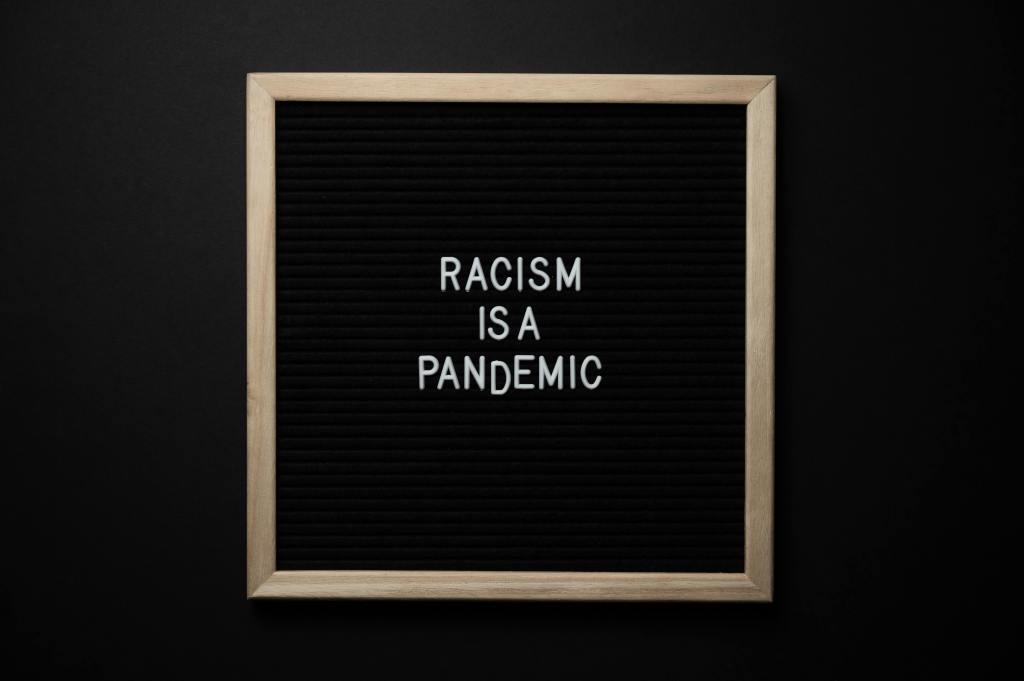
“Our nation is moving toward two societies, one black, one white—separate and unequal” (Kerner, 1968, p. 1). As a Black woman who has studied racial disparities in America extensively, these dire words of the 1968 Kerner Commission report have always resonated with me. During my doctoral studies on the effects of structural and systemic racism on Black women in corporate America, I discovered that this warning continues to be ominously prescient over half a century later (Bradford, 2023).
President Lyndon Johnson formed the National Advisory Commission on Civil Disorders—the Kerner Commission—in 1967 to explore the reasons behind urban rebellions sweeping across America. What they found was unambiguous: “White racism is basically responsible for the volatile mixture which has been building up in our cities since the end of World War II” (Kerner, 1968, p. 91). Though the manifestations have evolved and grown more complex, America continues to function as two distinct worlds—geographically proximate but alien experientially—with racial segregation mandated by ideologically contested individualism and collectivism (Casey & Hardy, 2018).
As Isabel Wilkerson states, these cracks have become “worn grooves of comforting routines and unthinking expectations, patterns of a social order that have been in place for so long that it looks like the natural order of things” (Wilkerson, 2020, p. 33). My research substantiated this reality, determining that these well-established habits are still imprinted on the lived experiences of Black Americans, especially Black women, in deep ways (Bradford, 2023).
The Kerner Commission in Historical Perspective
The Kerner Commission reached a tipping point in the history of America. President Johnson, after learning of disastrous riots in Detroit, Newark, and other urban centers, wondered why they occurred. The commission’s report was honest and blunt, blaming white racism and calling for huge investments in housing, schools, and job programs (Kerner, 1968).
Johnson, disappointed that the commission placed responsibility on white racism rather than outside agitators or a lack of personal responsibility, largely ignored the report. In his book “Separate and Unequal,” historian Steven M. Gillon (2018) characterizes this as a watershed in America’s reaction to racial inequality—one toward individual and not collective solutions.
My doctoral research illustrates how this tension between individualism and collectivism continues to influence the way we are working towards—or not working towards—racial disparity today (Bradford, 2023). The assumption that we can effectively eliminate racism from American systems without actually changing them is a broad fallacy that I have found to be particularly detrimental to the achievement of actual racial equity and justice.
Economic and Educational Divides
Perhaps nowhere is the “two worlds” model more present than in economic results. The racial wealth disparity is still stunning, with the average white family possessing eight times the wealth of the average Black family (Bhutta et al., 2020). This did not come about naturally but through deliberate policy decisions, as explained by Richard Rothstein (2017) in “The Color of Law.”
As I illustrated within my dissertation, these economic imbalances establish roughly unequal beginnings in life experience (Bradford, 2023). Black women average a bit over $46,543 yearly, while White women average $51,451 and Black men average $52,854 (Department of Labor, 2023). ). Educational inequality compounds this problem. Despite Brown v. Board of Education, schools today remain deeply segregated, with predominantly white school districts receiving $23 billion more in funding than predominantly nonwhite districts (EdBuild, 2019).
Throughout my research, I discovered that these disparities lay the groundwork for workplace inequalities. Black women in the workplace, and indeed in life, are frequently confronted with what I have termed “harsher criticism and scrutiny”—a recurring theme throughout my interviews. As one of my participants succinctly put it: “Black women in workplaces, and then in life in general, we are often seen as not good enough!” (Bradford, 2023, p. 37).
Justice, Health, and Digital Divides
The Kerner Commission devoted significant attention to police practices, and today we maintain what Michelle Alexander (2020) calls “The New Jim Crow”—a system that systematically devastates Black communities. Black Americans are incarcerated at nearly five times the rate of whites (Sentencing Project, 2021). They are 2.5 times more likely to be killed by police during their lifetime (Edwards et al., 2019). While Black people make up 13% of the population, they account for 40% of the incarcerated population (Nellis, 2021). Once arrested, Black men receive sentences nearly 20% longer than white men for the same crimes (U.S. Sentencing Commission, 2017). These disparities represent not just different experiences but fundamentally different Americas—one where the state serves as protector, another where it functions as predator.
The COVID-19 pandemic brutally exposed health inequities, where Black individuals’ hospitalization rate was three times that of whites and their death rate twice that of whites (CDC, 2021). But the inequities existed prior to the pandemic. Black women are three to four times more likely to die from pregnancy complications than white women, irrespective of income or educational attainment (Petersen et al., 2019). Black infants are twice as likely to die as white infants—a gap wider today than it was in 1850, fifteen years before slavery ended (Villarosa, 2018). Life expectancy can vary by as much as 30 years between neighborhoods only a few miles apart (Williams & Cooper, 2019). These aren’t abstractions—they’re evidence of a healthcare system that views Black lives as systematically less valuable, creating what has been referred to as “medical apartheid” (Washington, 2006).
Our modern media environment has produced new fault lines. Increasingly, Americans live in different worlds of information, as media consumption becomes more sorted by racial and party lines (Mukerjee et al., 2018). In my interviews with Black women professionals, the digital divide manifested in subtle but impactful ways, with participants describing exclusion from informal digital networks where important information is shared (Bradford, 2023).
Psychological Dimensions: Different Realities
Perhaps most fundamentally, Americans perceive the same events through entirely different frames. My dissertation research found that Black women frequently experience what scholars’ term “gendered racism”—discrimination at the intersection of race and gender (Bradford, 2023; Battle & Carty, 2022). This manifests as heightened scrutiny, with one executive in my study reporting: “With the amount of experience, skill sets, and credentials that I have, even though I’m in a leadership capacity now, it has taken me longer to get here than it should have” (Bradford, 2023, p. 36).
This creates what my participants described as a “double bind”—simultaneously expected to be assertive and nurturing but penalized for displaying either quality. One participant explained: “I have to be professional, but not too assertive, friendly but not too friendly, confident but not intimidating… it’s exhausting” (Bradford, 2023, p. 39).
Eduardo Bonilla-Silva (2017) argues that this perception gap stems from “color-blind racism,” which allows many white Americans to acknowledge inequality while denying systemic racism. Through frameworks like “abstract liberalism” and “naturalization,” individuals can attribute racial disparities to market dynamics, cultural differences, or personal choices rather than structural barriers (Bonilla-Silva, 2017). Surveys consistently show this disconnect: while 84% of Black adults say Black people are treated less fairly than whites in dealing with police, only 63% of whites agree (Pew Research Center, 2019). This creates what Feagin (2010) calls the “white racial frame”—a worldview that minimizes or rationalizes racial oppression while maintaining the status quo.
Beyond Prediction: Towards Solution
Although the Kerner Commission’s underlying prudence was accurate, modern racial realities extend beyond their Black/white dichotomy. The Latinx population has grown from 3.2% of the population in 1960 to 18.7% in 2020 but lives with deep disparities—earning only 73 cents on the dollar for whites and living at poverty levels near twice whites’ (Krogstad & Noe-Bustamante, 2021). Asian Americans, contrary to the “model minority” stereotype, have the greatest income inequality gap of any racial group, with median household incomes varying from $37,000 among Burmese Americans to $120,000 among Indian Americans (Budiman & Ruiz, 2021). Native Americans are still erased, experiencing the largest poverty rate (25.4%) of any racial group, and are allocated less than 1% of federal expenditures despite treaty promises (NCAI, 2020). Such multicultural reality indicates the ways systems of oppression adapt to maintain hierarchies among diverse populations.
Through decades of studies, the evidence converges on systemic strategies that have the potential to create deep transformation in society. Studies find that policy interventions aimed at reducing residential segregation through housing mobility initiatives and equal housing enforcement have decreased racial segregation by 20% in target communities (Chetty et al., 2020). Universal pre-K initiatives have closed education attainment disparities by 25-30% in neighborhoods where tested (Heckman & Karapakula, 2019). Comprehensive healthcare reform reducing cost barriers has decreased racial disparities in maternal mortality by 33% in states with expanded Medicaid (Howell & Zeitlin, 2017). Baby bonds programs—offering children in poor family’s capital accounts—can cut the racial wealth gap as much as 80% within one generation (Hamilton & Darity, 2010). Moreover, criminal justice reforms including the elimination of cash bail have reduced racial disparities in pretrial detention by 40% where implemented (Stevenson, 2018). These interventions demonstrate that addressing structural racism requires policy changes across housing, education, healthcare, wealth distribution, and justice systems rather than piecemeal organizational approaches.
As Heather McGhee (2021) argues in “The Sum of Us,” racism ultimately harms everyone by undermining public goods and social cohesion. Solutions must operate at multiple levels, addressing both policy reforms and institutional changes.
Conclusion
The Kerner Commission warned that “to pursue our present course will involve the continuing polarization of the American community and, ultimately, the destruction of basic democratic values” (Kerner, 1968, p. 2). This warning retains its urgency today.
My research has confirmed that the “two worlds” the Kerner Commission identified persist across multiple dimensions of American life. The specific barriers facing Black women represent one of the clearest examples of how these separate and unequal societies continue to function.
As Dr. King reminded us, injustice must be “exposed, with all the tension its exposure creates, to the light of human conscience and the air of national opinion before it can be cured” (King, 1963, p. 87). In exposing these divisions and centering the voices of those most affected, we take a necessary step toward creating not just one society, but a just society.

References
ACLU. (2020). A tale of two countries: Racially targeted arrests in the era of marijuana reform.
Alexander, M. (2020). The New Jim Crow: Mass incarceration in the age of colorblindness (10th
anniversary ed.). The New Press.
Battle, W. M., & Carty, H. M. (2022). Coping at the intersection: Gendered racism as a root
cause of mental health challenges. Journal of American Psychology, 77(4), 412-426.
Bhutta, N., Chang, A. C., Dettling, L. J., & Hsu, J. W. (2020). Disparities in wealth by race and
ethnicity in the 2019 Survey of Consumer Finances.
Bohnet, I. (2016). What works: Gender equality by design. Harvard University Press.
Bonilla-Silva, E. (2017). Racism without racists: Color-blind racism and the persistence of racial
inequality in America (5th ed.). Rowman & Littlefield.
Bradford, A. (2023). Toward an understanding of structural and systemic racism: Implications
for corporate America [Doctoral dissertation, Adler University].
Budiman, A., & Ruiz, N. G. (2021). Key facts about Asian Americans, a diverse and growing
population. Pew Research Center. https://www.pewresearch.org/race-ethnicity/2021/04/29/key-
facts-about-asian-americans/
CDC. (2021). Health equity considerations and racial and ethnic minority groups.
Chetty, R., Hendren, N., Jones, M. R., & Porter, S. R. (2020). Race and economic opportunity in
the United States: An intergenerational perspective. The Quarterly Journal of Economics, 135(2),
711-783.
Department of Labor. (2023). Labor force statistics from the Current Population Survey.
EdBuild. (2019). $23 billion: How America’s school funding gaps lead to inequality.
Edwards, F., Lee, H., & Esposito, M. (2019). Risk of being killed by police use of force in the
United States by age, race–ethnicity, and sex. Proceedings of the National Academy of Sciences,
116(34), 16793-16798.
Feagin, J. R. (2010). The white racial frame: Centuries of racial framing and counter-framing.
Routledge.
Frey, W. H. (2018). Diversity explosion: How new racial demographics are remaking America.
Gillon, S. M. (2018). Separate and unequal: The Kerner Commission and the unraveling of
American liberalism.
Hamilton, D., & Darity Jr, W. (2010). Can ‘baby bonds’ eliminate the racial wealth gap in
putative post-racial America? The Review of Black Political Economy, 37(3-4), 207-216.
Heckman, J. J., & Karapakula, G. (2019). The Perry preschoolers at late midlife: A study in
design-specific inference. NBER Working Paper No. 25888.
Howell, E. A., & Zeitlin, J. (2017). Improving hospital quality to reduce disparities in severe
maternal morbidity and mortality. Seminars in Perinatology, 41(5), 266-272.
Kerner, O. (1968). Report of the National Advisory Commission on Civil Disorders.
King, M. L., Jr. (1963). Letter from Birmingham Jail.
Krogstad, J. M., & Noe-Bustamante, L. (2021). Key facts about U.S. Latinos for National
Hispanic Heritage Month. Pew Research Center. https://www.pewresearch.org/fact-
tank/2021/09/09/key-facts-about-u-s-latinos/
McGhee, H. (2021). The sum of us: What racism costs everyone and how we can prosper
together.
Mukerjee, S., Majó-Vázquez, S., & González-Bailón, S. (2018). Networks of audience overlap in
the consumption of digital news.
National Congress of American Indians (NCAI). (2020). Fiscal year 2021 Indian country budget
request. https://www.ncai.org/policy-research-center/research-data
Nellis, A. (2021). The color of justice: Racial and ethnic disparity in state prisons. The
Sentencing Project.
Petersen, E. E., Davis, N. L., Goodman, D., Cox, S., Mayes, N., Johnston, E., … & Barfield, W.
(2019). Vital signs: pregnancy-related deaths, United States, 2011–2015, and strategies for
prevention, 13 states, 2013–2017. Morbidity and Mortality Weekly Report, 68(18), 423.
Pew Research Center. (2019). Race in America 2019.
Rothstein, R. (2017). The color of law: A forgotten history of how our government segregated
America.
Sentencing Project. (2021). Report to the United Nations on racial disparities in the U.S. criminal
justice system.
Stevenson, M. T. (2018). Distortion of justice: How the inability to pay bail affects case
outcomes. The Journal of Law, Economics, and Organization, 34(4), 511-542.
U.S. Sentencing Commission. (2017). Demographic differences in sentencing: An update to the
2012 Booker Report.
Villarosa, L. (2018, April 11). Why America’s Black mothers and babies are in a life-or-death
crisis. The New York Times Magazine.
Washington, H. A. (2006). Medical apartheid: The dark history of medical experimentation on
Black Americans from colonial times to the present. Doubleday.
Williams, D. R., & Cooper, L. A. (2019). Reducing racial inequities in health.
Discover more from Three-Fifths
Subscribe to get the latest posts sent to your email.
 Three-Fifths