
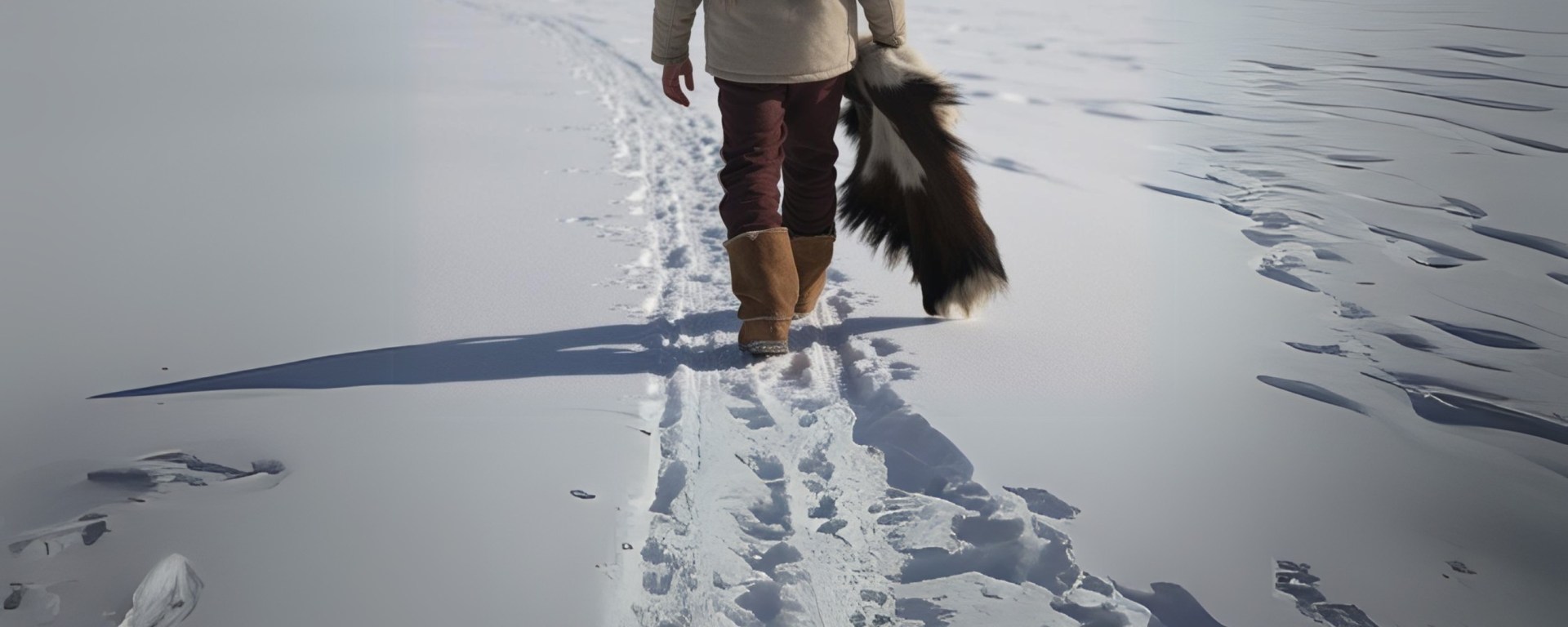
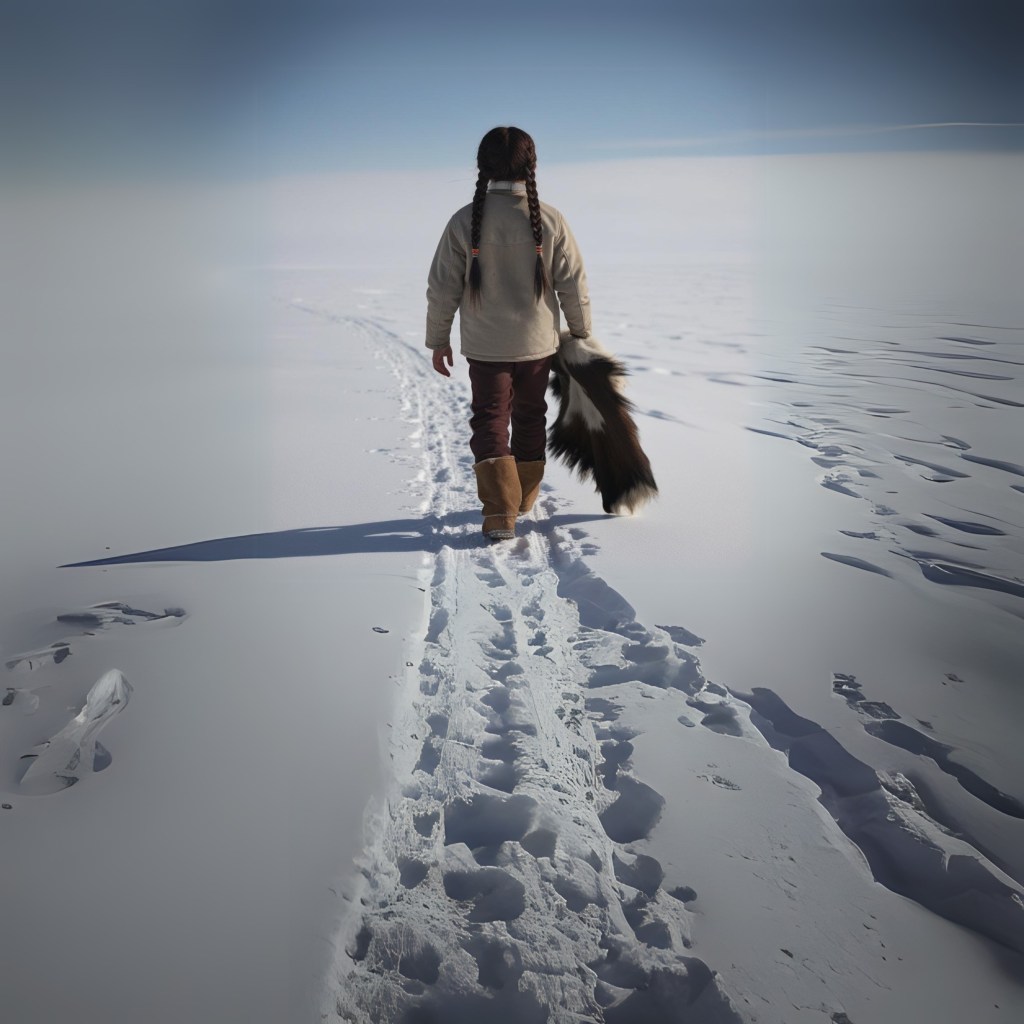
Winter, a season of reflection, remembrance, and storytelling, has always been a sacred time for tribal communities—a time to gather and share lessons from the past. The Old Ones would say that as the snow blankets the earth, it also covers the tracks of those who have journeyed on, holding their memory close to our hearts.
In the northern plains, where winters were harsh and unforgiving, survival depended on more than just warmth and shelter; it required a deep sense of community and caring for one another. The story of the Buffalo Robe is often shared during this time.
A long time ago, during a bitter winter storm, a young hunter set out to find food for his family and the elders because the dried meat was running out. The elders told him not to go; they feared the storm would be too much and there would be no animals to find. But he was determined. As he journeyed, he saw footsteps uncovered in the snow as the cold winter wind blew. He chose to follow them, and they led him to a lone buffalo standing by itself—a rare sight.
As he approached, the young hunter felt a sense of unease mixed with awe—something was guiding him, something greater than himself. He knew it wasn’t just about finding food; it was about a deeper connection to the Great Spirit and seeing the Creator speak to us through the land and all beings. The hunter’s generosity and determination were not driven by selfish need but by a sense of duty and care for his community. The Great Spirit brought blessings due to the unselfishness of his heart. The young warrior was given strength and wisdom, which he heard elders say were the best gifts to have on life’s journey–worth exceeds the greatest jewels of the earth. He followed the tracks in the snow, and it was not just his footsteps but the footsteps of those who had journeyed on before him, lending their compassion to uncover the path and guide him to what the tribe needed.
When he reached the buffalo, the young hunter was able to successfully hunt it and bring back not only buffalo meat but also a large, warm hide. The women took the meat to boil and made stew right away so it could be shared, and they saved the rest in the snow. This brought hope to the camp. The elders couldn’t believe his story that he had found one lone buffalo by itself. The eldest elder explained that this was no ordinary buffalo—it was a Wakħán Tħánkan (holy buffalo). The Great Spirit knew the village needed his sacrifice, and so he stood there, recognizing his greater purpose—not just for the buffalo but also for the boy. The buffalo was a sacred guide, a messenger from the Creator, offering his life so that the people could survive. It was a testament to the deep connection between all living beings and the cycles of life and death. This extraordinary act of selflessness spoke to the values of interdependence and survival through compassion.
“It was also a sign that those who love us and have journeyed on are always with us. Though they may no longer be in this world, they remain in the spiritual realm, gathering in a great ancestral camp across from this life to the other. We are taught to live in a good way—considering the well-being of others before our own and striving to be givers rather than receivers. The teachings of resilience, respect for all life, and the importance of caring for one another, even in times of scarcity.
From that winter onward, the people always remembered: compassion keeps the cold at bay. The young hunter’s generosity and determination, guided by the wisdom of the Wakħán Tħánka, ensured their survival and taught the community the importance of caring for one another. The Buffalo Robe became a symbol of shared sacrifice, a reminder that individual acts of kindness have far-reaching effects, not just for the giver but for the entire community. May we remember how compassion and grace make us feel—it’s something magical, a legacy that teaches all of humanity that life is more than just us; life is about people.

Author’s Note:
In the depths of winter, when times were toughest, it was this spirit of unity and compassion that carried them through, and it is a legacy they carried to the settlers when they arrived. Yet, Native Americans continue to face the harshest challenges and the worst statistics in this nation. Despite our enduring fight for survival, it is compassion—if embraced by all—that can truly save us.
As we enter this season of reflection, we remember our loved ones who have journeyed on and honor the legacy of care they taught us. We know that the holiday season can bring not just joy but also stress, anxiety, and worry. We are thinking of you and praying that the Creator leads you to resources. Make your needs known before the Creator but also pray for others, and no matter what you’re facing. Remember that compassion changes the world and most often, it’s the giver that is more blessed than the receiver. We’re wishing you success and peace in this winter season.
Thank you for listening to our stories. It’s been an honor to have this platform to share our culture, heritage and perspectives. Storytelling is part of our culture and who we are as Indigenous people. As we approach the end of the year, we are conducting our annual fundraising campaign. If you support stories like these and our overall mission to advocate for Indigenous communities, please consider making a one-time donation or joining as a monthly contributor. Text Native Give to 44-321 or visit our website to learn more. We would love to hear from you.
Wóphila-wóčhekiye
Wakħán Tħánkan namákiħ’ un wo oyâte kin wichúnkicichiyapi chantétanhan wichúnkicichiyapi.
Loose translation: Prayer of Gratitude—everyone receives the gift, relies on Him, and has faith (show expectation from Creator/God for He does not fail or disappoint). The people need prayers. Pray with good intentions and from a good heart.
Please note: We encourage the sharing of this article that features our cultural story. However, this story cannot be written or published without the written consent of Lynnette Grey Bull of Not Our Native Daughters. All rights reserved.


Discover more from Three-Fifths
Subscribe to get the latest posts sent to your email.

 Three-Fifths