
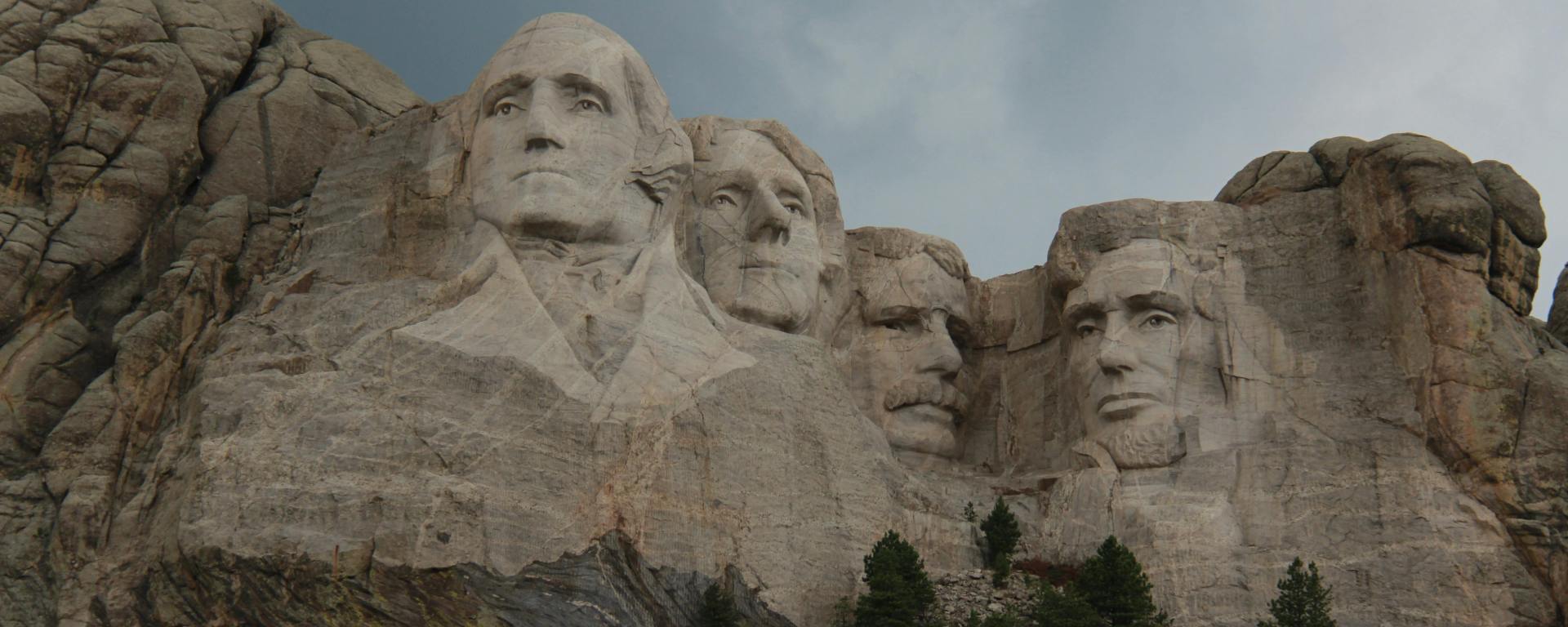

The journey of America’s presidency reveals a dynamic rhythm, marked by bold strides during administrations ending in six and challenges that often arise in those ending in seven. This cycle of advancement and retreat reflects the nation’s ongoing struggle with unity and division, yet also underscores the enduring resilience of its people to shape a brighter future in the midst of backlash.
John Quincy Adams and the Challenge of Bold Vision
John Quincy Adams, the sixth president, envisioned a nation bolstered by infrastructure, education, and exploration. His ambitious agenda for a National University, expansive railroads, and even advancements in astronomy marked him as a forward-thinker. However, his presidency was fraught with challenges, not least because he ascended to office through a disputed election, which some deemed illegitimate. Adams’s vision clashed with the rugged populism of his successor, Andrew Jackson, whose administration epitomized a reactionary approach to governance. Jackson dismantled many of Adams’s initiatives and ushered in policies like the “Indian Removal Act,” which cemented a divisive chapter in American history. Progress gave way to populist fervor, underscoring how swiftly America could pivot from ideals to exclusionary practices.
Lincoln’s Legacy and Johnson’s Reversal
Abraham Lincoln, the 16th president, held the Union together through its darkest hours, a feat no prior leader had dared to attempt. His leadership during the Civil War and the emancipation of enslaved people redefined America’s commitment to equality, even as it left unresolved tensions. Yet, the promise of Reconstruction unraveled under his successor, Andrew Johnson, the first impeached president. Johnson’s leniency toward the former Confederacy and his opposition to civil rights legislation emboldened the rise of Black Codes, stalling the progress Lincoln’s administration had painfully advanced. The pendulum swung from unification to regression, highlighting the enduring divisions within the country.
Roosevelt’s Innovation and Taft’s Party Fracture
Theodore Roosevelt, America’s 26th president, championed workers’ rights, conservation, and America’s emergence as a global power. His bold leadership, marked by the Square Deal and the creation of national parks, pushed the boundaries of what government could achieve for the public good. However, the “seven” presidency that followed, under William Howard Taft, fractured the Republican Party. Taft’s cautious approach and inability to manage internal party divisions led to a rift that weakened progressive reforms.
This political infighting opened the door for the 28th president, Woodrow Wilson, whose administration exacerbated America’s social backslide. Wilson’s screening of Birth of a Nation at the White House and his policies of segregation reignited racial divisions that had been smoldering since Reconstruction. The combined setbacks of Taft and Wilson’s presidencies (“seventeen” and “eighteen”) highlighted how easily progress could be undermined when leaders lacked Roosevelt’s bold vision or, worse, actively pursued divisive policies.
Johnson’s Civil Rights Breakthrough and Nixon’s Polarization
Lyndon B. Johnson’s presidency was a landmark era for civil rights. The Civil Rights Act of 1964 and the Voting Rights Act of 1965 fundamentally reshaped America, dismantling decades of legal segregation. Yet, the administration that followed, under Richard Nixon, eroded much of that momentum. Nixon’s “Southern Strategy” exploited racial divisions, while his “War on Drugs” disproportionately targeted Black and brown communities, laying the groundwork for mass incarceration. The promise of equality made during Johnson’s term was stifled by the calculated exploitation of fear and prejudice under Nixon.
Biden’s Restoration and the Uncertainty of 47
Today, President Joe Biden, the 46th president, has worked to restore America’s standing at home and abroad, advancing policies on infrastructure, climate change, and equity. Appointments like the first Black woman to the Supreme Court and Vice President Kamala Harris symbolize the progress he strives to achieve. As the nation approaches its 47th presidency, history suggests caution. Will the next leader build upon Biden’s foundation or dismantle it? The pattern of setback after a “six” administration looms as a possibility, but America’s strength lies in its people’s collective resolve.
The Power of the People
America’s resilience lies not in its leaders but in its citizens. Every setback presents an opportunity for growth, a chance to forge unity in the face of division. The cyclical nature of progress and regression teaches us that history is neither static nor inevitable—it is shaped by those who dare to dream and act.
A Christmas List for America
As the holiday season approaches, we reflect on what we wish for and what we are grateful to have. My Christmas list for America is simple: that we learn from history, embracing the promise that this nation belongs to all of us. Let the lessons of the “six” and “seven” presidencies remind us of our capacity for greatness when we act together. The promise of America is not merely in its Constitution or its leaders—it is in its people, united in the belief that this country’s best days lie ahead.
History tells us what is possible. Let our collective hope ensure that possibility becomes reality.

Discover more from Three-Fifths
Subscribe to get the latest posts sent to your email.
 Three-Fifths