


“In a circle, we are all equal, No one in front of you, No one behind you, No one above you and No one below you”
While the circle can have many meanings and interpretations, less discussed, is how the circle can represent the concept of health equity. As the statement underscores, in a circle, there is no hierarchy, only a continuous line in a closed loop. In this sense, the circle represents ‘one’ or a ‘whole.’ But should the circle break, it loses its essence, its purpose, even its very existence. On the one hand, this break in the circle can be representative of the many trials and tribulations that humanity has faced. But in the context of health equity, this break can come to signify the disruption of our health, and more importantly, our inability to achieve the most optimal versions of our health.
As we enter the eleventh month of the year which is often recognized in the U.S. as a festive time for giving thanks, the circle challenges us to think of health equity in a different way. It challenges us to ask the question – do our efforts to achieve health equity resemble the circle? To answer this question, we must first recognize the damage that inequity has caused in society. Unfortunately, history is replete with stories of marginalized populations that experienced ‘breaks’ in their respective circles. The impact of racism on humanity is written in our books and runs deep and wide even to this very day. It has manifested and entrenched itself in many ways; deeply affecting populations of color not only in the U.S. but also globally. Racial profiling, health inequities, violence, economic underdevelopment, exploitation, environmental degradation, and the intentional erection of barriers through policy interventions across many areas that impact the life span and health span of these population groups, are all visceral examples and reminders of lingering aberrations in the circle.
Repairing the ‘breaks’ in the circle requires us to go beyond just addressing these issues at an individual level. In fact, using a downstream approach is more likely to increase health inequality than it is to reduce it (Hall, Graffunder, Metzler, 2015). It requires a bolder upstream approach, one where the opportunity for these breaks to occur or continue is no longer enabled. It requires our collective society to champion this change, or as the newly established School of Global Health at Meharry Medical College has adopted, a “we not me” approach. Naming these inequities is not enough, it requires society to actualize, operationalize, and optimize health equity, by mounting a response aimed at dismantling these barriers that have been deeply embedded throughout time. This is exactly what Meharry Medical College – an institution that has been historically situated at the forefront of adversity, has always set out to do.
With an almost 150-year legacy in repairing breaks in the circle, Meharry’s steadfast commitment to health equity has and continues to remain in the advancement of educating African Americans and other historically marginalized populations to advance health equity. In line with such and recognizing the continuing need to address these structural barriers that go beyond medicine or public health, President and CEO James E. K. Hildreth, PhD, MD envisioned the creation of a new school tasked with addressing these issues. Born out of this commitment is the School of Global Health, the first in the United States, whose vision is to make health inequities history through a mission of empowering leaders to catalyze solutions to the world’s most pressing and complex health challenges.
The Meharry School of Global Health was established to serve as a conscience in academia for issues impacting health equity and lead in the development of effective interventions at all levels of society, inclusive of the most underrated issues that disproportionately affect these communities such as mental health, health communications, population health, and political determinants that influence health outcomes.
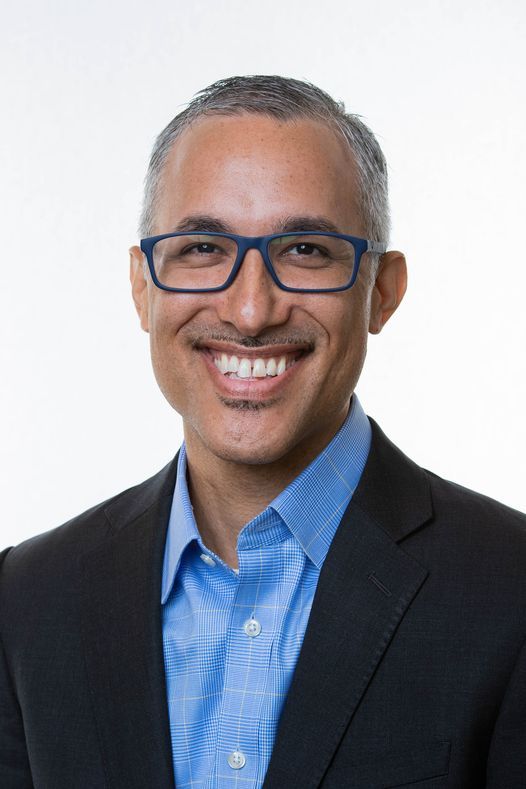
I am honored to lead the establishment and administration of the new school as Founding Dean and leverage my Political Determinants of Health (PDoH) framework, to ensure that our next generation of scholars and leaders understand how these determinants – voting, advocacy, government, commercial interests, and policy, have been galvanized throughout history to either hinder or advance health equity. The school believes that these determinants create the structural conditions and the social drivers—including poor environmental conditions, inadequate transportation, unsafe neighborhoods, poor and unstable housing, and lack of healthy food options—that affect all dynamics involved in health (Dawes, 2020).
A cursory look at the evidence regarding equity-focused policies such as the 19th amendment to the U.S. Constitution that afforded women the right to vote, the Civil Rights Act of 1964 that ended segregated health care, and the Voting Rights Act of 1965 that enabled African Americans to vote in jurisdictions that had limited their right to do so, show that infant mortality rates improved by up to 15% right after 19th amendment was ratified, 38,600 Black infant deaths were prevented because of Title VI of the civil rights law, and jurisdictions required to comply with the Voting Rights Act saw reductions of up to 20% in Black infant deaths in their communities. It is for these reasons and many others that the Meharry School of Global Health programs and course offerings were designed to help our students mobilize and actualize of health equity, with a deep understanding of the PDoH framework so that they can, in turn, go out and permanently repair these breaks in the circle by dismantling the structural drivers that threaten the very existence of certain populations.
At a time when history may repeat itself, and racial and political tensions are certainly at a high watermark, Meharry has found itself once again rising to the occasion, to serve as the bridge between the deep south and the global south through the School of Global Health. Equipping public health professionals and healthcare providers with the essential knowledge on how to navigate the choppy political waters is essential to moving the needle of health equity forward. And while it is vitally important that we keep in mind the hard-earned teachings of yesteryear, all while still looking towards a brighter tomorrow that the School of Global Health envisions, we cannot overlook some of the most recent and prescient lessons of recent times. For example, since the COVID-19 pandemic, more than1,000 legal decisions have been made at all levels of government regarding public healthprotections (Parmett & Khalik, 2023). And prior to the COVID-19 pandemic, the United States has never been able to realize an equitable response when pandemics or epidemics have struck. Defeating adversity takes great courage and is an ongoing effort – one that knows no rest, aptly, much like a perpetual circle.
Let this moment in time serve as a reminder and call to action that we all must be just as courageous, if not more courageous, in this fight for health equity today, even in what may seem to be the most challenging of times. In making the circle whole again, we must find common ground and continue to uplift Black, Indigenous, and all other communities who are being pushed to the margins of society, for as Galations 3:28 tells us, we are all one. The School of Global Health’s call to action lies in teaching current and future leaders how to navigate the destructive and elusive political underpinnings that are detrimental to our well-being, and to do so in an equity-centered, inclusive, and all-encompassing way that can only be truly expressed by a circle. For those who choose to respond to this call, the School of Global Health stands with you in solidarity and welcomes you into the circle of health equity, with open arms.
To learn more about the School of Global Health at Meharry Medical College and how to apply to our programs, please visit meharryglobal.org
Dawes, D. (2020). The Political Determinants of Health. Johns Hopkins Press University.
Hall, M., Graffunder, C., & Metzler, M. (2016). Policy Approaches to Advancing Health Equity. Journal of public health management and practice : JPHMP, 22 Suppl 1, S50–S59. https://doi.org/10.1097/PHH.0000000000000365
Parmett, W. E., & Khalik, F. (2023, March). Judicial Review of Public HealthPowers Since the Start of the COVID-19 Pandemic: Trends and Implications. American Journal of Public Health, 113( 3), 280-287. https://doi.org/doi.org/10.2105/AJPH.2022.307181
Discover more from Three-Fifths
Subscribe to get the latest posts sent to your email.
 Three-Fifths
Excellent article! Dr. Michelle Ned, Doctor of Behavioral Health
LikeLike