

As an advocate for psychological safety in education and the workplace, I feel the month of November is a perfect time to set the stage for new beginnings in the quest. Psychological safety begins with feeling connected to a group so that one can learn, contribute, and challenge norms. The journey to psychological safety often means criticizing or reevaluating previously held ideas or beliefs.
In the United States, many of us celebrate a November holiday called Thanksgiving. During my childhood, I learned that on this day in 1621, the Pilgrims and nameless, generic “Indians” brought forth the harvest from the land and sat down at a long table and happily shared a delicious bounty. Another notable November celebration is National Adoption Month, established in 1976, to bring awareness to the urgent need for adoption. A circle of connection has been created with both celebratory events, but just as one researches a family tree, surprises are often revealed when layers of history are uncovered.
As an adult intent on researching family migrations, indigenous connections, circular patterns of blended cultures, and questioning the accuracy of the history I’d been taught, my perspective and understanding of Thanksgiving evolved. Sadly, but perhaps not, my childhood acceptance of Thanksgiving as a friendly harvest celebration is a myth sparked in part by national nostalgia and Manifest Destiny sentiment. English accounts of the event were fueled by the white American imagination as the country continued expansion westward. Paintings with romanticized stereotypical images of pale-faced Pilgrims in tall hats and “Indians” in feathered headdresses were displayed as the norm. These were the images presented to me and, dare I say, the vast majority of Americans for generations before and after my own.
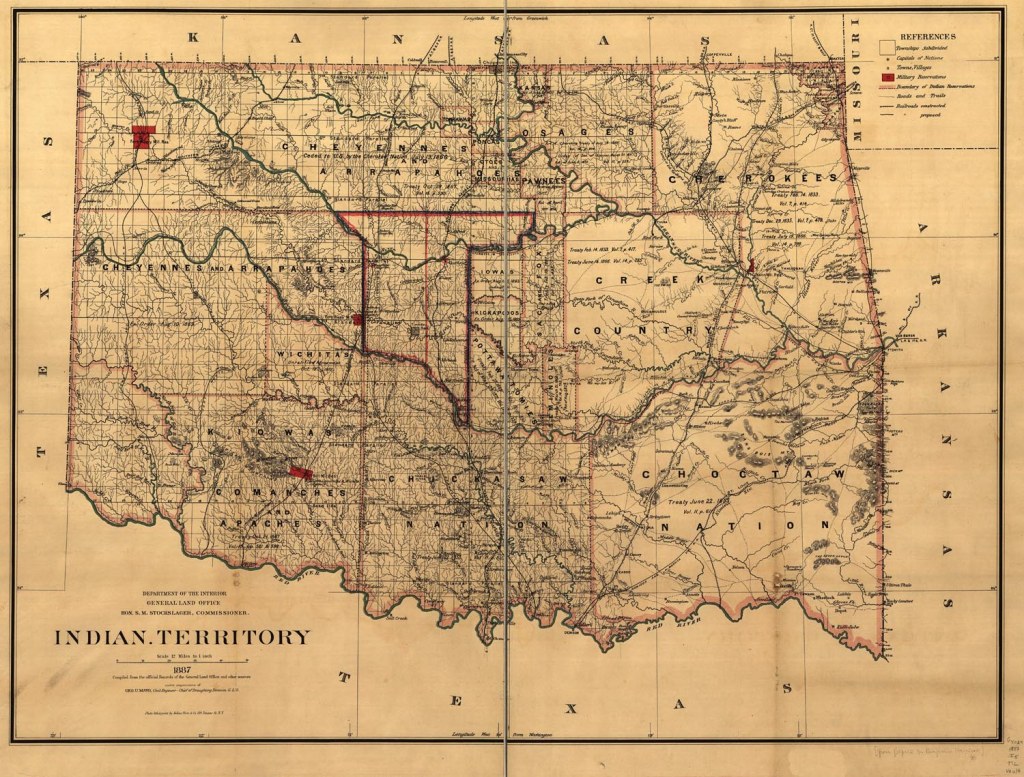
Well, I hate to break it to all the big roasted bird-loving, sage dressing-eating, sweet potato pie aficionados, but the First Thanksgiving as a national story is incomplete and inaccurate! The story is more complex and must include the voices of the actual native occupants in the East Coast region. The Wampanoag nation’s narrative was long overlooked but is critical in developing an accurate understanding, as their nation and other neighboring native tribes were interacting with European explorers, traders, and enslavers for nearly 100 years before English settlers arrived at the Wampanoag Valley. While an English rat pandemic wiped out many of the Wampanoag with disease, surviving members were skilled and adept at farming and harvesting the land. As many settlers began to succumb to the harsh winter with no food reserves, after careful observation, negotiations, and exchanges, the Wampanoag decided to adopt the inept and starving English settlers into their family to give them an opportunity for survival. With the adoption of the white settlers, we learn the true purpose of this First Thanksgiving had more to do with survival through political alliances, economic development, and diplomacy rather than budding friendships and kumbaya moments. Over time, indigenous people accepted some white settlers into their tribes through actual adoption, intermarriage, and assimilation or embracing cultural practices. This cultural ‘whitening’ led to the naming of the so-called Five “Civilized” Tribes – Cherokee, Choctaw, Chickasaw, Muscogee (Creek), and Seminole. Agricultural practices of the ‘Civilized” Tribes were superior to the white settlers and were shared with the same, but soon enough, the greed of the white settlers led to the forced removal of the tribes from their ancestral lands, which were primarily in North Carolina, Tennessee, Georgia, and Alabama.
As I delved deeper into the history connecting Indigenous peoples to the whole of America, I couldn’t ignore The Indian Removal Act, or, as I view it, ethnic cleansing or genocide. I have an ambivalent disdain for the journey that forced some of my ancestors to travel the Trail of Tears in the mid-1830s. Ancestors from Alabama, Tennessee, and possibly Georgia made this journey. But the ancestors of whom I speak, while traveling with the so-called “Five Civilized Tribes”, were not actual members of the tribes. The ancestors in this dialogue are those of African descent who were enslaved by those tribes and, therefore, forced to make the same journey along the Trail of Tears that brought them to the designated Indian Territory, today known as the great state of Oklahoma. While my heart breaks for the Cherokee, Choctaw, Chickasaw, Muscogee (Creek) and Seminole people being forced from their homes to what amounted to no man’s land, my sympathy is tempered with a bit of rage that the African people previously forced on an ocean journey to a strange land with strange people being forced once again to be subjected to another removal, and yet another treacherous journey.
Among the Five Tribes, the Muscogee (Creek) tribe made their way into the area that is near what is Tulsa, Oklahoma. My mother was born nearby on November 29th, while her mother was preparing Thanksgiving dinner. According to the stories told to my mother by her older siblings, “Mother took a break to give birth, then she finished baking the sweet potato pies!” The woman born that day in November was a remarkable person. She was the twelfth of thirteen children born to an African Baptist preacher who was a descendant of a Freedman and a mixed-race Creek and Black mother. She picked cotton and planted and helped maintain vegetable crops. She was taught to read by her older siblings and coveted the books her older siblings shared, and she enjoyed a relatively prosperous life on their farm acreage near Bristow, Oklahoma in the heart of Creek County, Oklahoma. As her older siblings left home to pursue education, work, or marriage, my mother became second in command in her mother’s kitchen and was responsible for her younger sister. She suffered bouts of rheumatic fever as a child, but medical challenges never deterred her from being active in sports; singing in the choir; or sneaking off to dances that were taboo, considering her father’s standing as a local preacher. Two of her older sisters married native Creek men, and the family continued to become a blend of cultures, customs, and, at times, controversy. Coming from a relatively affluent family for the time, my mother was off to Langston University after completing high school. Originally founded in 1897 as the Oklahoma Colored Agricultural and Normal University, Langston is the first HBCU that is a land grant institution. It was there that she decided that her life would be dedicated to learning and teaching others to learn. Upon graduation, she made her own Trail of Tears journey of sorts as she moved away from her family and the familiar red clay of Oklahoma to join her older brother in the north for greater opportunity and adventure. My mother passed away many years ago, and I’ve never really cared for Thanksgiving since her death. For several years, I almost dreaded the day. The lies, marketing around fake idealism and images made me cynical. Finding out that people I’d held in high esteem, and for whom I had great empathy, enslaved some of my other ancestors as did their white counterparts made me angry. Most significantly, my mother was born on that day and loved it. It just made me sad to think that I’d never enjoy her dressing or pie, or the bustle of her kitchen, and the throngs of relatives and friends that flowed in and out of my parents’ home during that day.
A few months ago, while going through a box of my mother’s things I came across a piece of my own history. A certificate of adoption dated November 26, 1964, that officially made me my parents’ youngest daughter. I had never known the date, and it would never have had any significance except that it happens to be my first and only granddaughter’s birthday. She is the light of my life and was born in 2019 just days before my eldest sister, my anchor and confidant, took her last breath. Never has a heart felt more broken than the day I lost my sister and never has a heart experienced more joy than on the day my granddaughter was born.
I believe in divine signs and events. Some of these come immediately and some take time and openness to discern. As Americans from all levels of society, we have endured many transitions. We have adopted and adapted to get through difficult, strange, and sometimes painful, transitions that lead us to grow and evolve. There will always be events and human behaviors that anger us, but it is my hope that we all find our way through bitterness to beauty and a celebration of families, friends, and the blessings of change.
Discover more from Three-Fifths
Subscribe to get the latest posts sent to your email.

 Three-Fifths