

As the leaves change during autumn, we are reminded of nature’s inherent cycles of transformation. In much the same way, America is undergoing a profound demographic shift, evolving into a multiethnic democracy. By 2045, people of color will outnumber white Americans. While this shift signals a major change, it also reflects a deeper truth: America is being called to a reckoning—one that involves acknowledging its history of colonization and the systemic oppression that has followed. This moment offers an opportunity for turning a new leaf, embracing justice and equity in ways that were denied for centuries.
For centuries, Indigenous, African, and Latino communities have been marginalized, forced to the periphery of the American story, and yet, through endurance, adaptation, and resistance, we have shaped the future of the nation. Our survival, despite attempts to erase us, is evidence of our enduring power. The demographic shift we are witnessing today is not simply an outcome of population growth, but a natural rebalancing of power and influence—a moment of spiritual and societal renewal, as we confront the systems of racial hierarchy that have governed this country for far too long.
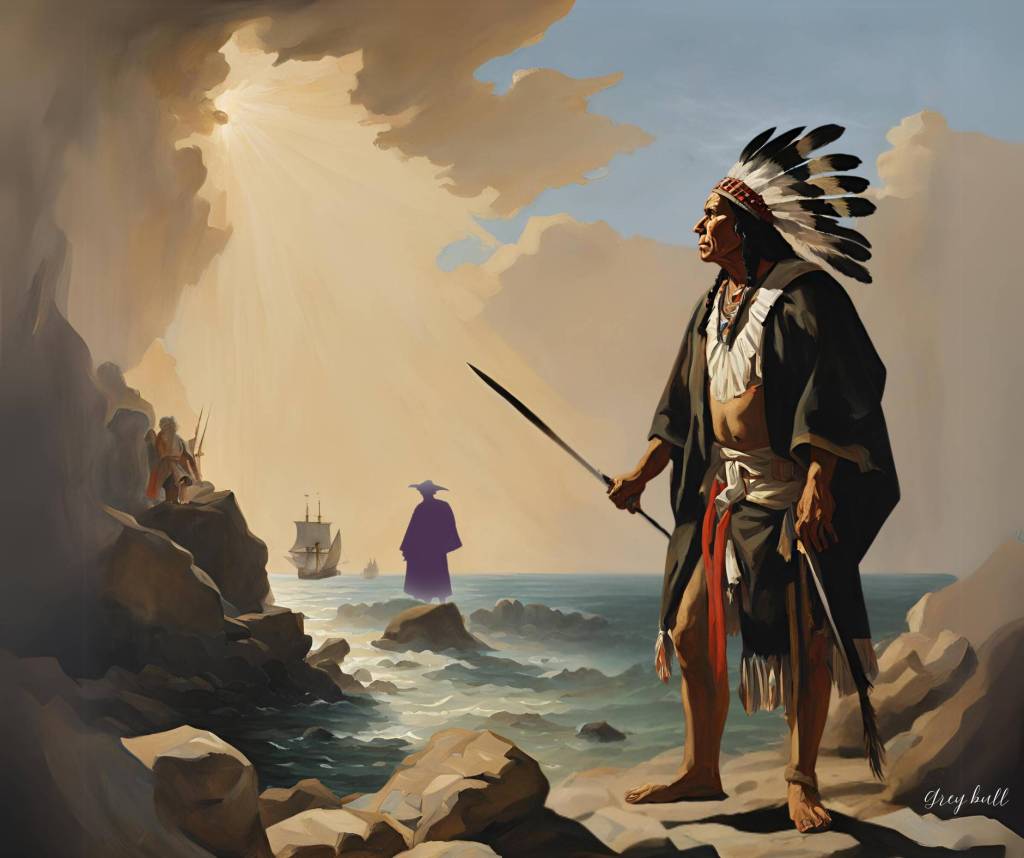
The foundation of America was built on the destruction of Native American civilizations and the enslavement of African Americans. Yet, this brutal history has often been hidden beneath whitewashed narratives that present figures like Christopher Columbus as heroes. The reality, however, is that Columbus did not “discover” America—he introduced a reign of violence, theft, and exploitation that would decimate Indigenous populations and lay the groundwork for centuries of racial oppression. His legacy of cruelty against Native peoples, especially women and girls, cannot be ignored. Columbus himself recorded how Indigenous girls were trafficked and exploited under his rule, setting a precedent for the modern-day crisis of Missing and Murdered Indigenous Women (MMIW).
This silencing of Native stories is emblematic of a broader reluctance to confront the truth about America’s foundation. It is a truth that must be reckoned with—not only through demographic change but through education, public awareness, and policy reforms that fully acknowledge the historical and ongoing violence faced by Indigenous and marginalized communities. The violence of Columbus’ time is not ancient history; it persists in the continued abuse and neglect of Native women and people today, as my work in MMIW advocacy has shown. True change requires more than demographic shifts; it requires a complete transformation in how we understand our past and how we move forward.
In this moment of transformation, there is also the possibility of spiritual renewal. Indigenous Peoples’ Day, which replaces the harmful celebration of Columbus, is a critical part of this effort. It is not just a holiday; it represents the reclaiming of Indigenous dignity, identity, and history. For me, as an Indigenous woman of faith, this is a deeply spiritual act. My spiritual beliefs are rooted in the Creator’s teachings that all people—“all tribes, all tongues, and all nations”—are equal. This truth stands in stark contrast to the way religion was historically misused by colonizers to justify their actions. The Christianity that was weaponized against Native peoples was a perversion of its true message—a message that calls for justice, equality, and love.
Spiritual renewal in America must involve not only confronting the past but embracing a future where the teachings of love, unity, and equality are at the forefront. Monday, October 14, 2024, Indigenous Peoples’ Day is a symbol of that renewal, but it is not the endpoint. If America is to truly heal, it must go beyond symbolic gestures and make substantial, systemic changes. This includes comprehensive education that tells the full truth about the history of Indigenous peoples and other marginalized groups—history that has been erased or minimized for far too long.
The legacy of colonization continues to cast a long shadow over Indigenous communities. The structures of oppression established centuries ago remain intact today, particularly in the way Native women are treated. The MMIW crisis is a direct result of the systems that were built to dehumanize Indigenous people from the beginning. The violence Columbus unleashed upon Native women has evolved into the systemic neglect we see today, where cases of missing and murdered Indigenous women are overlooked or ignored by law enforcement.
True change will come when America not only acknowledges these historical wrongs but actively works to correct them. This means more than offering apologies or implementing minor reforms—it means reparations, systemic overhaul, and a rewriting of America’s story to include the voices and experiences of those who have been silenced for generations. Education is central to this process. Until every American learns the true story of the 575+ federally recognized tribes, along with those who remain unrecognized, the country will remain trapped in the same flawed narrative that perpetuates inequality.
But despite the long history of oppression, Indigenous peoples have not only survived—we have contributed to societal growth in ways that often go unacknowledged. Our survival is not just an act of resistance, but a testament to our strength and resilience. Indigenous peoples are at the forefront of movements for environmental justice, human rights, and cultural revival. Our wisdom, especially in the context of environmental stewardship, traditional ecological knowledge, and cultural revival, offers valuable lessons for the nation as a whole. If America is to truly evolve, it must look to the endurance and resilience of Indigenous peoples, whose survival holds the key to the country’s own renewal.
Faith, too, plays a critical role in this renewal. For me, faith has been a source of strength in my advocacy work, but it is important to acknowledge the difference between the colonizers’ weaponization of Christianity and the true message of equality and love that is found in scripture. The Creator’s words that all nations are equal can guide us toward a spiritual renewal that recognizes the dignity and humanity of all people, regardless of race or ethnicity. This call for spiritual renewal is also a call for societal change—a call to embrace the reality of a multiethnic democracy as both a moral and demographic imperative.
Just as nature renews itself with the changing of seasons, so too must America. The transformation of fall reminds us of the potential for change and rebirth. While America has been slow to evolve beyond the colonial and racial systems that were established centuries ago, the changing demographic landscape offers a chance for true transformation. As our nation grows to populate more people of color and multethnicity, this too is a spiritual balance that the colonizers did not foresee—that their own actions of colonization, oppression, and societal hierarchy would ultimately die out. The bringing of enslaved people to America and the genocide they evoked would be balanced in the future by the reality that they would one day become the minority, not the majority.
If the Constitution was written in the words and essence that “all men are created equal, that they are endowed by their Creator with certain unalienable Rights, that among these are Life, Liberty, and the pursuit of Happiness,” then may the fruition of this declaration be the truth that we live by—ironically, written by colonizers and men who didn’t consider people outside their race as equals. The changing demographic landscape offers an opportunity for a true transformation—a time to turn a new leaf, shed the past, and embrace a future where all people, especially those who have been historically oppressed, are treated with the equality they deserve. Only then can America live up to its promise of liberty and justice for all.
Discover more from Three-Fifths
Subscribe to get the latest posts sent to your email.

 Three-Fifths