

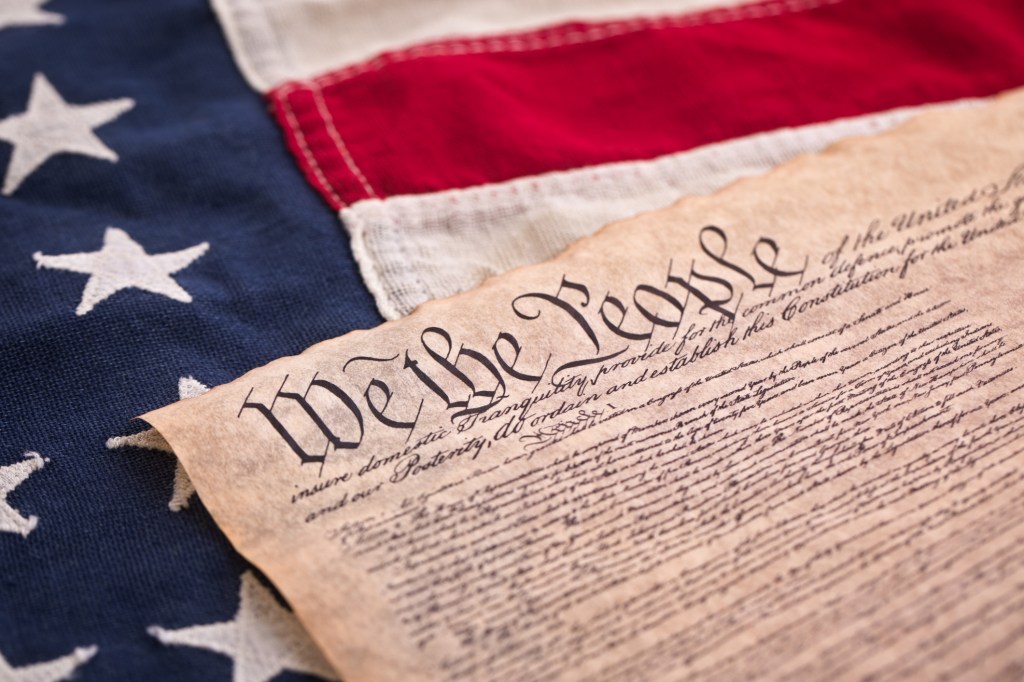
Instead of giving in to cynicism and division, let’s move forward with the confidence and optimism and unity that defines us as a people.
President Barack Obama
While researching the Civil War and the meeting at Appomattox between General Robert E. Lee, the leader of the Confederate States Army, and General Ulysses S. Grant, the leader of the Union Army, I discovered a relatively obscure but significant historical moment before their meeting in the home of Wilmer McLean. The Civil War, a four-year conflict that ended with General Lee’s surrender at Appomattox, was fundamentally about slavery. On one side, the Confederates strongly advocated for maintaining the institution of slavery, particularly the enslavement of Black people, to uphold their way of life. On the other side, the Union fought to keep the United States together, which would ultimately result in the liberation of Black people from enslavement.
This turbulent period in America’s history sheds light on the struggle for freedom, as proclaimed in the Constitution, and the unfortunate necessity of war to achieve it. From the perspective of the Union, the Civil War served as a powerful denunciation of a system that allowed certain individuals to prosper and establish generational wealth from the free labor of Black people. From the perspective of the Confederates, the Civil War was a fight for states’ rights to maintain the institution of slavery and to preserve King Cotton to keep their economy afloat because slavery was their currency. The enslavement of Black people was comparable to the stock exchange during this period, where Black people were publicly traded from one enslaver to another. The Civil War was a conflict between opposing narratives, which would never be solved through iron weapons of war. As the walls began to close on the Confederate Army, its leader, General Robert E. Lee, facing defeat, chose to sit and reflect under an apple tree1.
I can imagine that as General Lee was sitting under the apple tree, he began to think about the futility of the war he had just fought for four long and bloody years. His body was tired, his spirit heavy, and his conscience seared with memories and decisions that he thought would bring victory, only to end in defeat. As he pondered the impact of the war, he started to consider the possibility of seeking a peaceful resolution, which would ultimately lead him to surrender. This war was a turning point in his life, prompting him to question his leadership and strategies. At this moment, I can imagine God saying to him, “It is hard to kick against the pricks.” When a person is humbled, it is where human limitations intersect with God’s authority. The wall of defeat often turns us inward to reflect upon our ways.
I had never heard of this part of history regarding the apple orchard at the close of the Civil War, mainly because of its perceived insignificance compared to the more prominent narratives of slavery and states’ rights. Why is the apple tree so important? The apple tree holds great significance due to its unique growing requirements. Considered self-unfruitful, it cannot produce fruit alone and requires the presence of another apple tree for cross-pollination. This dependency on another tree for fruit production symbolizes the importance of unity and collaboration. We cannot be a great nation independently. We need each other. If we want unity, we must come together.
At the Meeting in Appomattox, both generals were assisted in composing their letters. General Lee’s aide, Charles Marshall, composed his letter. Ironically, Lt. Colonel Ely S. Parker2, an Indigenous native and Seneca leader from the Tonawanda Reservation in New York, composed a copy of General Grant’s letter outlining the terms of surrender. Parker’s presence and literary duty directly challenged the false narrative that people of color were unintelligent. Here was a person of color schooled in the matters of law, who held the titles of Chief and engineer before being promoted to the esteemed rank of Brigadier General, composing a letter for General Grant that would be given to the leader of the Confederate Army. The sheer power of the optics alone silenced the false narratives surrounding people of color that had been perpetuated by the opposing side. This moment undeniably dismantled that narrative.
Our nation continues to be divided because we continue to “kick against the pricks” by denying the humanity of others and their right to exist. We are divided due to a severe lack of empathy and a blatant disregard for the constitutional rights of all people. We must govern our nation with a unified perspective based on truth, not division and false narratives. When we selectively ignore the provisions of the Constitution for certain individuals, we undermine the fundamental principle of upholding the law for everyone. Consistent application of the law is non-negotiable. Widespread division fueled by false narratives has to be acknowledged and rejected. History has unequivocally shown that division leads to negative outcomes, yet we refuse to pick up what history is putting down. True strength lies in unity, not division.
Nature is our greatest teacher. Just as an apple tree cannot produce fruit independently, we, as a nation, can only achieve unity together. We need a national ‘Meeting at Appomattox’ moment to call a truce on our divided agendas. It is time to emphatically raise the white flag in the face of division and declare, ‘Enough.’ Our nation must unite and reject all forms of division. Only then will we authentically embody our name as the United States of America.

Discover more from Three-Fifths
Subscribe to get the latest posts sent to your email.

 Three-Fifths