
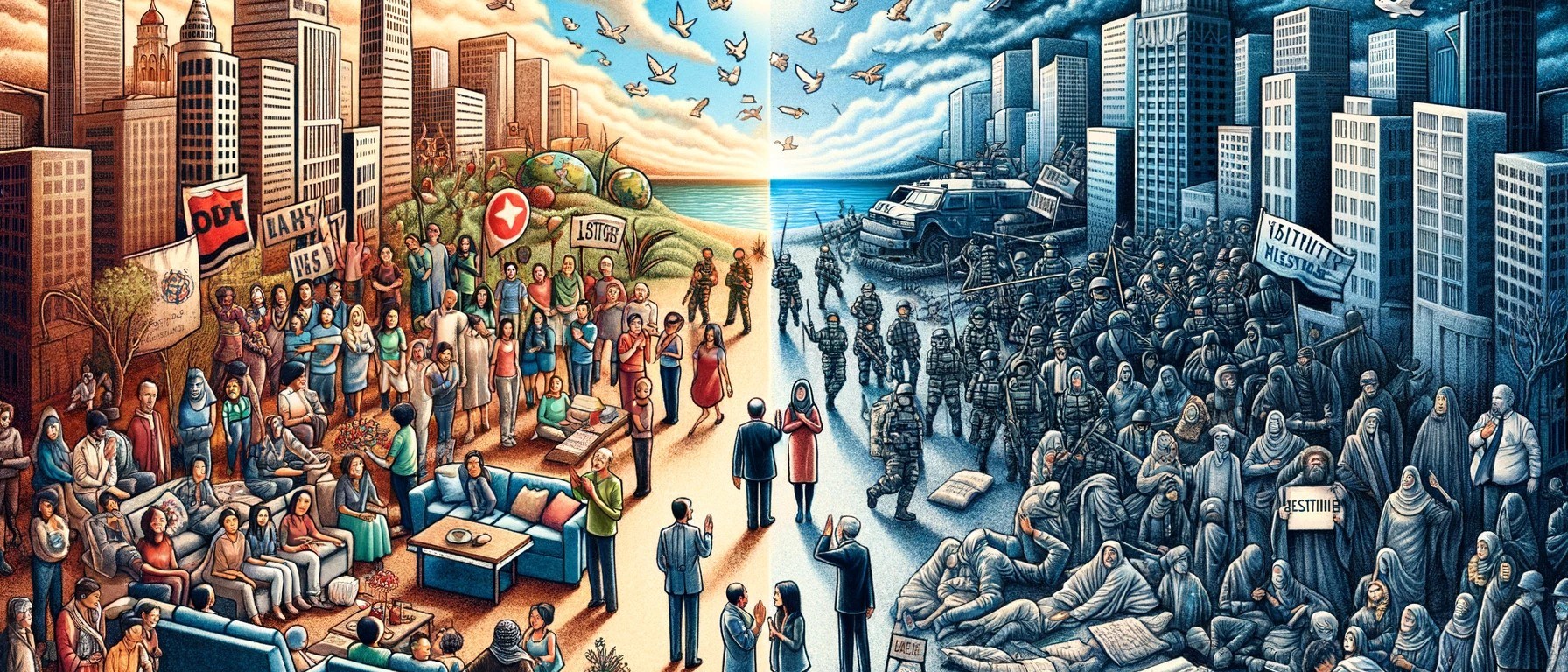

In the complex terrain of Diversity, Equity, and Inclusion (DEI) initiatives, we confront the intricate web of systemic injustices entrenched within our society. Each step forward feels like a battle against the shadows of the past, a daunting task that demands unwaveringg commitment and resilience. Despite the strides made by past civil rights movements, marginalized communities, allies, and advocates find themselves grappling with the persistent challenge of dismantling oppressive systems that perpetuate marginalization and disenfranchisement.
Embedded within the fabric of our societal discourse, Scripture offers profound wisdom on the significance of justice and ethical conduct. Proverbs 21:3 in the Message Bible eloquently underscores the primacy of genuine action in the pursuit of social change, emphasizing the intrinsic value of equitable treatment and fairness in our interactions with one another. This moral compass guides us as we navigate the complexities of DEI efforts, reminding us of the ethical imperative to strive for justice and equity in all aspects of our lives.
Resilience, the indomitable spirit that propels us forward in the face of adversity, compels us to view challenges not as insurmountable obstacles but as catalysts for transformation. It beckons us to critically analyze our methods of resistance, identify the agents of change, and discern the starting points for our collective journey toward equity and justice. Whether within the hallowed halls of places of worship, the corridors of courtrooms, the chambers of corporate boardrooms, the lecture halls of educational institutions, or the grassroots movements burgeoning in communities, collective efforts are indispensable in dismantling the structures that perpetuate systemic oppression.
In the workplace, DEI initiatives are not just moral imperatives; they are essential for fostering a culture of inclusivity and equity. Despite the growing recognition of their importance, persistent disparities continue to plague countless organizations. A report by the Society for Human Resource Management (SHRM) found that while 90% of organizations claim to prioritize DEI, only 25% have specific goals and metrics to track progress (SHRM, 2021). This stark discrepancy underscores the need for more than just lip service; tangible actions, such as implementing inclusive hiring practices, providing diversity training, and establishing mentorship programs, are necessary to drive meaningful change.
Addressing these disparities requires a multifaceted approach that challenges bias at every level of the organization. Creating inclusive policies, promoting diverse leadership, and fostering a culture of belonging are crucial steps toward building a more equitable workplace. Additionally, providing opportunities for advancement and professional development for all employees, regardless of background, is essential for breaking down systemic barriers and fostering a truly inclusive environment.
As we confront the challenges of DEI efforts, let us not lose sight of the resilience and determination that have propelled us thus far. The resistance of the Palestinian people serves as a poignant reminder of the power of grassroots movements to effect change. Their struggle should inspire our own journey as we confront systemic injustices and strive toward a future where justice, equity, and inclusion are not just ideals but lived realities for all.
Amidst the landscape of DEI efforts, the future trajectory of inclusivity and equity is deeply intertwined with political decisions. Policies enacted at local, national, and global levels have profound implications for marginalized communities and their access to opportunities. The commitment of political leaders to prioritize DEI initiatives will undoubtedly shape the landscape of social justice and equity for years to come. As advocates and allies, it is imperative that we remain vigilant in holding our elected officials accountable and advocating for policies that advance DEI principles.
Furthermore, as DEI initiatives face the risk of being dismantled, we have a unique opportunity to reevaluate and rebuild these efforts from the ground up. While the previous DEI model had its merits, it was not without significant challenges, including a limited scope and insufficient commitment from senior leadership.
Moreover, the new DEI paradigm must emphasize the business value of diversity and inclusion. Research consistently demonstrates that diverse teams are more innovative, productive, and resilient. According to a report by McKinsey & Company, companies in the top quartile for racial and ethnic diversity are 35% more likely to have financial returns above their respective national industry medians (McKinsey & Company, 2020). However, to fully realize these benefits, organizations must cultivate environments where all employees feel valued, respected, and empowered to contribute their unique perspectives. This necessitates a firm commitment from senior leadership to create inclusive cultures and implement policies that foster diversity and equity at all levels of the organization.
The urgency of the moment demands a reimagining of DEI efforts that transcend the limitations of the past. As Audre Lorde once stated, “I am not free while any woman is unfree, even when her shackles are very different from my own.” This quote encapsulates the essence of our struggle—a recognition that true liberation cannot be achieved until all individuals are liberated from the chains of oppression. Therefore, as we move forward, let us prioritize intersectionality in our DEI initiatives, acknowledging the interconnected nature of oppression and centering the voices of marginalized communities. Additionally, let us recognize the business value of diversity and inclusion, understanding that diverse teams are not only more innovative and productive but also financially successful. The time to act is now. As modern-day warriors for justice, we must stand in solidarity with the oppressed, challenge the status quo, and strive relentlessly toward a world where justice, equity, and inclusion are not just ideals but lived realities for all. In the words of Malcolm X, “The future belongs to those who prepare for it today.” Together, let us continue to push forward with courage and conviction, knowing that our efforts today will shape the future for generations to come.

References:
– ACLU. (2021). Racial Disparities in Incarceration. Retrieved from https://www.aclu.org/issues/smart-justice/mass-incarceration/racial-disparities-incarceration
– Economic Policy Institute. (2021). Black Workers’ Wages Still Lag. Retrieved from https://www.epi.org/publication/black-workers-wages-still-lag/
– McKinsey & Company. (2020). Diversity wins: How inclusion matters. Retrieved from https://www.mckinsey.com/~/media/McKinsey/Business%20Functions/Organization/Our%20Insights/Diversity%20wins%20How%20inclusion%20matters/Diversity-wins-How-inclusion-matters.ashxReferences:
– Society for Human Resource Management (SHRM). (2021). The State of Workplace Diversity, Equity & Inclusion. Retrieved from https://www.shrm.org/hr-today/trends-and-forecasting/research-and-surveys/pages/2021-state-of-workplace-diversity-equity-and-inclusion.aspx
Discover more from Three-Fifths
Subscribe to get the latest posts sent to your email.
 Three-Fifths