
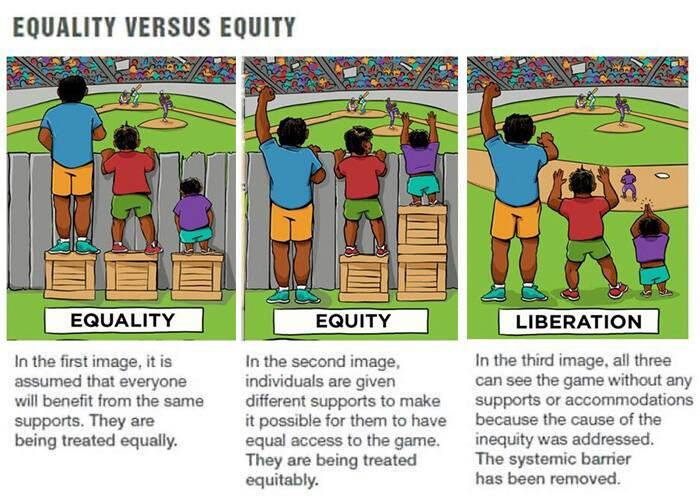

Image created by the Interaction Institute for Social Change
As a DEIB (Diversity, Equity, Inclusion, and Belonging) consultant, I often work with the HR departments of organizations that are looking for ways to remove bias from their recruitment and hiring practices by using a variety of strategies, including AI and what Trakstar Hire calls *“blind auditions” According to Trakstar Hire, companies such as Good and Dolby select talent through software that allows them to do “blind* auditions.” Instead of looking at a resume and assessing an applicant based on name, schools attended, companies worked for, and titles held, the only thing employers can measure is the candidate’s performance on a skills-based test. The theory is that by leaving out personal information such as name, gender, race or ethnicity, the process will be based on meritocracy without any biases.
Here are what I see as some of the problems with this theory:
First, we like to think there is no bias in AI, but who will be programming the AI we are using, and who will interpret the data? Secondly, even if there is less bias, like it or not, we still live in a world where color matters. Our race/color impacts almost every aspect of our lives and experiences. I pray for a day when color no longer “matters,” but until the playing field is equal, it does matter. That means we need to be aware of and sensitive to the ways that color impacts our lives. There is more than enough research pointing to the adverse impact of racial oppression on People of Color. Health, life expectancy, maternal death rates, anxiety, stress, mental health, and many more aspects of life are impacted.
I like to use an image created by the Interaction Institute for Social Change to explain the difference between equality and equity. This image is worth a thousand words.
When we use “blind” auditions or hiring practices in an attempt to create equality, we are not necessarily creating Equity!
I took a course last year with Dr Kenneth V. Hardy on Racial Trauma. He had a lot to say about the phrase, “All lives matter.” He believes it is essentially “code for erasing race and speaks to our pathology as a society.” When I talk about racism and oppression, I am often challenged by other white people who ask, if race is a social construct, then it isn’t real, so why are we making such a big deal out of something that doesn’t really exist? According to Dr. Hardy, “Race is a social construction AND it has a real impact on many parts of our lives.” One of those impacts is Racial Trauma. Dr. Hardy believes that “Racial trauma can cause People of Color to be in survival mode all the time; sometimes spending so much time being in survival mode that they don’t get to spend time on actually living.” Even further, he states in his book Healing the Hidden Wounds of Racial Trauma that “racial oppression is a traumatic form of interpersonal violence which can lacerate the spirit, scar the soul, and puncture the psyche.” These are powerful and profound words that have stayed with me. They are with me now as I ponder the impact of advances in technology on People of Color. When you leave decision-making to AI and utilize “blind” hiring practices, you don’t account for the very real impact of race and racial trauma on POC. In my humble opinion, this is why many of the new advances in technology will serve to create more of a racial equity gap.
* I acknowledge that the use the use of the word blind is ableist language and has been used because I am quoting directly from sources.
Discover more from Three-Fifths
Subscribe to get the latest posts sent to your email.
 Three-Fifths