
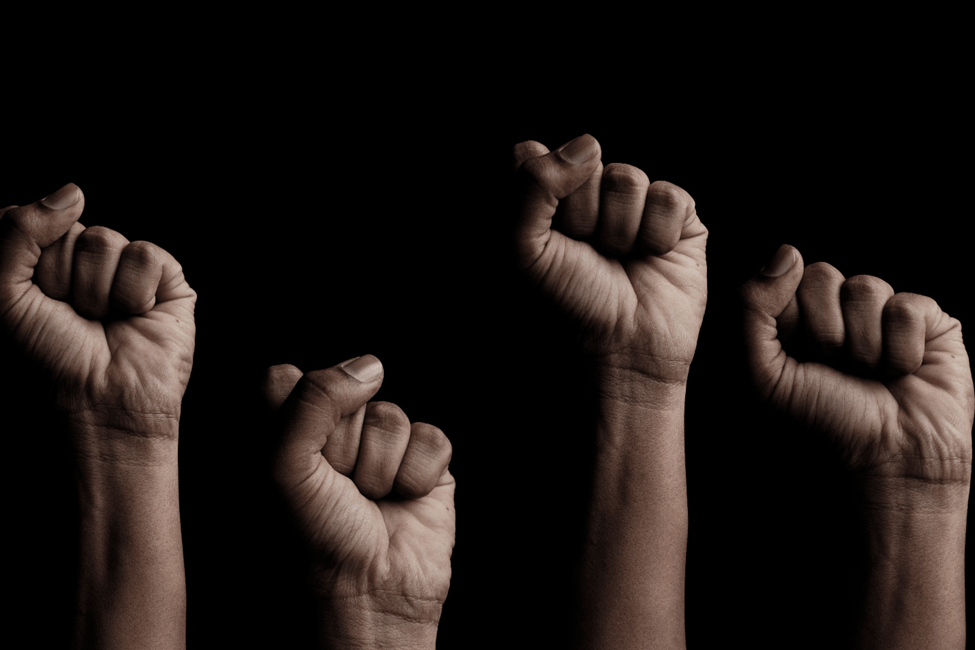
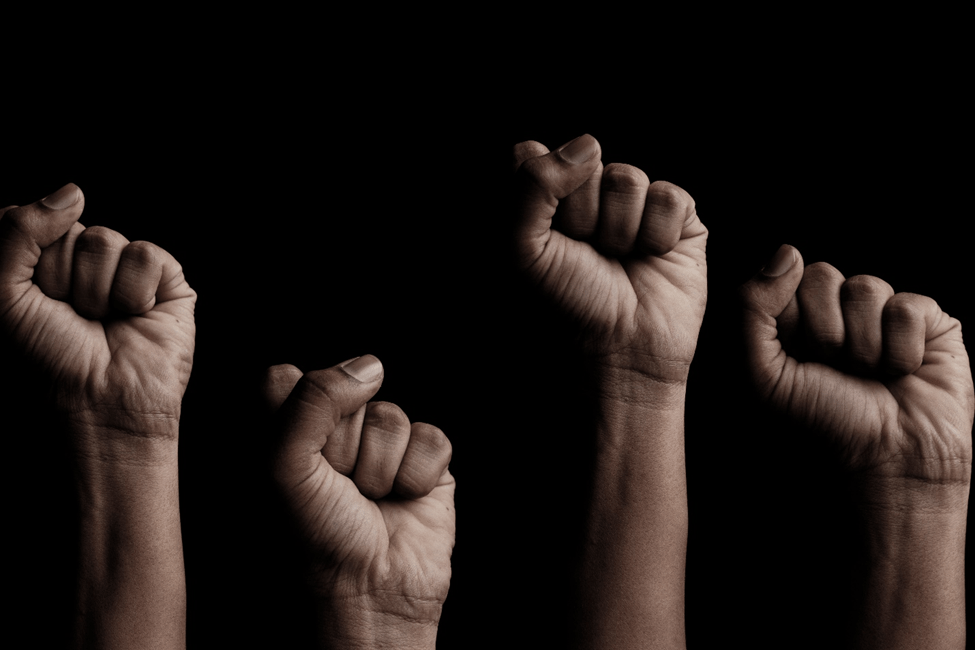
“We Shall Overcome” became the theme song of the Civil Rights Movement. It was the backdrop and battle cry for the fight for equality, and human and civil rights. “We Shall Overcome” motivated the descendants of former slaves and their allies toward the arc of justice. It reflected hope for the future, a day when we would eventually walk hand in hand beyond our racialized past and legalized oppression and discrimination.
Of course, “We Shall Overcome” was just one of many protest songs that laid the foundation for our fight for common human decency. The arts have always played a role in reflecting our deepest felt emotions amid collective pain, suffering, and oppression.
Marvin Gaye’s 1971 classic LP “What’s Going On” features such cuts as: “The Inner City Blues;” “Right On;” “What’s Happening Brother;” “Save the Children;” and “God is Love,” unapologetically spoke to pertinent issues of the times like poverty, and the Vietnam war.
Billie Holiday sang about Strange Fruit more than 30 years prior, a song which made her the target of brutality at the hands of law enforcement. Yet she sang:
Southern trees bear strange fruit
Blood on the leaves and blood at the root
Black bodies swinging in the southern breeze
Strange fruit hanging from the poplar trees
Pastoral scene of the gallant south
The bulging eyes and the twisted mouth
Scent of magnolias, sweet and fresh
Then the sudden smell of burning flesh
Here’s a fruit for the crows to pluck
For the rain to gather, for the wind to suck
For the sun to rot, for the trees to drop
Here’s a strange and bitter crop
Nina Simmone kept the struggle in the forefront with passionate, emotionally laced songs like: “Revolution,” “To Be Young Gifted and Black,” “Backlash Blues,” “Mississippi godd@m,” and “Four Women.”
Gil Scott Heron added to the backdrop of the continued struggle with a plethora of standouts like: “The Revolution Will Not Be Televised;” “Home is Where the Hatred Is;” “Whitey on the Moon;” and “Winter in America.”
Public Enemy (Fear of a Black Planet) picked up the baton with social conscience rap music with cuts like: “Fight the Power;” “Don’t Believe the Hype;” “Rebel Without a Pause;” State of the Union;” “Welcome to the Terrordome;” and “Harder than You Think.”
It can be seen in the visual arts of Sam Gilliam’s 1970 painting entitled, “Red April,” depicting an abstract statement of racial chaos and urban unrest following the assassination of Dr. King. We also have the insightful depth contained in the works of Gordon Parks, Kara Walker, Romare Bearden, and Jacob Lawrence.
The heart of the movement has also been captured on the movie screen with “Blaxploitation” films where Black heroes defeated “the man” in movies like: “Shaft;” “Coffy;” “Black Belt Jones;” “Super Fly;” and “Black Caesar,” and modern filmmakers like Spike Lee and movies such as: “Do the Right Thing;” “Get on the Bus;” and “Malcolm X.”
Literary giants like James Baldwin (Go Tell It On the Mountain), Nikki Giovanni (Cotton Candy on a Rainy Day), Tony Morrison (Song of Solomon), and Maya Angelou (I Know Why the Caged Bird Sings) used pen and paper to express in rhythm and rhyme what many of us were unable to translate into words.
In the arena of dance, Alvin Ailey explored the art of dance taking it to new levels of Black expression. Misty Copeland broke new ground as the first Black ballerina, breaking stereotypes and countering the racist notion that ballet was a white space only.
Comedians share this stage as well with truth speakers through humor with such legends as Dick Gregory, Richard Pryor, Paul Mooney AKA “The Godfather of Comedy,” and relative newcomers like Dave Chappelle, Katt Williams, Trevor Noah, W. Kamau, and many others pulled no punches and had no problem making a room uncomfortable while addressing issues of race.
Considered to be a “Rebirth of the African American Arts,” The Harlem Renaissance (1918 – mid-1930s) portrayed the struggle in various forms of art, via cultural reflections and expressions of emotions felt through collective oppression and subjugation. The Renaissance was inclusive of theater, fashion, politics, and scholarship, in addition to all of the other aforementioned art forms.
It would be extremely difficult to narrow down any one favorite artist, as all have played a critical role in the collective whole. The Movement is so much bigger than any of us and is dependent upon the communal village to stand in unity to push our cause forward regardless of tribal affiliations. This is a cause for the rights of human beings, ALL human beings. Anything less is a threat to the rights of all of us as the scales of power can shift at any time.
The arts have always been an expression and call for revolutionary change from the Negro Spirituals on the slave plantations to the freedom songs at the March on Washington. The passion is unbridled and cannot be contained. It’s the release of the presser cooker that falls just short of a full-blown explosion that destroys us all.
In the words of Dr. King Jr. in his speech entitled The Other America:
“Let me say as I’ve always said, and I will always continue to say, that riots are socially destructive and self-defeating. … But in the final analysis, a riot is the language of the unheard. And what is it that America has failed to hear? It has failed to hear that the plight of the Negro poor has worsened over the last few years. It has failed to hear that the promises of freedom and justice have not been met. And it has failed to hear that large segments of white society are more concerned about tranquility and the status quo than about justice, equality, and humanity. And so in a real sense, our nation’s summers of riots are caused by our nation’s winters of delay. And as long as America postpones justice, we stand in the position of having these recurrences of violence and riots over and over again.”
I still believe that we shall overcome our divisiveness, we shall overcome our ignorance, we shall overcome our fear of “the other,” we shall overcome hatred, and we shall overcome our indifference and apathy, and we shall overcome our lack of empathy, and love our fellow man/woman.
Yes, “Oh, deep in my heart I do believe we shall overcome someday.”

Discover more from Three-Fifths
Subscribe to get the latest posts sent to your email.

 Three-Fifths