
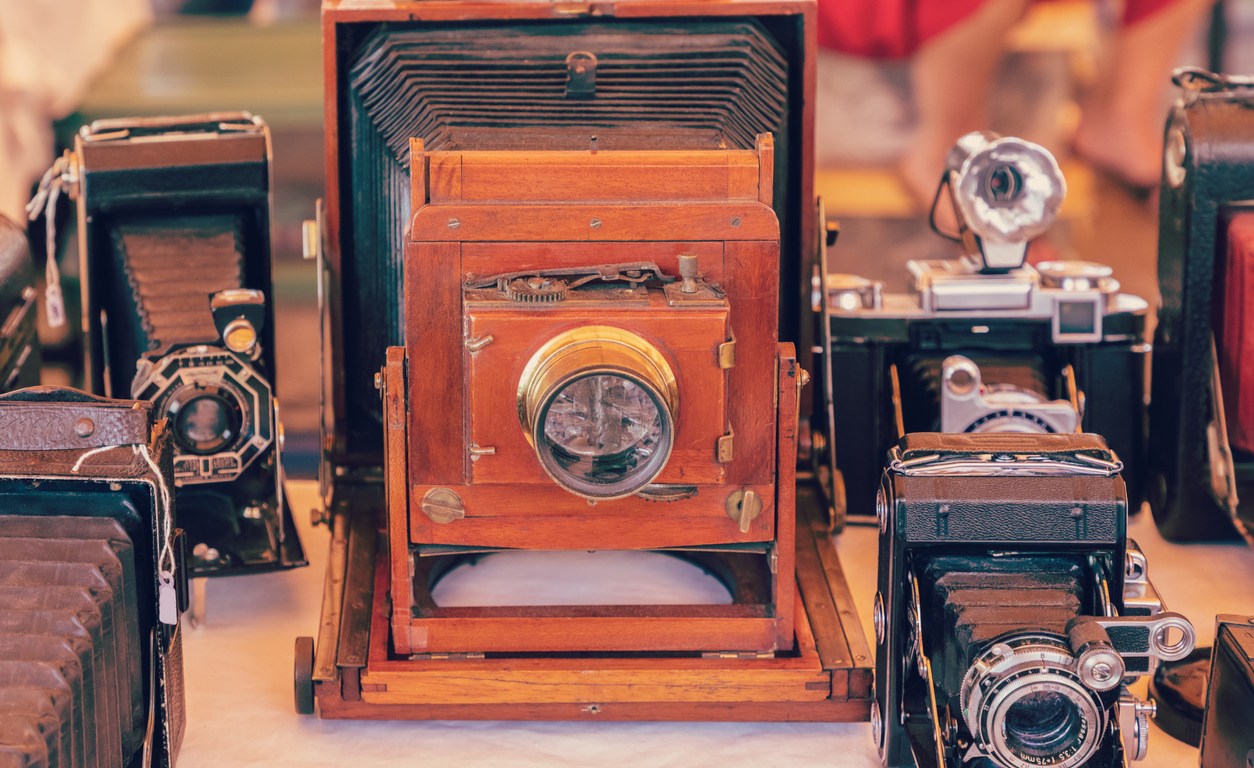

The camera gave me an incredible freedom. It gave me the ability to parade through the world and look at people and things very, very closely.
Carrie Mae Weems, Photographer
As an educator, one of my most important jobs is teaching children how to read. The key to unlocking the mystery of words for beginners is decoding. It is the process of translating written words into speech, starting with the knowledge of letters and sounds. Once children can decode words and comprehend their meanings, they can read fluently. Decoding doesn’t just apply to reading. There have been many coded messages in America’s history that have remained hidden, especially concerning the contributions of Black people. There has been a concerted effort to redact the history of Black people from institutions of learning, libraries, and even top leadership positions. This collective effort to hide the contributions of Black people who built America with their blood, sweat, and tears cannot escape the scrutiny of the Black photographer. The Black photographer plays a vital role in bringing history, the horrors of slavery, death, war, conflict, poverty, injustice, civil rights, joy, triumph, ancestry, music, food, beauty, culture, and the stills of Black life to the visual doorstep of those whose minds are chained with selective memories. Through their images, Black life is revealed and decoded, showing us that Black people have always been here, contributing to America’s past, present, and future.
Photography is an art form that is often overlooked when it comes to Black History and art. It deserves more recognition. Photography has the power to capture moments in time and transport us to any year throughout history, allowing us to witness people, places, and events as if we were right there. A photograph can engage all of our senses, allowing us to see, hear, feel, and even touch what is happening in the picture. It is a unique way of storytelling, using subliminal words in the form of images that can evoke a range of emotions in the viewer. A photograph is a visual record of our existence and a permanent imprint in American history.
The daguerreotype was referred to as a mirror with a memory.
John Jacob, Photography Curator, Smithsonian American Art Museum
Throughout history, many talented Black photographers have created some of the most memorable and moving images. To pay tribute to their contributions, we honor and salute these artists. Glenalvin Goodridge and James Pressley Ball were among the earliest Black photographers in the history of our nation. Their daguerreotypes have become a rich legacy. Both photographers were abolitionists and used their craft to raise awareness about the enslavement and unfair treatment of Black people. They were pioneers in using the latest techniques in the art of photography. Atlanta-based photographer Thomas Askew expertly captures Black excellence and the Black professional experience, while photographers Florestine Collins and Deborah Willis deliver a photographic celebration of the dignity and beauty of Black women. Urban photographer Devin Allen from Baltimore also deserves recognition for his work that captures the full range of the human experience and makes an essential contribution to the photographic landscape.
James Pressley Ball (1825-1904) was a Black photographer and abolitionist who owned a studio in Cincinnati, Ohio, on 28 W. Fourth Street. Mr. Ball employed nine assistants in his gallery. He used his masterful photography not only for portraits but to fight against slavery. In addition to owning a studio with many prominent clients, such as Frederick Douglass, Queen Victoria, and Charles Dickens, he organized a moving canvas exhibit in 1855, a panorama chronicling the story of slavery as a narrator would narrate each moving scene. The exhibition was called The Mammoth Pictorial Tour of the United States. The canvas was reported to be four feet high and 2,400 yards long. It was divided into four parts depicting views that begin in Africa of the African Slave Trade, a race riot in Cairo, Illinois, and slave quarters on the cotton and sugar plantations. Viewers go on a visual journey to the Charleston Harbor, New Orleans, and the Mississippi River.
Ball took his exhibit to Boston and other places. He even won the bronze medal for photography in 1857 from his work featured at the Ohio Mechanics Institute expositions. Ball was the official photographer of the 25th-anniversary celebration of the Emancipation Proclamation. He set the pathway ablaze for future photographers. Ball was elected a delegate to the Republican convention in the Montana territory in 1894 and nominated to run for County Coroner but declined the nomination. In 1992, he set an auction record as one of his 1851 daguerreotypes sold for $63,800. Mr. Ball’s work is housed in Cincinnati Museums, Historical Societies, and the Schomburg Center for Research in Black Culture.
Glenalvin Goodridge (1829-1867) was among the first African American photographers in the United States. He began his career as a teacher at a Colored High School in York, PA, before opening his photography studio in 1847. While still teaching, Goodridge honed his photography skills and techniques, including lighting and posing. As his photography business grew more profitable, he gradually reduced his teaching hours. Goodridge also developed an improved method of daguerreotyping called an ambrotype, which eliminated glare from the images. Additionally, he was the first photographer to introduce customers to the stereoscopic view, which added a 3-D and realistic effect to the images. Goodridge and his family were actively involved in the Underground Railroad, providing assistance to the enslaved in their quest for freedom. William Goodridge, Glenalvin’s father, worked as a conductor on the Underground Railroad, and Glenalvin often used his downtown studio as a safe haven for the enslaved. The Goodridge family’s involvement in the Underground Railroad attests to their commitment to the abolitionist cause and their unwavering dedication to ending slavery in the United States.
The whole soul of man is a sort of picture gallery, a panorama, in which all the great facts of the universe, in tracing things of time and things of eternity, are painted.
Frederick Douglass – Lecture on Pictures, 1861
In the Black community, the practice of “framing us” is a perpetual and ongoing necessity due to negative stereotypes. By controlling the narrative, we can reverse this harmful trend and promote a more accurate counter-narrative of the Black community. It’s not about seeking validation from others but defining ourselves on our own terms. Photographers are uniquely positioned to shift the narrative, showcasing the vibrancy and complexity of Black culture through their lenses.
The intelligence, excellence, and beauty captured by Black photographers are truly captivating. Dr. W.E.B. Du Bois, a sociologist, historian, and journalist, challenged the negative stereotypes attached to the Black community. At the 1900s World Fair held in Paris, Du Bois harnessed the power of photography when he curated an exhibition titled, The Exhibit of the American Negroes, which featured a collection of stunning images that showcased the diverse and multifaceted world of Black people in various settings. The exhibition was a “raised fist” moment of triumph, representing the emergence of a people who had been freed from the chains of slavery and were now taking their rightful place in the world. The collection is currently located in the Library of Congress. Among the artists whose works were displayed in the exhibition was Thomas Askew, a photographer from Atlanta, Georgia, who had previously been enslaved.
Askew began his career as a printer for C.W. Motes, a studio in Atlanta, Georgia. From there, he opened up his own studio in NW Atlanta. Askew’s photographs are stunning works of art that showcase the lives of prominent Black families in Georgia. Through his lens, he captured and celebrated the achievements of Black professionals like educators, doctors, nurses, and business owners. His images stand in stark contrast to stereotypical depictions of plantation life and offer a powerful visual commentary on the contributions of Black individuals to society. Through his works, Askew beautifully captured the spirit of Black excellence, portraying Black people as rising above the plantation and forging their place in society. Some of Askew’s original works are preserved in the archives of the Auburn Avenue Research Library and the Atlanta History Center, both located in Atlanta, Georgia.
Goodness is beauty. It reflects in people’s attitude, and sense of style. That’s basically how I consider and recognize beauty. I’m not defining it. I’m reflecting.
Deborah Willis
Black women have also played a significant role in the field of photography. However, not many people know about Florestine Perrault Collins, one of the early pioneers of Black women in photography. Collins was born in New Orleans to free people of color and developed an interest in photography at an early age. In the 1920s, there were only a handful of black female photographers, and Collins was one of them. She was not only a photographer but also a shrewd businesswoman who used images of herself to advertise her skills. One of her most notable accomplishments was documenting the New Orleans Creole community. Her photographs reflected pride, elegance, and dignity, and she was known for her ability to capture the essence of her subjects.
Let’s shift our focus to the present and discuss some contemporary photographers who are currently active in the industry. Deborah Willis is a highly acclaimed photographer, professor, curator, and historian who showcases the beauty of the Black body, women, and gender in her work. She challenges conventional beauty standards and believes that beauty should not be defined but rather reflected. One of her notable exhibitions is “Posing Beauty in African American Culture,” which features different representations of African and African American beauty through various forms of media in both historical and contemporary contexts. Through her work, Willis challenges Westernized ideologies and definitions of beauty that have become the norm by presenting a counter-narrative of beauty that is reflected from within.
What also makes Willis unique is her research on the history of photography as it relates to Black history and culture. Her scholarly work in this area has made a significant contribution to our understanding of the intersection of photography, race, and cultural identity. By examining how photography has been used to document and shape Black experiences, Willis has uncovered new insights into photography’s role in shaping our understanding of race and identity. She brings a humanistic approach to her work and goes beyond the image to curate exhibits that uncover the stories, history, and humanity behind them. Her work has been instrumental in bridging the gap between the past and present, providing a platform for Black voices and representation in photography. Willis has demonstrated that every picture has a unique history, and her exceptional work helps us gain a greater appreciation for the stories behind the photographs. Her research is highly regarded in academic circles and has helped establish her as a leading voice in photography studies.
Devin’s role was more than that of a photographer. He was a liaison between his people and the rest of the world, and you can feel the compassion in his photos. They aren’t cheap and exploitative. They capture the love, pain, togetherness, and humanity that exist within the Black community—what he calls A Beautiful Ghetto.
D. Watkins
In the spring of 2015, in Baltimore, following the death of Freddie Gray, photographer Devin Allen picked up his weapon of choice—the camera. Allen embedded himself with the people of Baltimore during the Uprising, capturing raw and unfiltered images of people who were hurt and felt betrayed by the system. His photos depict the protests demanding justice for Gray and reveal the depth of emotions the people of Baltimore felt at that time. The contrast between the protestors marching past the city’s beautiful murals and historical monuments highlights the juxtaposition between the demands of the people and the city’s rich cultural heritage.
Allen is the author of the book A Beautiful Ghetto. I had the honor of meeting Mr. Allen at the Reginald F. Lewis Museum during a book signing event. The images in the book are unfiltered. There is no narrative that Allen is trying to counter. It is what it is. It reminds me of the quote by Oliver Cromwell, “Paint me as I am. If you leave out the scars and wrinkles, I will not pay you a shilling.” Allen’s work extends to the next generation. He gives back to the community by providing cameras to the youth through an organization called Wide Angle Youth Media. Allen is carrying on his mission of empowering others by capturing their stories through the lens of his camera.
The ability to decode the intended meaning of a photograph demands a genuine appreciation for diversity and a profound love for humanity. The lens of our hearts must be free from the debris of racism, classism, sexism, and any other forms of bias to truly see the humanity behind the image. By viewing the photograph with an unclouded lens, we can recognize and celebrate the beauty of human diversity.

Discover more from Three-Fifths
Subscribe to get the latest posts sent to your email.

 Three-Fifths
I ran across this article on my search to find more information about a large antique portrait I bought of an African American woman from a a small pawn shop in rural Alabama. I was looking for antique frames for a wall art project, but when I saw her…there was no way I was separating her from her frame! A 16X32 portrait of a beautiful woman from an ugly time in history. She mesmerized me and I have always wanted to know anything more of her story. I have attempted to research how old the portrait is and what time period it is from, but I am clearly no historian. I would be interested to know of any contacts who could help me give her a voice. She spoke to me that day in that rural store and I will continue to try to learn more!
Holley Wilson, Tuscaloosa, AL, ednpmom@gmail.com
LikeLike