
This year, we commemorate Black History Month with a celebration of the arts and the African American artists whose work has transformed our culture. In my preparation for February, I have been drawn to the broad idea of Black creativity, which precedes transformative cultural productions. Rather than one particular artist I have been thinking more generally about the creative processes of artists over the last 60-70 years.
While all humans have an individual baseline of creativity, Black creativity serves additional purposes. When forces align to ban or erase Black history, creativity in the African American context takes on historic significance. When states infringe upon the free speech rights of teachers to teach all of American history, Black creativity takes on political significance. Both expand the impact of Black cultural productions well beyond the artistic product itself.
I’ve recently had the opportunity to learn more about Black creativity from four films that chronicle how Black artists engage their creativity across genres and generations. While the films each illuminate an artist’s idiosyncratic approach to creating art, the films also communicate volumes defining Black creativity’s role in affirming Black people’s humanity and Black people’s freedom.
In “Ailey” (2021), a documentary about legendary choreographer Alvin Ailey (1931-1989), contemporary choreographer Rennie Harris connects Black dancers directly to Black history through their bodies: “I see the dancer as a physical historian. The dancer holds the information from the past, present, and future: why a particular movement was relevant or important and why it was valued in my community. They have this information stored in their body.” Throughout the film, Ailey’s dancers and collaborators speak to his clear genius but note the loneliness of artistic processes, something assuaged but not eradicated by the creation of the Alvin Ailey Dance Theater, the company that continues to perform Ailey’s work today.
Alvin Ailey’s signature dance, “Revelations” (1960), celebrates and preserves the southern Black church experience for audiences. 64 years later “Revelations” continues, through the art of dance, to share an institution that has long played a pivotal role in the African American struggle for freedom. Once you experience “Fix Me Jesus” or “Wade in the Water” you cannot unsee the role of the Black church across the complexity of Black life in the United States in both the hard and the joyous spaces. Ailey’s company also launched a host of careers, including that of Tony-award-winning choreographer George Faison (“The Wiz”), whose dance “Suite Otis” (1970) occurs in a context that would have traditionally been framed as the “opposite” of the southern Black church – the juke joint. Both still danced by the Ailey Dance Theater today, the creative processes that produced these dances continue to expand what we mean by Black humanity and freedom.
In a similar vein, Beyonce’s (1981 – ) concert film, “Homecoming” (2018) celebrates a culturally Black approach to higher education: Historically Black Colleges and Universities (HBCUs). Here we can see how a Black institution becomes both muse and beneficiary of a Black artist’s attention. As she herself notes people can go to the Battle of the Bands without enrolling in an HBCU, but imagine: could a “Homecoming” performance have existed at all without HBCUs? In addition to the homage she paid during her Coachella performance, Beyonce also gave scholarships to students from different HBCUs, shaping a historical moment where HBCU alumni pride and student interest surged.
In both “Homecoming” and the more recent “Renaissance” (2023) Beyonce speaks for herself about the balance between the solitary elements of the artistic process and the communal nature of its execution. The “Renaissance” tour took four years to bring to fruition and also featured philanthropic efforts to support scholarships and small businesses through her BeyGOOD Foundation.
Dominated by the songs that her fans adore, both films illustrate the full spectrum of emotions often denied to Black people through phenomena such as tone policing, microaggressions, and homophobia. Instead, Beyonce encourages her fans to come to the concerts as they are and expands the representations fans see on stage, boldly including different physical body types, gender fluidity, and bodies in different stages of the life cycle (like her pregnant trumpet player). In this way she serves as a conduit for the emotion that most eludes the Black community: Black joy, which emerges as we are seen and valued for who we authentically are..
In “American Symphony” (2023) viewers get to see the juxtaposition of creative joy experienced by Jon Batiste (1986 – ) and the pressure he experiences as a creator whose expression of Black masculinity does not necessarily line up with the conventional stereotypes of Black men. Like Beyonce, who is forthcoming about balancing her maternal caregiving responsibilities in her films, Batiste threads a needle between creative productivity and marital caregiving responsibilities as his wife, writer Suleika Jaouad, is treated for a recurrence of cancer. Batiste’s creative product, “American Symphony,” is simultaneously grounded in his Black musical roots of New Orleans and in an embrace of musical influences throughout the country, showing us that the existence of indigenous, western European, and other traditions harmonize with rather than erase or drown out the Black traditions. In this way, Batiste’s composition escorts us through a vision of Black freedom to a world of freedom for all.
These incredible artists reaffirm the importance and the complexities of bringing Black creative processes to light. Thus, the commemoration of Black History Month this year, which celebrates the arts, must also, by definition, celebrate Black creative processes. It must celebrate a straight Black man (Batiste) and a gay Black man (Ailey) embodying different expressions of Black masculinity through their respective creative processes. It must celebrate a woman (Beyonce) empowering people with all kinds of bodies to share the stage and the spotlight for themselves but, more importantly, for those who will watch so that they will know their humanity and freedom matter too.
In sharing how they create the artists can certainly inspire the next generation to connect their creativity to the full expression of our humanity – the sadness, rage, grief, anxiety, loneliness, humor, love, and caring at the heart of who we are as humans. That seems to me the low hanging fruit. If we look deeper, we will find that Black creativity can remind us not to keep ourselves in boxes the world has created for us. When pursued for its own sake Black creativity ushers in and preserves freedom, humanity, and joy for our entire world.
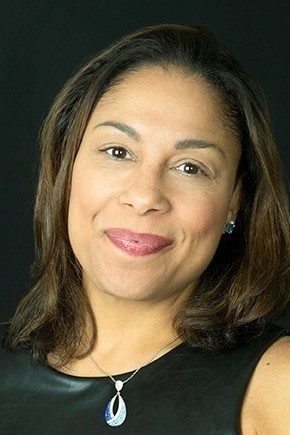
Dr. Ange-Marie Hancock is Executive Director of the Kirwan Institute for the Study of Race and Ethnicity at The Ohio State University.
Discover more from Three-Fifths
Subscribe to get the latest posts sent to your email.
 Three-Fifths
Enjoyed this article, Dr. Hancock! Too often, as cultural consumers, we appreciate what is produced and presented but fail to appreciate the very intersectionalities whose friction sparked the artistic achievement we enjoy.
You write, “we will find that Black creativity can remind us not to keep ourselves in boxes the world has created for us. When pursued for its own sake Black creativity ushers in and preserves freedom, humanity, and joy for our entire world.”
Indeed, Black creativity in the US is a “rose in the concrete” triumphed from historical legacies of resisting enslavement (as big a box the world can create) – legacies that persist even now unresolved to threaten hopes for democracy. Black American creativity is nothing less than transcendence wrought in the crucible of the American Experiment itself.
If we can survive this “fire next time,” from it can come fulfillment – a covenant of justice then liberty then peace then prosperity – the sustainable order of democracy. In that covenant, race no longer predicts outcomes – then “freedom, humanity, and joy for our entire world.” “How long – not long . . . “
LikeLike