

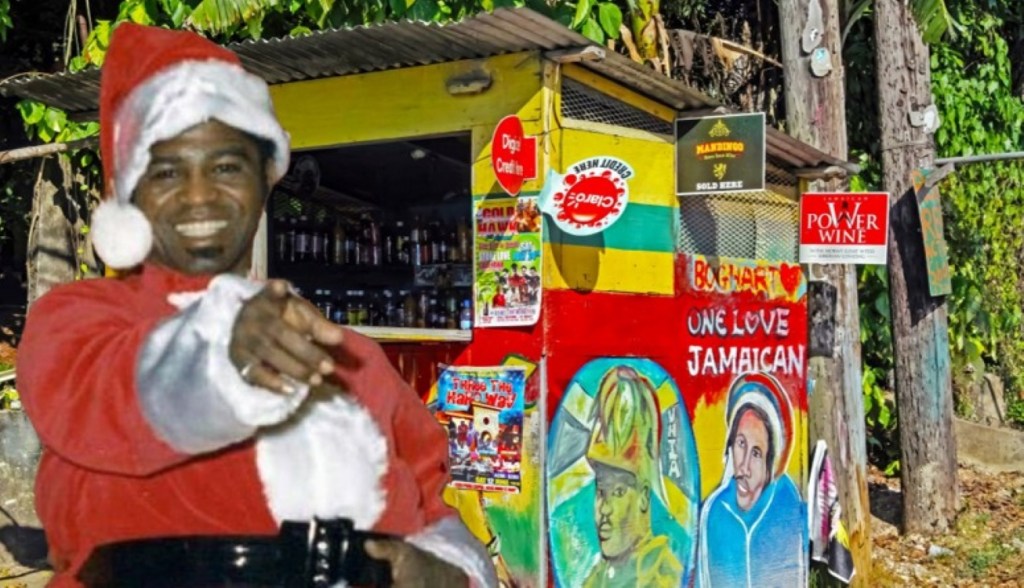
Add some color to your carols and learn a little about the stories behind the songs.
James Brown: Santa Claus, Go Straight to the Ghetto
The Temptations weren’t “too proud to beg” back in 1966, but by August 1968 James Brown said it loud, “I’m Black and I’m Proud!” This was a defining moment in which the “Godfather of Soul” became much more than an entertainer, he was now a musical militant. The April 4, 1968, assassination of Dr. Martin Luther King, Jr. catalyzed a change in Brown’s music. By December of ‘68, the self-proclaimed “Minister of Super Heavy Funk,” boldly interceded with Santa by ordering him to “go straight to the ghetto” a dozen times in one song. Perhaps Brown urged Santa 12 times to go with the 12 days of Christmas? One thing is for certain: Minister Brown’s boldness didn’t emanate from anger. Empathy was the motivator, as seen in the following sample:
Never thought I’d realize
I’d be singing a song with water in my eyes
Santa Claus, go straight to the ghetto
Don’t leave nothing for me
I’ve had my chance, you see?
Yellowman: Santa Claus Never Comes to the Ghetto
Did Santa listen and add some overlooked communities to his route? Not according to the reggae artist, King Yellowman. Born Winston Foster in Kingston, Jamaica, Yellowman was abandoned by his parents as an infant and was raised in orphanages. The pain of parental rejection and poverty was compounded by getting bullied for having albinism. A Jamaican nickname for albinos is “dundus,” meaning “ghost person.” Young Winston heard the insult regularly and physically felt its violent intent from more aggressive peers.
Instead of being ashamed of his appearance, Winston embraced it by donning the stage name he’s famous for. In 1982, Yellowman was diagnosed with skin cancer and told he only had three years to live, but is blessed to be alive today. Survival had a cost, though. In 1986, Yellowman had surgery to remove the cancer that also removed part of his left jaw, resulting in permanent disfigurement. These hardships didn’t quench his passion for musical performance, nor his compassion for people. Yellowman’s 1998 “Santa Claus Never Comes to the Ghetto,” came from the heart and accused Santa of favoritism:
Him a visit the queen and a visit the king
And poor people, never get anything…
What about the children who suffering?
From Santa Claus, you nah hear nothing.
Carlene Davis & Company: Santa Claus, Do You Ever Come to the Ghetto?
That’s right, thirty Christmases later and sonic appeals were still being made to Santa on behalf of the poor. Perhaps Santa would be more responsive to a female’s entreaty? In 1981, Carlene Davis sang “Santa Claus, Do You Ever Come to the Ghetto?” (written by her husband Tommy Cowan). This time Santa was given the benefit of a doubt and an opportunity to answer. Since Santa hadn’t answered in 40 years, Carlene sang it again with her daughter, Naomi Cowan in 2021. They informed him know they saw him in other places and want a definite reason for he hasn’t visited their neighborhood.
We see you in the papers,
You’re on TV giving the toys to some pickney
Wondering what’s happening to poor people like we.
Is it because we no have no chimney?
Many other Jamaican artists have covered the song as well. Chronixx didn’t get a response after renewing the question, so he closed the invitation with: Santa Claus, Santa Fraud.
Of course, none of the artists above believed in Santa Claus. They were trying to quicken the consciences of their audiences to make a difference. Chronixx’s version of “Do You Ever Come to the Ghetto” challenged lawmakers to overcome petty arguments and enact policies to send Santa’s gifts to the poor:
Santa never bring the sorrel
Never bring no present
Never bring no barrel
Three stoogies weh inna parliment a quarrel.
Be the Santa You Want to See in the World
James Brown led by example in 1968 by putting on a Santa suit and delivering 3,000 gift certificates so people in need could have free Christmas dinners. He was moved by the words he sang just as much as he was moved to write them in the first place.
Gestures like this honor the person whose birth we’re supposed to be celebrating. Jesus said there will be some who claim to know and love him, but he never saw their profession in action. He never felt the love. On the other hand, some people will be surprised when he thanks them for feeding him when he was hungry and visiting him when lonely. They In return, He offers them, us, “the kingdom prepared for you from the foundation of the world.” (Matthew 25:34).
People who’ve served with gracious hearts will almost be unconscious of the kindness, asking “’Lord, when did we see you hungry and feed you, or thirsty and give you something to drink? When did we see you a stranger and invite you in, or naked and clothe you? When did we see you sick or in prison and visit you?’
“And the king will answer them, ‘I tell you the truth, just as you did it for one of the least of these brothers or sisters of mine, you did it for me.’” (Matthew 25:37-40, 34, NET)
But what about those of us who can’t do like James Brown and singlehandedly feed 3,000 people? Just follow the practical advice of John the Baptist and do what you can with what you have:
“Whoever has two shirts should share with the person who doesn’t have any. Whoever has food should share it too.”
Discover more from Three-Fifths
Subscribe to get the latest posts sent to your email.

 Three-Fifths
4 thoughts on “Dreaming of a Black Christmas, part 2: Ghetto Claus”