
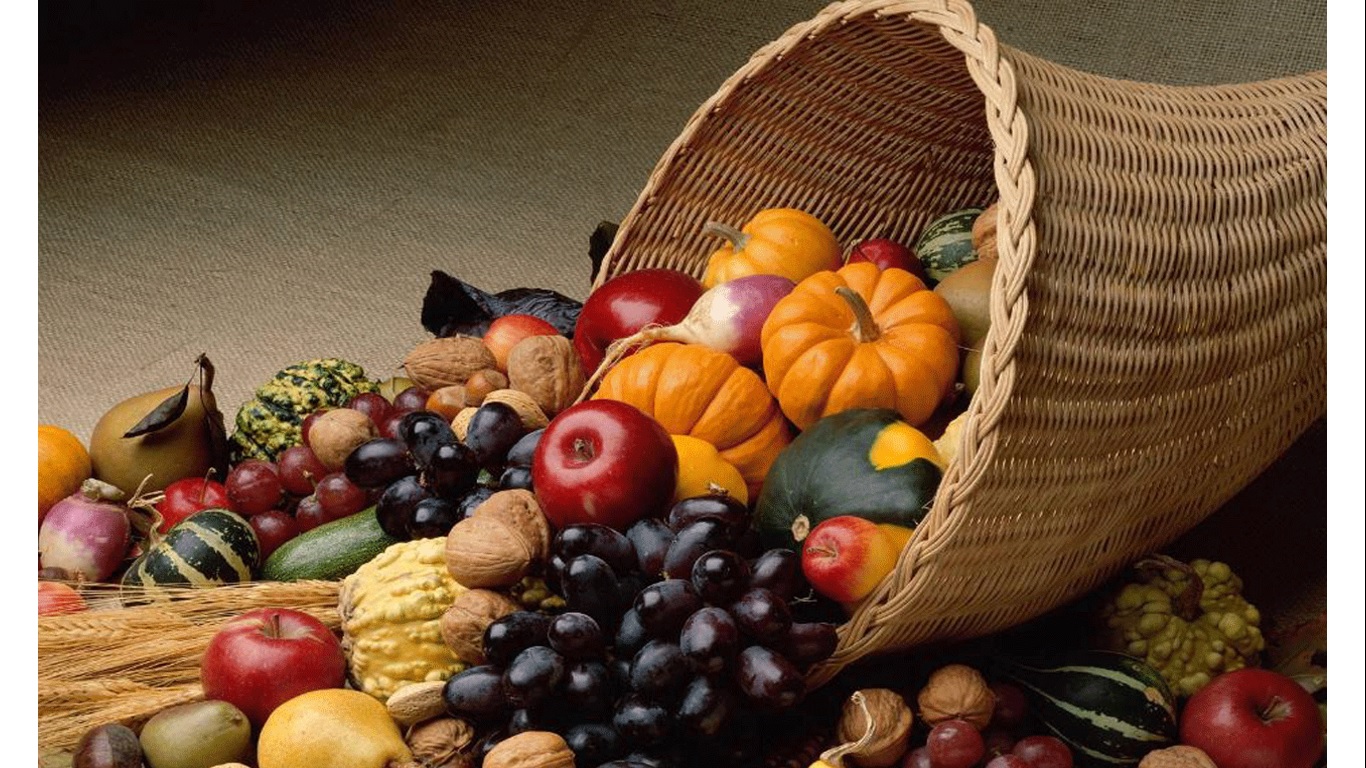
Pass the Turkey, Pass the Stuffing as we celebrate how the indigenous people shared life-preserving sustenance with the immigrants at Plymouth Rock. Because there was “Plenty Enough to Share.” This assured the European’s survival. As we celebrate The History of Thanksgiving, its effect on these two groups cannot be underestimated. We must remember that History itself has certain ironies; it can repeat, rhyme, and have role reversals in some of the most seemingly serendipitous and peculiar of ways. Thanksgiving Day is Family Health History Day. Before we pass the Turkey, let’s look at a little more History.
November 7, 1983, when the Cold War was potentially approaching a frightening crescendo of generational implications. Ronald Reagan had just proclaimed Russia “The Evil Empire.” To clarify, this was one of the most tenuis chapters of the American dream. Millions of young people across the country were in the deflating grips of a depressing fear that they would never live until old age in anticipation of a nuclear holocaust.
That evening, as a temporarily stay-at-home college student, I was at home nestled on my favorite comfortable and well-worn corner of our family couch for a night of TV. It was the kind of couch that absorbed your form with the embrace of a warm hug on a brisk November night. My parents looked on as well. My Father was in his chair, and my mother took the other end of the couch. My older sister was away at college. ABC premiered the television major motion picture, “The Day After.” It was a movie that captured all the fear and apprehension of a nation on the brink, as it, in graphic detail, displayed the realities of a nuclear war. From the helpless feeling of a family in a packed stadium witnessing ICBMs being launched in the distance to the staggering anticipation of waiting for what comes next, knowing that with only a 15-minute window, Soviet missiles would soon be on the way. What made it paralyzingly worse was that the onlookers didn’t know if the Soviets launched first or the United States did. From families in utter panic, Electro Magnetic Pulse (EMP), vaporized bodies, and nuclear winter, it was graphic indeed. After the broadcasts, depression escalated among young people like never before.
Imagine, if you will, frightened children huddled in a school room as the unrelenting thunderous, sound of an automatic rifle and the accompanying screams of horror were just down the hallway.
Kevin Robinson
Years later, as a father shuttling my children’s doctor and dental appointments, I returned to scoop up my daughter from the dentist on a crystal-clear September morning. I opened the door, and to my amazement, my daughter was perched on the edge of her seat in the waiting room, mouth opened and virtually in shock. Opening the door a little wider, I could see the television on the wall in front of her showing both World Trade Towers on fire. This was September 11, 2001 (911). In a moment, I realized that mental trauma was real. It took quite some time to get my 12-year-old daughter to reckon with what she had experienced all by herself. Imagine frightened children huddled in a schoolroom as the unrelenting thunderous sound of an automatic rifle and the screams of horror were just down the hallway. The reality of trauma and its aftereffects is beyond reproach.
Now take all the trauma mentioned thus far and multiply that a million times over for five hundred years, and one begins to feel the pain, anguish, and despair endured by generations of families of African slaves and their descendants or the annihilation of tribes of the Indigenous and the generations that followed. It is not a wonder that every health metric has these two groups at the bottom. Phill Vischer puts it this way, “Think about it: these two groups were the only two groups of people that weren’t given a choice whether or not to live in white America.” Remember that Thanksgiving Day is Family Health History Day.
Is there any connection between the past and how healthcare fails populations of color? DNA can’t pass trauma from one generation to the next, or can it.
In a study, scientists shocked a group of lab rats when they were exposed to a particular fragrance. Later, the lab rats became agitated when exposed to the scent minus the shock? But more fascinating is why their offspring and even the second-generation offspring become agitated when they smelled the aroma? Note the babies were totally separated from their progenitors. The answer lies in what geneticists call epigenetics:
“the study of how your behaviors and environment can cause changes that affect the way your genes work.” What is Epigenetics? CDC Centers for Disease Control and Prevention
A 2021 study reviewed how systemic racism may continue to harm future generations at the level of their genes, as the author argued for urgent changes to the status quo of white supremacy. [2] Mulligan’s work focuses on the plight of African Americans, but she notes that racism-associated epigenetic marks may apply to any racially oppressed population.
[2] Mulligan C. Systemic racism can get under our skin and into our genes. Am J Phys Anthropol. 2021;175(2):399-405. doi:10.1002/ajpa.24290 Noted from very well mind
The pandemic has contributed to a growing understanding of the impacts of collective trauma and indigenous communities have long navigated this in terms of settler colonialist harm. For Native Americans, this began in 1492, following the arrival of Columbus, and continues today.
Many may associate Standing Rock with the #NoDAPL movement that gained momentum in 2016 to address the proposed Dakota Access Pipeline, but that is only one example of the settler colonialist violence that has threatened Native American communities for centuries.[1]
For Indigenous communities across Turtle Island (the Indigenous name for the American continent), settler colonialism includes such legislation as the Indian Civilization Act Fund of 1819 and the Peace Policy of 1869, which implemented cultural genocide through boarding schools and undeniably negatively impacts mental health. [2]
Also, from very well mind,
“How Native Americans Are Healing Despite Ongoing Settler Colonialists Trauma.”
By Krystal Jagoo Updated December 12, 2021
Fact Checked By Karen Chilli
“We cannot guarantee equal outcomes, but we must do all we can to ensure equal opportunity.”
Jon Meacham
Paul reminds us in scripture, “Dear friend, I am praying that all is well with you and that your body is as healthy as I know your soul is.” 3 John 1:2 Living Bible (TLB)
When we see the social construct of race as a determinative factor in health disparities, we must take a closer look at who we are as a nation and quickly assess the soul of America. In his book “The Soul Of The Nation: The Battle For Our Better Angels.” Historian Jon Meacham says,
“We cannot guarantee equal outcomes, but we must do all we can to ensure equal opportunity.”
Therefore, if the soul of America is Healthy and the national heart and psyche are right, searching for better outcomes for all its citizens, healthy people will include all ethnicities. Besides, remember how that first cultural majority provided equity, care, and support for the new immigrant minority. Remember, Thanksgiving is Family Health History Day,
To start, making healthcare more affordable is paramount. Financial incentivization for good health by companies large and small, including tax incentives, would save and extend lives and save billions in lost productivity. The establishment of Nutrition Equity must become a reality. Increase affordable housing in all communities within metros in America. There must be more walkable green spaces made available regardless of the neighborhood. More BIPOC Physicians are needed, along with increased sensitivity to the voices of those in the present minority community. And let’s never forget an honest conversation on reparations.
The cruelest of historical Ironies finds native people, along with other BIPOC, needing equity, empathy, care, and understanding in the polar opposite of Plymouth Rock. If Indigenous Americans were given the choice of whether or not to do it again, would they? Many Europeans trace their lineage to the Mayflower, and others are thankful that choice is unavailable. Remember, Thanksgiving is Family Health History Day. “Let’s make it right.” Let health equity abound in this season “Because there’s Plenty Enough to Share. “

Discover more from Three-Fifths
Subscribe to get the latest posts sent to your email.

 Three-Fifths