
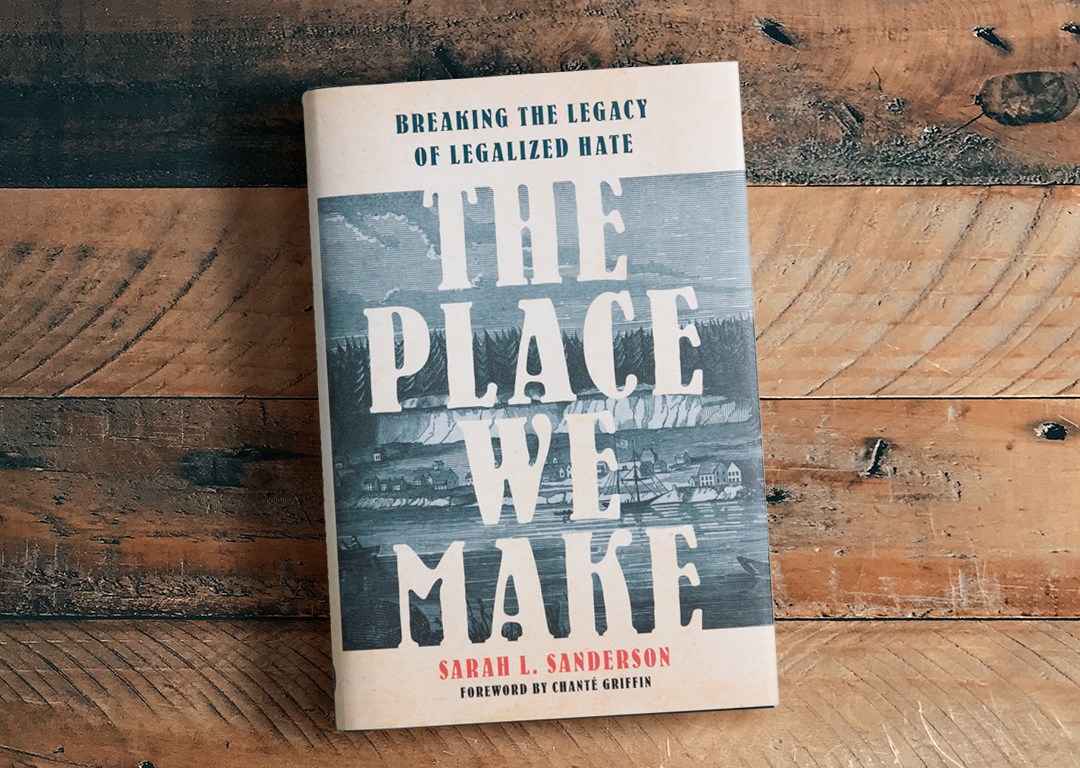
An excerpt from The Place We Make: Breaking the Legacy of Legalized Hate

We don’t know what we don’t allow ourselves to know. But when I began to know—after I’d picked my jaw up off the floor enough times to wonder if maybe there was a pattern to the small, individual shocks I kept receiving—the first dimension of my own racism that God called me to turn from was the sin of not knowing.
Ignorance is not always sinful; there is no moral obligation to remember the Pythagorean theorem or the vice president’s birthday (unless, perhaps, you are a structural engineer or the vice president’s spouse). But to spend decades living in a society that has been obviously shaped along racialized lines and never to allow the injustices around me to nudge me toward curiosity? That was a sin, not of commission but of omission.
But the opposite of ignorance is not mere knowledge. Just as harmful as not knowing was using a little bit of knowledge to make myself seem smarter. What I needed was not so much knowledge as empathy.
Empathy: the discipline of encountering another person’s story and allowing ourselves to imagine our own way in. Beginning with Richard Wright, the first place where I began to exchange ignorance for empathy was on the page. The page was a safe space to learn to listen to other people’s stories. From my mostly White suburb of the Whitest city in America, I did not have immediate access to many relationships with people of color. What I had was the public library.
When it finally dawned on me that I had not been given the tools I needed to understand the world in which I lived, the first thing I did was read. I read memoirs by living authors of color—Austin Channing Brown, Marjane Satrapi, Charles M. Blow, Nicole Chung, Sherman Alexie, Richard Rodriguez, Jesmyn Ward; and those who had died—Frederick Douglass, James Baldwin, Maya Angelou. I read books by journalists like Ta-Nehisi Coates and Ruby Hamad; activists like Ijeoma Oluo and Heather McGhee; historians like Ibram X. Kendi, Isabel Wilkerson, and Jemar Tisby; theologians like Willie James Jennings, Chanequa Walker-Barnes, Esau McCaulley, Mark Charles, and Soong-Chan Rah. I read fiction by Louise Erdrich and Khaled Hosseini and Zadie Smith and Jamaica Kincaid. I read the poetry of Lucille Clifton and Phillis Wheatley and Naomi Shihab Nye and Claudia Rankine and Langston Hughes. I read widely and quixotically. I read what friends recommended and what I saw on social media and what I bumped into at the bookstore. It was as if I were making up for a lifetime of thirst by flinging my whole body into a rushing river and opening my mouth. As I read, I could almost feel my soul expanding, as though the words were pushing at my edges, forcing me to make room. I read online too. Among other things, I spent time tracking down articles about the history of Oregon. I wanted to understand who had made the place where I lived, and how, and why. I didn’t begin with Oregon because it was worse than any other place; I began with Oregon simply because it was my place. And it was on one of those websites that the name Jacob Vanderpool first shimmered out at me.
My friend Velynn Brown describes the moment when something in the world calls out to you as a “soul snag.” It is the experience Moses had at the burning bush—the double take when some word or object says, Look again. That is what happened to me when I first saw his name, in the middle of an ordinary sentence on an ordinary web page.
“In 1851, Jacob Vanderpool, the black owner of a saloon, restaurant and boarding home, was actually expelled from the Oregon territory.”
His name wasn’t highlighted on the page, but it might as well have been for the way it leaped out at me.
Jacob Vanderpool.
To this day, I can’t explain why it hooked me. He was Black; I was White. He was male; I was female. He was dead, an artifact of history; I was alive and very much a member of the modern age. But we had this in common: Each of us was one human being, whole yet small. And each of us had stood here—with all the uniqueness and yet relative insignificance of our respective lives—on Oregon soil.
What else might there be to find out about us?
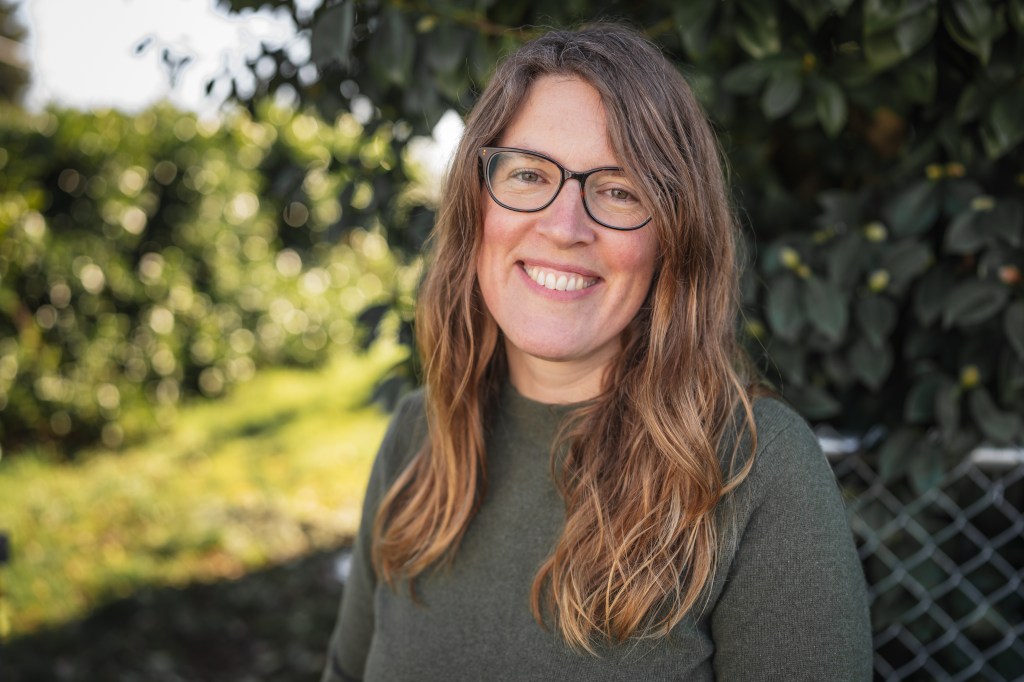
By Sarah L. Sanderson
Adapted from The Place We Make: Breaking the Legacy of Legalized Hate Copyright © 2023 by Sarah L. Sanderson. All rights reserved. No part of this excerpt may be reproduced or reprinted without permission in writing from the publisher.
Discover more from Three-Fifths
Subscribe to get the latest posts sent to your email.
 Three-Fifths