


“Where do we go from here, where do we go? And is it real or just something we think we know? Where are we going now, where do we go? ‘Cause if it’s the same as yesterday, you know I’m out. Just so you know. Because, because our paths are crossed. Yesterday was hard, on all of us…”
Sung by Fink the song is titled, “Yesterday Was Hard On All Of Us.” The song is a part of the soundtrack for the movie Selma. I confess. I’d never heard of Fink before encountering this song through the movie. When I’m intrigued by a song, I put it on repeat. It’s not uncommon for me to listen to a song for hours or days until I have fully internalized the music; Sometimes, even after feeling I’ve internalized it, I keep listening to the song. Yesterday was hard on all of us speaks to the confusion where each of us has found ourselves at some point in our lives, wondering where we are going and who we can trust on the path to getting there.
My brother and father have been trying to eradicate a Pecan tree that has been growing in the yard of our family home for years. The tree is less than a foot tall. The last time they attempted to dig it up, about three months ago, they dug well below where they imagined the roots of the tree were. Last week, I noticed the tree was back with a friend. There are now two trees standing about a foot tall where there was once only one. The roots of Pecan trees don’t just spread deep they spread wide. The Pecan tree that my father and brother have been attempting to eradicate for the last few years has a root system the depth and breadth of which we will likely never know. It’s like racism. In many ways, it’s so embedded into systems operating in our country that rooting it out seems nearly impossible. To root it out means that we have to admit the roots are deep and wide. If it’s anything like the hole my brother and father keep digging to uproot the pecan tree, the likelihood of the roots ever being fully eradicated at this point is slim.
Where do we go from here?
I was recently asked the question, “How do we get Black people to trust us?” Medical professionals, with a clinic for the uninsured, they wanted to know why they see hardly any Black people. Every time I’m asked the question, my answer is the same, and I start with the historic and current injustices that Black folks encounter when seeking medical care. The injustices are rooted in the system, and the roots run deep and stretch wide. The roots are not unlike the Pecan tree in the front yard of our family home. The tree keeps coming back with a vengeance. It’s as though the roots get stronger the more my brother and father try to tear them out.
If the first step is admitting that the roots are deep and wide, the second step is knowing that it will take work and time to tear them out.
It’s a fair question, especially in a day and age where things are seemingly becoming more complex.
I’m the Founder and Executive Director of a nonprofit that grows food for families in need and sets up gardens in communities. In our model, everyone does the work. No one is too good to get outside and plant a seed, or pull a weed. The work of pulling weeds is exhausting, and it doesn’t take long before you realize root systems are often intertwined.
We feel lucky when we get to pull weeds after a hard rain, or when we are pulling up plants with shallow roots. These are the times when pulling the entire root system out feels easy. These are often young plants or annual plants. They grow only for a year before their life cycle is complete. Racism is like a perennial. It keeps coming back, and the more it grows, the more it spreads, and the larger it gets.
Examining racism through a system that acknowledges the roots that are very much a part of all our lives should keep weeding at the forefront of all our minds. Uprooting the racist systems and pushing for change will take all of us doing the work with infrequent breaks. It feels a lot like a road we haven’t traveled. It also feels like we are moving in a direction whose path and end destination we are unsure of. It will take faith.
It has consistently been faith that has seen the changes we so desire in communities.
I’ve wondered more than once about our direction as a nation and where our communities are headed, especially as there are so many attempts to roll back time as we work to create more diverse spaces.
The younger generation gives me hope. As I look toward their work, it will far exceed the work of my own generation, and generations ahead of me. It is the work of Christ beyond the confines of the church. It is the work of Christ in the world. Christ makes it possible for us to stand our ground in the midst of racism as we work to pull the roots to undermine the racism that runs wide and deep
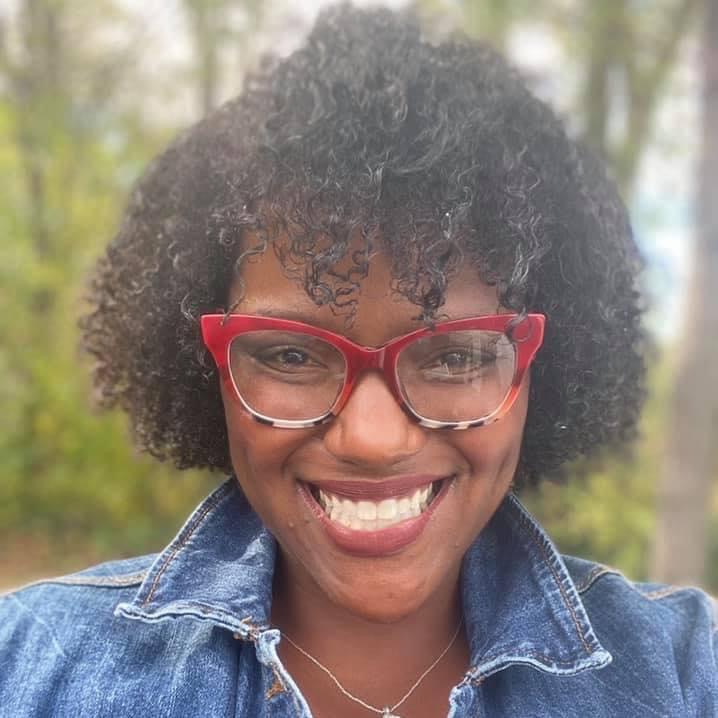
By Rev. Dr. Michelle Lewis
Discover more from Three-Fifths
Subscribe to get the latest posts sent to your email.
 Three-Fifths