
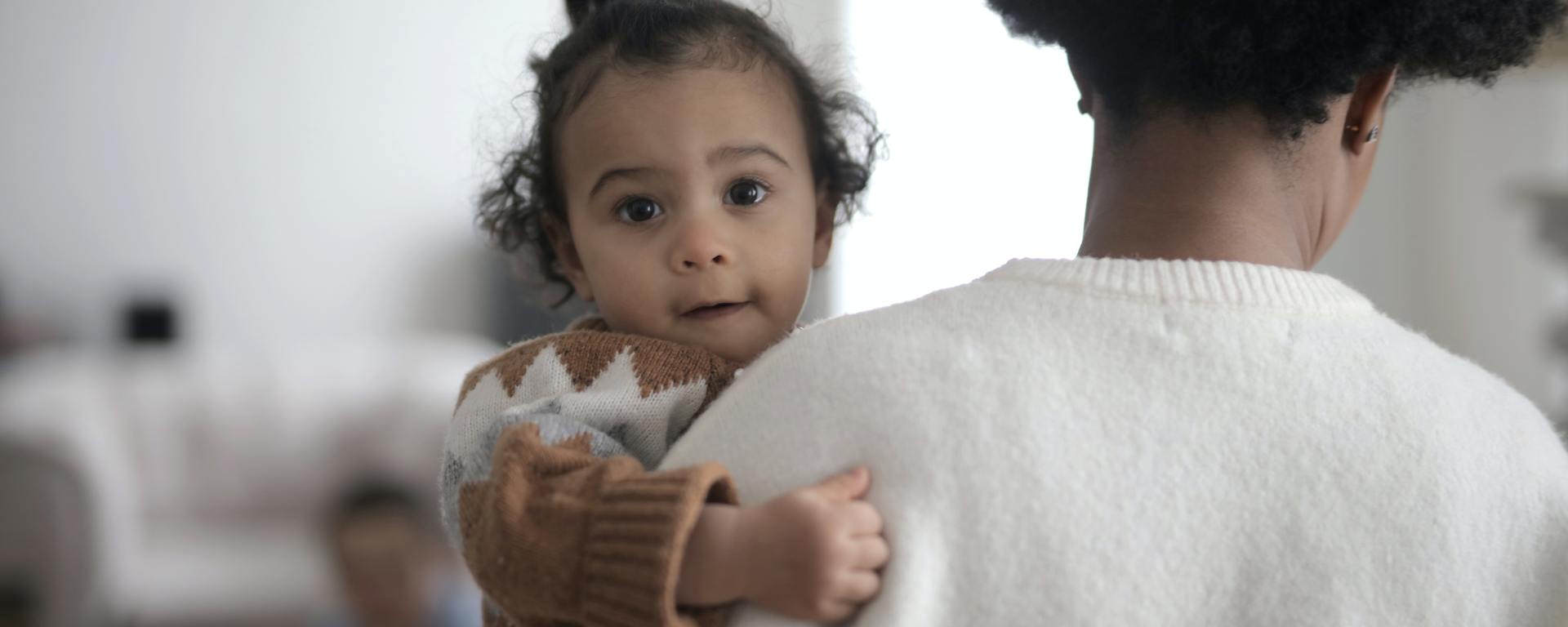
My great-grandmother was generous to a fault. The stories of how her house was a haven for needy people abound. My grandmother inherited this value, and I grew up never knowing who would show up for lunch at her table. One of my aunts is the apple that did not fall far from that tree, and her son, my cousin, will give you the shirt off his back.
What we model tends to stick for generations.
I want to pass a long list of values to my children before they leave our home. Work ethic, a love for traveling, assertiveness, a willingness to take risks, to stand up for others, to be good stewards of the environment, empathy, kindness, and the ability to set healthy boundaries.
And, of course, faith.
But I know my children will also learn from our less stellar traits because…
What we model tends to stick.
If we talk to them about being good stewards of the planet, but they don’t see us recycle, or we try to instill in them integrity, but they hear us lie, or we tell them to be kind, but they watch us cuss the driver who cut us off, they will tell us our actions had much more influence than our words.
And as hard it is to hear, the root of all “-isms,” the basic cause, source, or origin, is often the home.
Yet, when a kid displays racist behaviors, for example, the parents are appalled and say: “We’re not racist. We treat everyone the same. We’re colorblind. We have no idea where they learned that!”
But what we model…
Recently, I re-watched the movie The Help. It is the story of a young white journalist who convinces a group of Black maids in Jackson, MS, in 1963 to tell what it was like to serve white families.
One character of the story is Hilly Holbrook an influential woman whose mission is to ensure every white household has a separate bathroom for “the help,” as the Black maids were referred to.
Hilly tells the members of her ladies’ club that it is for the sake of everyone because Black people have different diseases. Having a “separate but equal” bathroom would make everyone happy, including the maids who now have their own space, she explains.
When her maid, Yule May, asks Hilly for a loan of $75 to send her twin boys to college, Hilly refuses and tells Yule Mae, “As a Christian, I’m doing you a favor. See, God doesn’t give charity to those who are well and able. You need to come up with the money on your own. Okay?”
If you ask Hilly if she is racist, she would be appalled and reply that she cannot be racist because she is a Christian, she raises money for the African Children’s Fund, collects coats for the homeless, hires Black people, and gives them work, and even cares that they have their own bathrooms so they can be comfortable.
When later, in desperation, Yule May steals and pawns a ring belonging to Hilly, she is quickly and violently arrested. Hilly, who called the police, watches her former maid be publicly detained on the street while sitting in her car with her five-year-old son. There is no dialogue between Hilly and her son, but the message is clear: the child is learning how to treat Black women from her mother.
He is learning that Black people are dirty and dishonest and should be talked to and treated as children because they don’t know better.
This was 1963. Today, that boy would be 66 years old.
Hilly Holbrook passed on her ideas about Black people to her son, who, in turn, likely passed them on to his children, who today are in their 40s. Those children are now bosses, teachers, doctors, lawyers, pastors, engineers, mechanics, plumbers, politicians… and voters. And they too are raising kids.
Very few people would consider themselves racist. After all, they are not members of the KKK. They work and do life with people of color. They are “good Christians.”
But when we vote for politicians who actively push racist agendas, when we allow Uncle Bud’s racist jokes to go unchallenged, when we perpetuate stereotypes about immigrants, when we do and say a million little things that differentiate “us” from “them,” we are preserving a racist environment.
Our children are watching.
And what we model tends to stick.
For generations.
If I hope my children learn from me, my values, my behaviors, my worldview, and my faith, I need to be careful about what attitudes, words, actions, and reactions I am modeling.
Hilly may tell her children she is not racist and that Jesus commands us to love and treat everyone with kindness.
But that is not what she models.
And…
By Gabriela Buitrón
Discover more from Three-Fifths
Subscribe to get the latest posts sent to your email.
 Three-Fifths