

I can clearly remember the day that I became acutely aware that I was different from other little 10-year-old girls. During the summers, my family had a big camper and we traveled across the country in that camper, staying at KOA Campgrounds whenever necessary. I loved camping and enjoyed swimming, hiking, and meeting new friends during our KOA Campground stays. One day, I was swimming and playing in the creek with three other little white girls. We went to the restroom to wash our hands from the dirt accumulated from our explorations. While washing my hands in the sink with one of those girls, she looked at my hands and said “You can’t wash off your skin color huh? Is it always gonna be dirty?”
I was surprised by her response but said “No, I am black and my skin color does not wash off.” I continued to play with the girls until it was time for me to return to my parents. I walked into the camper and told my mom what my newly found playmate said to me. My mother seemed a bit angered by what that girl said, but she did not seem surprised. When my father came into the camper, my mom told my father of the conversation. They explained that the little girl was taught by her parents that the color black was dirty and the color white was clean. Dad told me that little girl was probably told untrue things about anyone who looked different than her. Dad mentioned the term “bad roots.” At that time, I did not understand what he meant by that phrase, but now that I am an adult, I clearly understand his phrase.
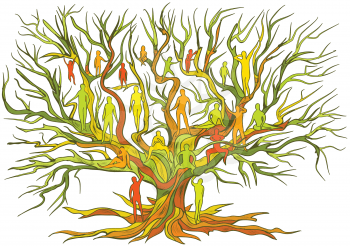
That was the point in my young development, that my innocence was lost. Our roots are where we get our nourishment and substance to grow. As an adult, I often think about what our country would look like, if we did not have the shackles of slavery rooting in every square inch of its soil. They say that the love of money is the root of all evil, but where would this country be without the profits of slavery to till the land? America is so deeply rooted in racism and its caste systems of oppression; it makes it difficult to ponder better soil anywhere on this earth.
A country so rich in opportunities, yet so deeply rooted in the sins of its past. I had a theory that racism only existed in America and the rest of the world adopted a more modern approach to diversity. I tested that theory by traveling to Europe, Africa, and Asia. To my surprise, my theory was proved wrong. Bad roots have been planted in other parts of the world. It is disheartening to experience the sins of racism on foreign soil.
During a fall trip to Egypt, I returned home with some seeds given to me by my tour guide. He asked me if I was a gardener. I smiled and told him “YES” and that I absolutely loved gardening. He gave me the seed and requested that I plant them in spring. He assured me that these seeds would take root in “good soil.” I carefully stored those seeds in a small bag until the spring. I planted the seeds in May. Every day, I make sure that the seeds get plenty of light and water. Although I cannot mimic what the seed’s environment would be in Egypt, I hoped that my good faith and soil will help them grow into something beautiful.
I think about how those seeds will take root and grow into something good. I sometimes think about that little girl from the KOA Campground. I hope that she was “repotted” to a more diverse soil. I pray for better soil for all of us to grow as human beings living on this earth. I believe that it is possible for all of us to be “repotted” from sinful soil to rich, fertile soil as mentioned in John 15.
After all, Christ tells us in John 16:33 “In this world, you will have trouble” but we can be assured that God will always be there to watch over us, to shade and protect us. I can think of no better gardener than God.

By April Griffith Taylor
Discover more from Three-Fifths
Subscribe to get the latest posts sent to your email.

 Three-Fifths