


I have to admit that I’m not a fan of the notion of reparations as it is discussed in conversations about racial redress. This is not because I don’t think that African-Americans deserve to be restored for 404 years of intentional abuse in the United States of America. This is not because I think that the cost is too much for the descendants of those who have benefited from our oppression to bear. This is not even because I am beholden to the Christian notion of forgiveness expressed in the Lord’s Prayer that charges forgive others their “debts” as God has forgiven our own… (Actually, I am certain that Jesus did not have racial concerns in mind when he uttered that prayer and that restoration will not only uplift the oppressed but also restore the soul of the oppressors…but I digress…)
I am not a fan of reparations because I think the concept has been co-opted in the public square. Much like the concept of being a “liberal” has been villainized, the concept of “socialism” has been demonized, and the issue of reparations has been cast into the same ideological abyss from which nothing good can ever return. Like so many other ideas that have become fodder in partisan, political wars, the term reparations has become a dog whistle to those on the political/ ideological right. In this regard, reparations have come to be understood as financial compensation by way of a check that is to be paid to black people. Those who make this kind of argument often raise a number of questions intended to stop the conversation in its tracks:
-How do you calculate the compensation for black people for centuries of free and underpriced labor? Can that elusive number be accurately assessed?
-Who do you compensate for that labor since the majority of those who endured slavery, convict leasing, and Jim Crow are long dead and gone?
-Why are black people deserving of “more” compensation after the shedding of (white) blood in the Civil War, the Civil Rights Act of 1964, the Voting Rights Act of 1965, Affirmative Action, and Welfare Entitlements?
-And what more do we need to do after we have had a black man elected President of the United States, twice? Is that not a clear indication that black people no longer need to reparations (or that we are a “post-racial” society)?
Yes, these are just a few of the kinds of questions I have heard raised by those who are opposed to reparations. Because of these questions and the prevalence and power of the anti-Critical Race Theory Movement (read, telling the truth about race in America), I might suggest that the concept of reparations is one that is dead on arrival in the American public square.
So why should we fight for “reparations,” something that we likely cannot win…?
The Need for Redress:
Well, we should fight for some sort of restitution because African-Americans deserve recompense for all that they have suffered in America. And there are a number of reasons why I feel that this is so.
The first is that compensation can never be simply financial. The suffering that African-Americans have endured has certainly disadvantaged them economically, but it’s also undermined their very humanity and human dignity. Any kind of response has to provide redress for those injuries as well.
Second, inasmuch as we can have racism without racists in this nation, any mode of redress must attend to the systemic issues that are at play in our nation. In order to truly repair the breach caused by a supremacist system, then the system itself in which we live must be fundamentally re-oriented. Only then can the weeds of injustice premised on racial identity be rooted out of the foundations of our social structures.
Third, the kind of restoration that would be necessary cannot be either simply momentary or simply monetary. 404 years of bearing the weight of racialized disadvantage, implicit bias, and oppression cannot be resolved by a single event that takes place on a single date in time and is done. The years of systemic and ideological dehumanization require intentional work over the years to undo. I would hate to hear the argument that we cut the big check to black people and now they should be just fine; the deal has been done so let us wipe our hands of any future responsibility to make sure that change has truly come.
Fourth there need to be measurable assessments to make sure that whatever means we choose to foster systemic change, we have data to indicate that we are substantively changing the lives of African-Americans in clear, evident, and tangible ways.
From Reparations to Shalom
Given the baggage a term like reparations carries, perhaps we need to find another, more suitable term. What if instead of seeking reparations we chose to use a more appealing and positively regarded Hebrew term like “shalom.”
We have all heard of the Hebrew concept of “shalom.” Typically we think in its nominal state that it means peace, quiet, calm, the absence of overt hostility. But the concept of shalom in Hebrew is actually far broader. Shalom encompasses a restoration of wholeness.
The verbal form of this Hebrew root (Sh-L-M) means that something that has been broken has been restored, someone who has been defrauded has been compensated; that which was fractured and fragmented and shattered has been made sound again.
The concept of shalom also has another clear vantage. Members of the Abrahamic faith traditions will see the inherently theological dimensions of this term. To seek shalom is a God inspired act. God wants, desires, and seeks shalom, and we as adherents of such traditions should, too!
Further, the concept of “shalom” also has another value. As a person who stood in the streets and marched with the Moral Monday Movement, the Poor People’s Campaign: A National Call for Moral Revival, Black Lives Matter, and a host of other issues of human rights and justice, I’ve got accustomed to hearing the phrase, “no justice, no peace.” Well, the concept of shalom has inherent in it the necessity of the Hebrew concept of “tsedek” or “righteousness/ justice.” In order for there to be “shalom“ the balance of justice must be restored. So in a very real sense, if there is no “tsedek” (justice), there can be no “shalom” (wholeness)!
For all of these I think that we as people of faith striving for Beloved Community, those of us who comprise the church, those of us who are people of humanistic goodwill working for a better world, we should be those who seek “shalom.” Reparations alone as financial remuneration are not enough! But the concept of “shalom” can account for the necessary shifts in our overall society that need to be made to ensure that we live up to those vaunted American ideals… “We hold these truths to be self-evident that all human beings are created equal!” Whereas reparations wrongly can be reduced to the standard American litigious response, compensate the aggrieved with a fat check and everything is made right, “shalom” forces us to do the hard work of looking at ourselves and our society, of seeking to understand how we got to where we are, and of confronting with a degree of honesty and integrity our history. Only once we do this can we begin to envision it as just America and work to make it a reality. For these and other reasons, I assert that we need to seek “shalom!”
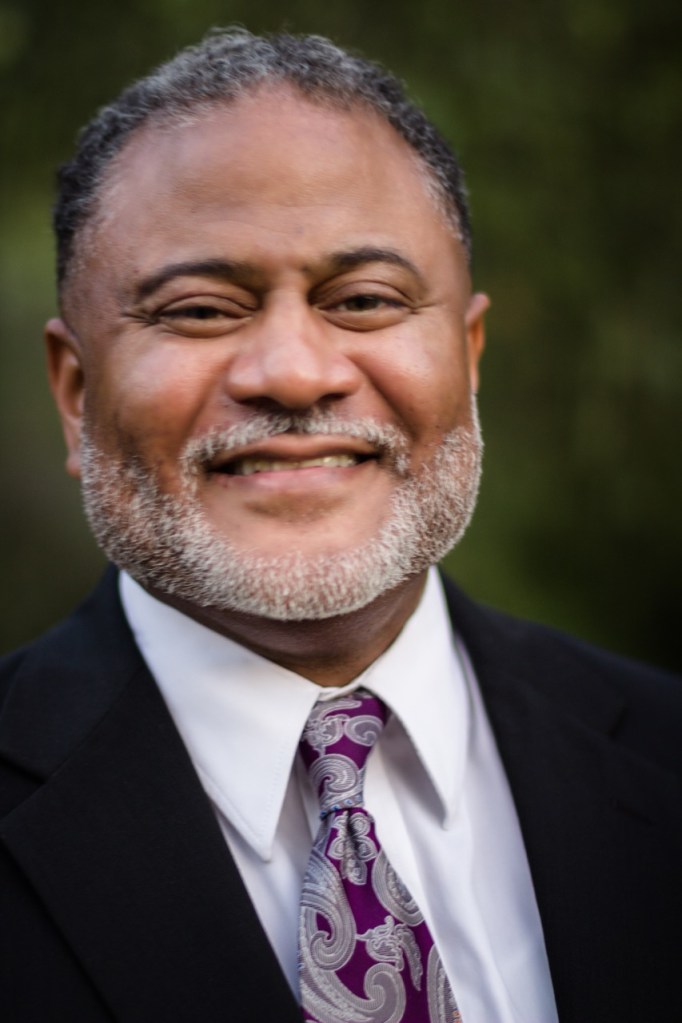
By Rev. Dr. Rodney S. Sadler
[Rev. Dr. Rodney S. Sadler, Jr. is Associate Professor of Bible and Director of the Center for Social Justice and Reconciliation at Union Presbyterian Seminary in Charlotte, NC. He also serves as the co-chair for the Reimagining America Project, a truth and reconciliation commission that seeks to foster a system void of the disparities caused by racialist ideology.]
Discover more from Three-Fifths
Subscribe to get the latest posts sent to your email.
 Three-Fifths