

The US American experience has always been one created by, driven by, managed by, and
motivated by money and the economy. Racist capitalism is the preface, premise, and table of
contents for the American storybook. The ills of slavery and native genocide were all to create an economy that works for some at the expense of others. This society has always needed a labor class of various exploitation levels to keep it solvent. Today those structures are still in place. Racist capitalism is the reason behind gentrification. Racist capitalism is the reason behind mass incarceration. Each phase of the US American racist story has economic
motivations. The fundamental truth of America is that BIPOC people are an exploited labor
class. That has been our role in society and it remains the overt goal of many in places of
power.
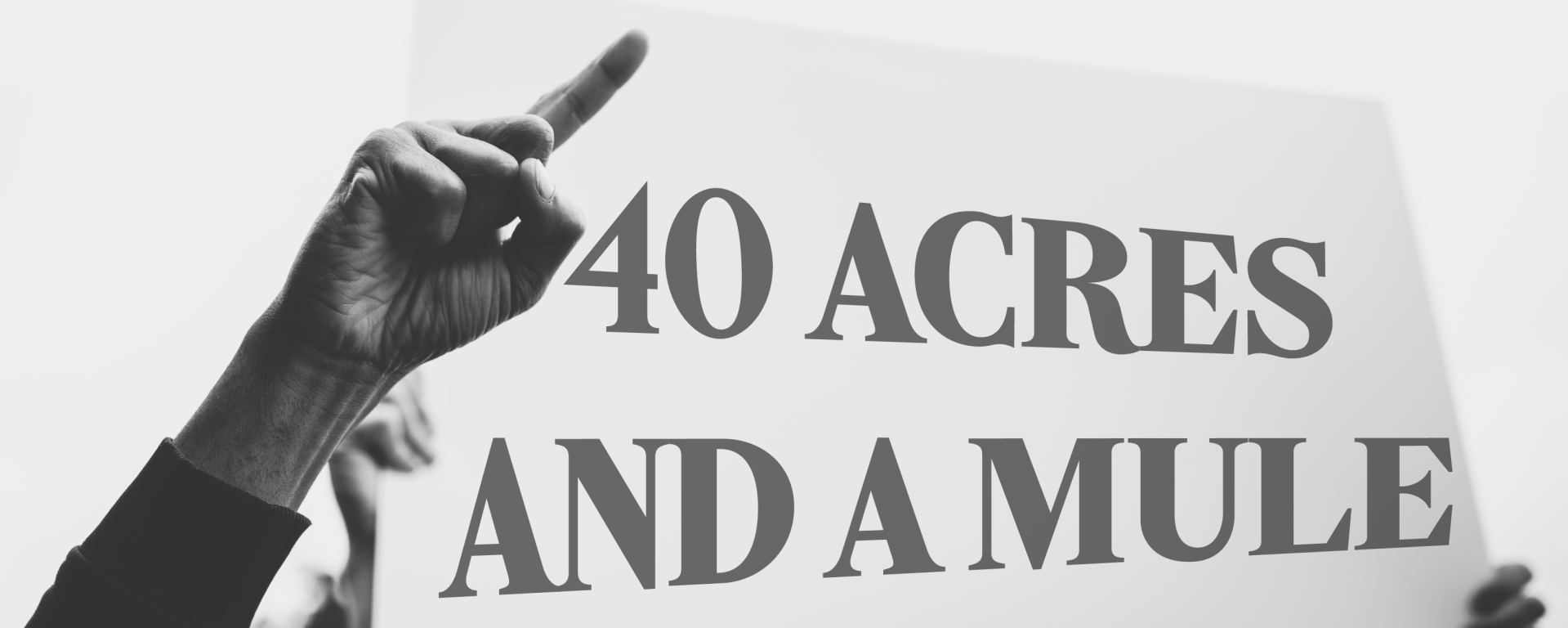
So, reparations must be as pervasive and systematic as racist capitalism. It will in fact take the entire village to see deep change on every level.
Given our history and current racist capitalist landscape, I have not heard of many reparation
theories that go far enough to address the economic wrongs that my people have lived with, I
have grown up into, and that my grandkids will unfortunately face. I have heard so many
reparation theories. I have heard about direct payment from the government, home ownership
and college assistance from banks, citizen-to-citizen wealth transfer, and on and on and on. While
any one of them would be nice to see, all of them together would probably still not build up to justice. While there have been many attempts, I have not seen or heard of one politician who has yet put out a theory of reparations that even scratches the surface of what black and
indigenous folks have stolen. Most scholars and public intellectuals I have heard from seem to fall woefully short because of the vast systems that need to be confronted.
Dr. King knew that the economy was at the center of the particularly brutal version of racism in the United States. That is why he used the “bad check” metaphor in his “I Have a Dream”
speech and why he connected racism and poverty with militarism as the triple evils. At the time of his murder, he had turned his work towards the Poor People’s Campaign in the critique of the foundations of the US American economy.
I don’t believe the current conversations on reparations for Black and Native people will be
fruitful – not because black history is becoming more and more illegal in many states, but
because the foundation of our economy is still built upon the exploitation of black and brown bodies for the economic gain of white people and structures.
The US paid reparations to white people at the abolition of chattel slavery. The US paid
reparations to over 80,000 Japanese American citizens who were formally interned which would be valued at over $3.5 billion today. Reparations are possible… for those that are not needed as a servant class. They just are not possible for black and native people who are still exploited.
In every category of social mobility, black people are behind in comparison to the civil rights
generation. We are less healthy, more incarcerated, less likely to own homes, more likely to be below the poverty line, less educated, etc. This is only the result of a cruel and calculated
system that keeps so many down.
If reparations for black people were successful, then there would be an influx of capital wealth into black families that would create generational wealth and thus send black people into universities as students and professors, into businesses as CEOs, and into government as
policymakers. We see black excellence in industries in which there is a vested interest in a true
meritocracy, like sports and music. If the scales are balanced and opportunity is truly colorblind, those in power will have to get there on their own merit and America would turn on its head… ‘cause I would bet on black.
By Leroy Barber
Discover more from Three-Fifths
Subscribe to get the latest posts sent to your email.
 Three-Fifths